




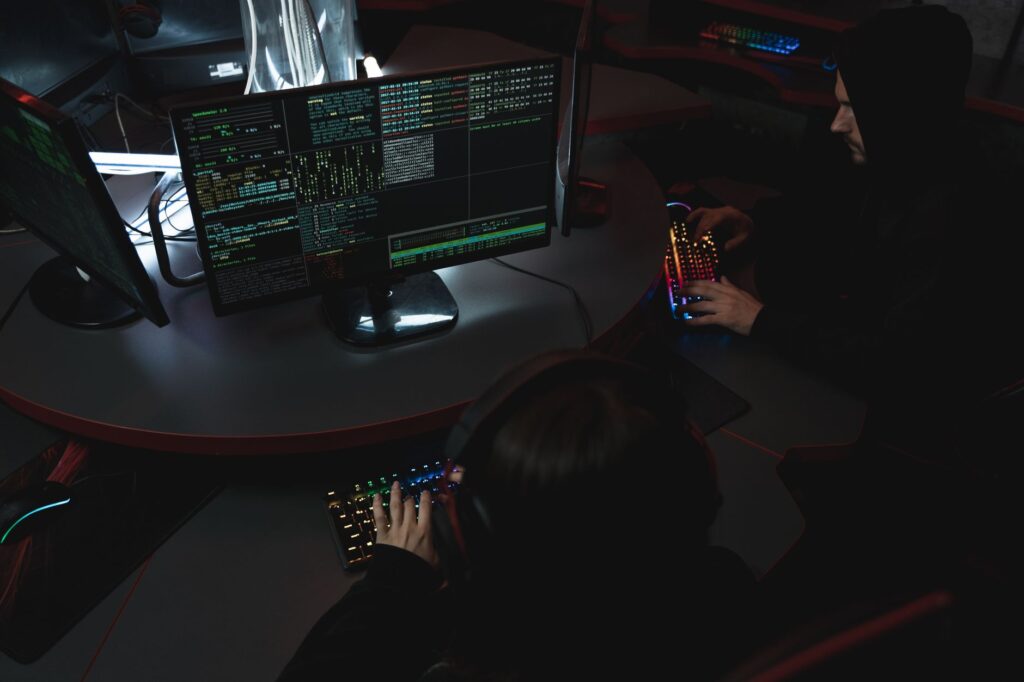
On June 7, 2026 Iran signed a formal ceasefire, yet its cyber actors kept pounding targets – a stark reminder that diplomatic ink doesn’t automatically mute the digital battlefield. The push to embed cyber ceasefire rules into an extension of the Geneva Conventions could finally give governments a tool to police that gap.
Key Takeaways
- Iran’s ceasefire didn’t stop its state‑linked hackers from launching attacks.
- Current international law leaves a loophole for cyber operations during ceasefires.
- An amendment to the Geneva Conventions would define permissible cyber behavior under ceasefire conditions.
- Developers and security teams will need to adapt to new compliance expectations if the amendment passes.
- The move could set a precedent for other conflict zones where cyber forces operate independently of political agreements.
Cyber Ceasefire Rules: What the Geneva Extension Proposes
According to the original report, the proposed amendment would treat cyber attacks that violate a ceasefire the same way kinetic attacks are treated under the existing conventions. That means any offensive cyber operation that breaches a ceasefire could be classified as a war crime, opening the door to legal accountability.
It isn’t just semantics. By codifying what counts as a prohibited cyber act, the amendment would give military lawyers a concrete framework to cite in tribunals. That’s something that’s been missing ever since the original Geneva texts were drafted for a world that didn’t have the internet.
And because the language would be tied to the ceasefire itself, the rules would automatically activate whenever two parties declare a pause in hostilities. That’s a practical way to close what the article calls “a major loophole in international conflict.”
Iran’s Ceasefire and the Reality of Its Cyber Actors
When Iran’s diplomatic corps signed the ceasefire, its cyber units – often described as loosely coordinated with the nation’s intelligence agencies – didn’t get the memo. The report notes that Iranian hackers kept exploiting vulnerabilities in regional networks, targeting infrastructure and political opponents.
It’s not the first time that a state’s cyber wing has operated on a different timetable than its diplomats. What makes this case noteworthy is that the ceasefire was publicly announced, yet the digital strikes continued unabated. That discrepancy highlights how cyber forces can act autonomously, or at least semi‑autonomously, from the traditional chain of command.
Because the attackers weren’t bound by the same diplomatic constraints, they could keep using tools that had been in use for months. That’s why the proposed Geneva amendment could be a game‑changer – it would give policymakers a lever to pull when their own cyber teams step out of line.
Legal and Operational Gaps in Current International Law
The Geneva Conventions were last updated in the mid‑20th century, long before anyone could imagine a ransomware campaign that crippled a hospital’s IT system. As a result, there’s no explicit language that bars a cyber‑enabled offensive during a ceasefire. The article points out that this omission creates a “major loophole” that adversaries can exploit.
And because there’s no universally accepted definition of what constitutes a cyber attack under international law, each nation ends up interpreting the rules to its own advantage. That’s why the proposed amendment is focusing on “restrictions on cyberwarfare under ceasefire conditions,” which would give a shared baseline.
But the amendment won’t be a silver bullet. It still relies on signatories to enforce the rules, and enforcement mechanisms for cyber crimes have always been murky. Still, having a legal standard is better than the current free‑for‑all, where the only recourse is diplomatic protest.
Implications for Nations and Developers
If the Geneva extension passes, governments will need to rewrite their rules of engagement for cyber forces. That means security teams will have to embed compliance checks that flag any operation that could be deemed a breach of a ceasefire.
Developers building offensive cyber tools will also feel the pressure. They’ll have to incorporate audit trails and perhaps even geo‑fencing capabilities that prevent the tools from being used in prohibited contexts. That’s a shift from the usual “once you have the code, you control the use” mindset.
Practical Impacts
- Compliance Audits: Organizations will likely be required to run regular audits that confirm no cyber activity violates a ceasefire.
- Tool Restrictions: Vendors may need to add kill‑switches or usage‑policy enforcement modules to their software.
- Legal Exposure: Engineers could face personal liability if they knowingly enable a breach.
- International Cooperation: Nations may share threat intel to prove violations, increasing transparency.
That’s not just theory – it’s already shaping procurement discussions in ministries of defense that are drafting cyber doctrine for the next decade.
What This Means For You
If you’re a developer working on network‑level tools, you’ll have to start asking whether your code could be used in a ceasefire‑violating scenario. That might mean adding logging that records the geopolitical context of each operation, or building in safeguards that halt activity when a ceasefire is declared.
For security architects, the new rules will push you to design architectures that can be quickly re‑configured for compliance. Think of it as an extra layer of defense – one that protects you from legal fallout as much as it protects you from technical threats.
In short, the push to embed cyber ceasefire rules into the Geneva framework is more than a diplomatic footnote. It’s a call to the tech community to treat cyber warfare with the same rigor we apply to conventional battlefields.
Will the international community manage to codify enough detail to make the rules enforceable, or will they end up as another well‑intentioned but empty promise? Only as the amendment moves through the UN process.
Historical Context: From Kinetic Ceasefires to Cyber Rules
The original Geneva Conventions were drafted for a world that fought with rifles, tanks, and artillery. Those texts gave clear guidance on what constituted a breach of a ceasefire – an artillery barrage, a ground assault, a bombardment. They also laid out the legal consequences for violating those limits. The digital realm, however, emerged after those conventions were set, leaving a vacuum where cyber actors now operate.
Since the first large‑scale cyber incidents, states have built parallel capabilities that sit outside the traditional military hierarchy. Those capabilities have been used to steal data, disrupt services, and even sabotage critical infrastructure. Each conflict that has featured a cyber component has also revealed the mismatch between old‑world rules and new‑world tactics.
When diplomatic agreements are reached, the expectation has always been that all instruments of state power will respect the pause. The Iranian case shows that expectation is fragile when the toolkit includes code that can be deployed across borders in seconds. The proposed amendment tries to bridge that gap by translating the language of kinetic ceasefires into the language of bits and packets.
By anchoring the rules to the ceasefire itself, the amendment mirrors how traditional ceasefire clauses automatically suspend kinetic operations. It creates a legal mirror that reflects the same prohibitions onto the cyber domain. That mirror, if accepted, would give prosecutors a reference point that currently does not exist.
History also shows that when new technologies outpace legal frameworks, the resulting ambiguity often benefits the aggressor. In the early days of aerial bombing, there were few rules governing where planes could strike. It took decades of treaty work to restrict that freedom. The cyber arena is poised at a similar crossroads, and the Geneva extension could be the first formal step toward a comprehensive rule set.
Scenarios: How the Rules Would Play Out for Different Stakeholders
Scenario 1 – A Startup Building Pen‑Testing Tools
A small company creates a platform that automates vulnerability scanning for enterprise clients. Under the new rules, the company would need to embed a compliance module that checks whether a target is located in a region where a ceasefire has been declared. If the module detects a ceasefire, the tool would automatically suspend any active exploit attempts. The startup would also be required to keep detailed logs that show the decision‑making process for each scan, providing evidence that it respected the ceasefire.
Scenario 2 – A National Cyber Command
A nation’s cyber command plans an operation to disrupt an adversary’s command‑and‑control network. The ceasefire amendment forces the command to obtain legal clearance that confirms the operation does not violate a ceasefire clause. If the target is deemed a prohibited objective, the command must either abort the mission or re‑target a non‑prohibited asset. The legal review becomes a mandatory checkpoint, just as artillery units now must obtain clearance before firing.
Scenario 3 – An Incident‑Response Team in a Private Company
A corporate SOC receives an alert that a foreign actor is probing its network during a regional ceasefire. The team must assess whether any defensive actions – such as active threat hunting or counter‑measures that could be interpreted as offensive – would cross the line into prohibited activity. The new framework would guide the team to focus on defensive containment, logging every step to demonstrate compliance. If the team needed to take a more aggressive stance, it would have to coordinate with national authorities to ensure the action is legally permissible.
Scenario 4 – A Vendor Supplying Network Appliances
A hardware vendor ships routers that include firmware capable of remote command execution. The amendment would likely require the vendor to embed a “kill‑switch” that can be triggered when a ceasefire is in effect. The switch would disable any remote execution feature until the ceasefire is lifted. Such a safeguard would protect the vendor from being unintentionally implicated in a ceasefire breach.
Key Questions Remaining
- How will the amendment define the technical threshold for a “cyber attack” that violates a ceasefire? Will low‑intensity probing be covered, or only high‑impact operations?
- What verification mechanisms will be put in place to confirm that a state’s cyber actors have indeed ceased hostilities? Will independent monitors be allowed to inspect logs?
- How will liability be apportioned when a cyber tool is sold to multiple customers, some of whom might use it in a ceasefire‑violating context?
- Will there be a clear process for updating the rules as new cyber tactics emerge, or will the amendment risk becoming outdated quickly?
- How will nations balance the need for rapid cyber response with the procedural steps required for legal compliance?
Answers to these questions will shape whether the amendment becomes a functional instrument of peace or remains a symbolic gesture. The coming months of UN deliberations will test the international community’s willingness to translate intent into enforceable law.
Sources: Dark Reading, Reuters