




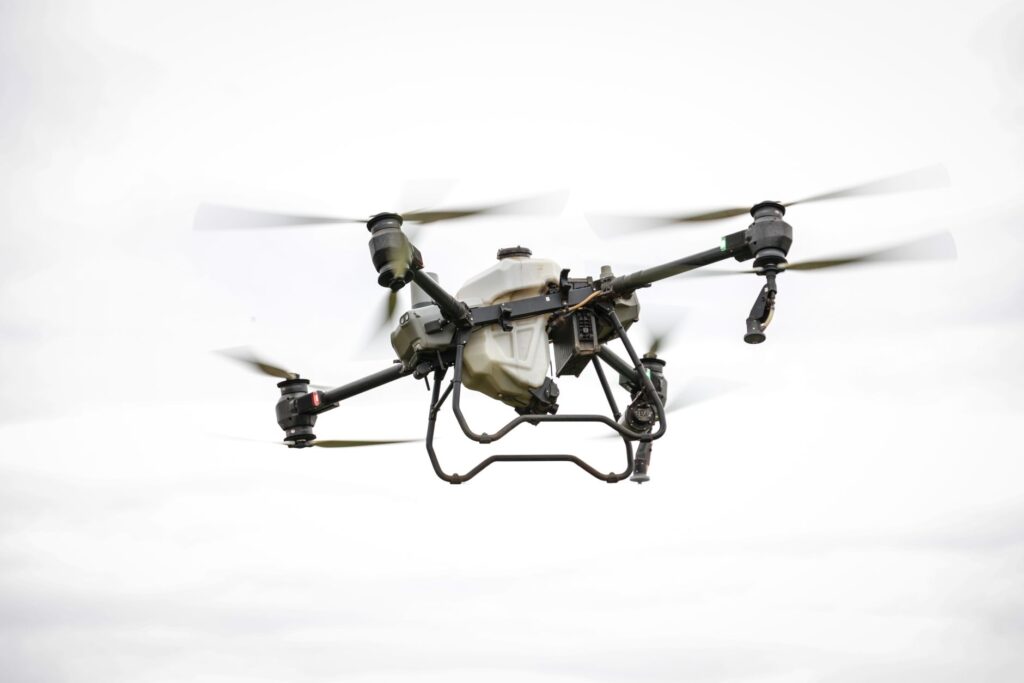
Ten AI‑controlled “Terminator” drones killed soldiers on the Ukrainian front, a fact that’s both stark and unsettling. It’s the first time that fully autonomous drones have been confirmed to kill human combatants without a human in the loop, according to a senior figure in Ukraine’s defence industry.
Key Takeaways
- 10 quadcopter drones were used in a one‑off test near Bakhmut and Chasiv Yar.
- The drones flew 3–5 kilometres over roughly 10 minutes before entering “Terminator mode”.
- Victims included “a couple of soldiers, one truck”, confirming lethal outcomes.
- Ukraine currently bans AI at the final stage of target interception, but the test shows the capability exists.
- The UN has called for a ban on lethal autonomous weapon systems, citing humanitarian concerns.
Fully Autonomous Drones: First Confirmed Lethal Use
Alexander Kokhanovskyy, the drone‑maker who supplied the technology, told New Scientist at a press event hosted by the Ukrainian embassy that the test was purely experimental. “We tried it,” he said, adding that they “never implemented it [more widely]”. That admission alone is enough to make the story feel like a scene from a sci‑fi novel, yet the details are painfully real.
Test Parameters and Outcome
The test involved 10 AI‑controlled quadcopter drones, each programmed to fly toward the front line, cover 3–5 kilometres in about 10 minutes, and then switch into what Kokhanovskyy called “Terminator mode”. In that mode, an AI model searches for and intercepts any target it detects. “We just launch it and we know everything will be dead – everything that will be found there in this particular area will be dead,” Kokhanovskyy explained. “There is no connection to the drone at all, you cannot see the video, nothing… Everything it sees will be killed.”
Because there was no live feed, human‑piloted drones were sent in after the test to verify the results. Those follow‑up drones reported “a couple of soldiers, one truck” as the casualties. While there’s no recording of the autonomous drones firing, the conclusion was that the drones had indeed caused the deaths.
Ukrainian Stance and Legal Gaps
Kokhanovskyy said he wasn’t present at the test; it was carried out by an unnamed unit near the cities of Bakhmut and Chasiv Yar as part of a Ukrainian counter‑offensive push. The Ukrainian Ministry of Defence didn’t answer questions about the test or the legal status of fully autonomous weapons. Defence‑company sources at the embassy press conference said Ukraine currently bans the use of AI at the final stage of intercepting targets, even though AI is employed earlier in the kill chain.
That policy gap is what makes this test so concerning. If the government’s ban only covers the final engagement, then the very fact that an AI can autonomously decide to kill means the ban might be circumvented by simply redefining the “final stage”.
Technical Details of the “Terminator” Mode
The drones were quadcopters, a design that gives them agility in cluttered battlefield environments. Their flight software plotted a path that would take them across the front line, then, once they entered the pre‑designated zone, the AI took over. The model wasn’t receiving any human commands; it was entirely self‑contained.
Flight Path and Targeting Logic
During the 10‑minute flight, the AI processed sensor data to identify any heat signature or movement that matched its target profile. When something fit the criteria, the drone would lock on and fire. Because there was no telemetry, observers couldn’t verify exactly how many engagements the drones performed, but the post‑test reconnaissance confirmed at least two infantry casualties and one vehicle.
What’s eerie is that the system was designed to be a “fire‑and‑forget” weapon. Once launched, there was no way to abort or redirect it. “Everything it sees will be killed,” Kokhanovskyy said, underscoring the lack of any human override.
International Reactions and Legal Context
The United Nations has long been uneasy about lethal autonomous weapons. Last year, UN Secretary‑General António Guterres said, “there is no place for lethal autonomous weapon systems in our world.” That statement reflects a broader concern that removing human judgement from the kill chain could breach international humanitarian law.
UN Calls for a Ban
The UN has warned that autonomous systems could mistakenly target friendly forces or civilians. A 2021 UN report even suggested that a Turkish‑made Kargu‑2 quadcopter may have been used autonomously to attack humans, though the report didn’t confirm any injuries. The report highlighted the risk of “mistakes, either attacking soldiers or equipment from the same side or striking civilians.”
Even though there’s no official international ban on fully autonomous lethal weapons, the UN’s repeated calls for one show that the global community is watching. The Ukrainian test adds a concrete data point to the debate, moving the conversation from theory to reality.
Implications for Military AI Development
Most militaries already use AI to assist with target selection, but they maintain a human‑in‑the‑loop. The United States, for example, employs software that sifts through massive data streams and suggests targets, but a human must confirm each strike. However, claims have surfaced that the US is developing Goalkeeper flying drones and Whiplash naval drones that could find and engage targets autonomously.
Major Danylo Polozhukhno, a senior figure in Ukraine’s 21st Separate Unmanned Systems Regiment, told New Scientist that his troops use semi‑autonomous systems, but “there is always a human in the loop.” That contrast between semi‑autonomous and fully autonomous shows how thin the line can be. If a system can operate without any human oversight for even a few minutes, the temptation to expand its role is strong.
For developers, the lesson is that the ethical and legal responsibilities of AI don’t stop at the lab. Once an algorithm can make life‑or‑death decisions without a human, the stakes skyrocket, and the scrutiny follows.
What This Means For You
If you’re building AI components for any kind of weapon system, you need to embed hard stop mechanisms that enforce a human decision point before lethal force is applied. That means designing interfaces that make it impossible to disable human oversight without explicit, logged authorization. It also means documenting the decision‑making flow so regulators can trace responsibility.
Companies should also monitor policy developments closely. Nations that currently ban AI at the final engagement stage may tighten those rules if public outcry grows after incidents like this one. Staying ahead of legal requirements will protect you from retroactive compliance costs and reputational damage.
As the battlefield becomes more digitised, the line between autonomous assistance and autonomous killing will keep shifting. The Ukrainian test is a warning that the shift is already happening, and it’s happening without a global consensus on how to manage it.
Historical Context: From Assisted Targeting to Full Autonomy
Autonomous concepts have lingered in defence circles for decades. Early experiments focused on unmanned aerial platforms that could loiter over an area and send back imagery. Over time, software evolved from simple waypoint navigation to more sophisticated perception stacks. The United Nations’ 2021 report referenced a commercial quadcopter that may have been used without human oversight, hinting that the technology was already approaching lethal capability before the Ukrainian test.
Policy discussions have kept pace with technical progress. The UN’s repeated calls for a ban illustrate a growing consensus that fully autonomous lethal weapons cross a moral line. Yet, no binding treaty has emerged, leaving national militaries to interpret the guidance independently. Ukraine’s current ban on AI at the final stage reflects one such national interpretation, but the test shows the practical gap between policy wording and operational reality.
Competitive Landscape: How Other Nations Are Positioning Their AI‑Enabled Weaponry
While Ukraine’s test is the first confirmed lethal use of a fully autonomous drone, other armed forces are already fielding semi‑autonomous systems. The United States, for instance, relies on AI to filter sensor streams and suggest targets, but human operators retain the final say. Recent claims about Goalkeeper and Whiplash platforms suggest a trajectory toward greater independence, though those systems still promise a human‑in‑the‑loop safeguard.
European partners have taken a more cautious stance, often embedding explicit “kill‑switch” provisions in their procurement contracts. The contrast between these approaches and the Ukrainian experiment underscores how divergent national doctrines can be, even when the underlying technology is similar. That divergence sets the stage for a fragmented global market, where some vendors may offer fully autonomous kits while others restrict their products to advisory roles.
Key Questions Remaining
- Will international law evolve to explicitly prohibit fully autonomous lethal engagement, or will it remain a patchwork of national bans?
- How will procurement officers balance the tactical advantage of fire‑and‑forget weapons against the ethical backlash that could follow their use?
- What verification mechanisms can be put in place to ensure that “no human in the loop” truly means “no human oversight at any stage”?
- Will the commercial drone industry develop standards that differentiate civilian from military autonomous capabilities?
- How will future conflicts test the limits of autonomy when both sides possess similar technology?
Answers to these questions will shape the next generation of warfare. The Ukrainian test offers a stark illustration of what can happen when a system crosses the threshold from assistance to autonomous lethality. Whether the world moves toward a formal ban or toward quiet integration will depend on how policymakers, industry leaders, and the public weigh the trade‑offs.
Sources: New Scientist Tech, United Nations reports