




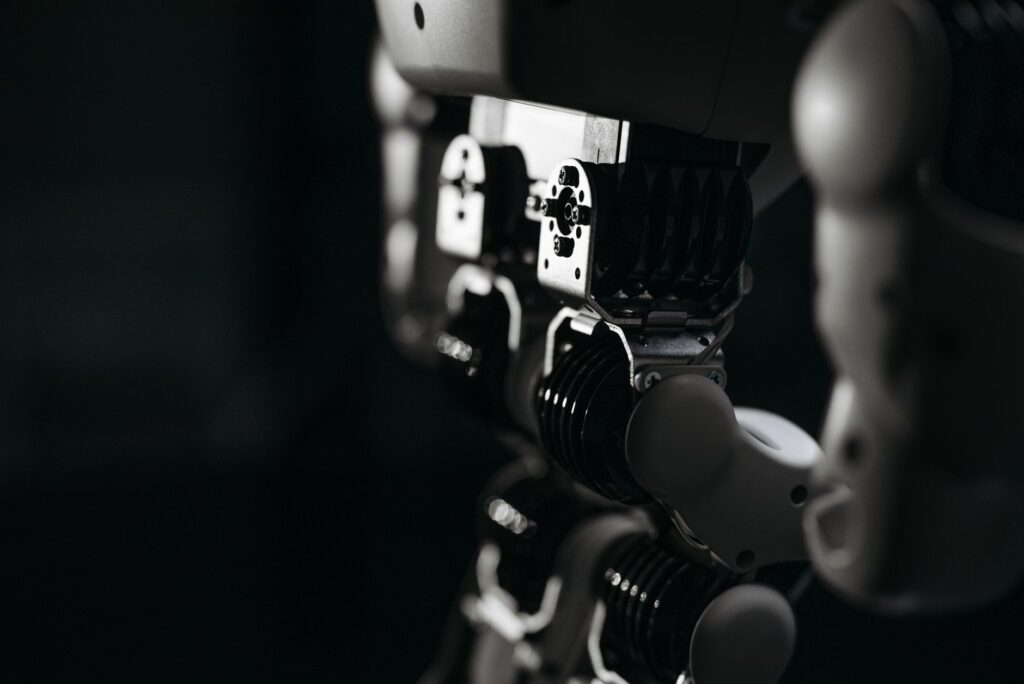
Neura Robotics has raised **$1.4B** in funding from investors including Nvidia, Amazon, and Qualcomm to support the development of humanoid robots and **Physical AI**. This significant investment is a clear indication of the growing interest in **Physical AI** and its potential applications. As of June 12, 2026, this funding round is one of the largest in the robotics industry, and it’s expected to have a significant impact on the development of humanoid robots.
Key Takeaways
- Neura Robotics raises $1.4B in funding from investors including Nvidia, Amazon, and Qualcomm
- Funding to support the development of humanoid robots and Physical AI
- Investment is one of the largest in the robotics industry
- Expected to have a significant impact on the development of humanoid robots
- Neura Robotics is a leading player in the Physical AI space
Historical Context
Physical AI, the blend of embodied robotics and artificial intelligence, has been on the industry’s radar for more than a decade. Early prototypes focused on narrow tasks—gripping, navigation, or simple object recognition. Over time, research labs shifted toward more generalizable perception and motor control, aiming to let machines reason about the physical world the way humans do. That evolution set the stage for a company like Neura Robotics to emerge, positioning itself at the intersection of hardware, software, and data.
Investors have gradually warmed to the idea that true autonomy requires more than a handful of sensors. The rise of powerful GPUs, the proliferation of cloud compute, and the maturation of deep‑learning frameworks all contributed to a tipping point. When Neura Robotics announced its funding, the market recognized that the convergence of these enablers finally made large‑scale Physical AI projects feasible.
Physical AI Development
The funding from investors including Nvidia, Amazon, and Qualcomm will be used to support the development of humanoid robots and **Physical AI**. This technology could revolutionize various industries, including healthcare, manufacturing, and logistics. Neura Robotics is at the forefront of **Physical AI** development, and this investment will enable the company to further advance its technology.
Physical AI goes beyond simple automation. It equips machines with an understanding of mass, friction, and force, allowing them to anticipate how objects will behave when manipulated. That capability opens doors to tasks that were previously out of reach for conventional robots, such as delicately handling soft tissues or dynamically reconfiguring assembly lines in response to real‑time demand.
Neura’s roadmap emphasizes three pillars: perception, decision‑making, and actuation. Perception pipelines will fuse visual, tactile, and proprioceptive data, creating a unified model of the surrounding environment. Decision‑making layers will apply reinforcement learning to translate that model into actionable plans. Actuation modules will translate plans into smooth, human‑like motions, using the latest advances in motor control.
Investor Interest
The significant investment in Neura Robotics is a clear indication of the growing interest in **Physical AI**. Investors including Nvidia, Amazon, and Qualcomm are betting on the potential of this technology to disrupt various industries. And it’s not hard to see why – **Physical AI** could enable robots to interact with their environment in a more human-like way, which could lead to significant advancements in fields such as robotics and artificial intelligence.
From Nvidia’s perspective, the partnership aligns with its broader strategy to embed GPU‑accelerated AI across the edge. Amazon sees a direct line to more efficient fulfillment and service operations. Qualcomm’s involvement signals confidence in the compute‑on‑the‑edge models that will power the next generation of autonomous agents. Together, these investors form a support network that spans silicon, cloud infrastructure, and market access.
Humanoid Robots
Neura Robotics is developing humanoid robots that can interact with their environment in a more human-like way. These robots have the potential to be used in various applications, including healthcare, manufacturing, and logistics. The funding from investors will be used to further develop these robots and enable them to perform more complex tasks.
Humanoid form factors matter because they can operate in spaces designed for people. That includes narrow aisles, standard workstations, and even domestic settings. By matching the dimensions of a human, Neura’s robots can use existing tooling, safety protocols, and ergonomic standards without requiring wholesale redesign of facilities.
Beyond shape, the company is pushing for fluid motion that mirrors natural biomechanics. Advances in joint compliance, sensor fusion, and predictive control let the robots adjust their gait on the fly, maintain balance on uneven surfaces, and handle objects with variable stiffness. Those capabilities translate into real‑world value when a robot must pick up a fragile component, navigate a cluttered warehouse, or assist a surgeon during a delicate procedure.
Technical Challenges
Developing humanoid robots that can interact with their environment in a more human-like way is a complex task. Neura Robotics will need to overcome significant technical challenges to achieve this goal. But with the funding from investors, the company is well-positioned to address these challenges and develop robots that can perform complex tasks.
One hurdle lies in sensor integration. A robot must reconcile data from cameras, lidar, force sensors, and joint encoders in milliseconds. Latency or misalignment can cause missteps, especially when dealing with dynamic objects. Another obstacle is energy efficiency. Human muscles operate with remarkable efficiency; replicating that in electric actuators demands careful power management and thermal design.
Software complexity adds a further layer of difficulty. Coordinating perception, planning, and control requires strong pipelines that can handle unexpected events without crashing. Safety standards for collaborative robots also dictate rigorous testing, verification, and certification processes—each adding time and cost to the development cycle. The new capital infusion will fund dedicated teams to tackle these problems head‑on, accelerating prototype iterations and validation.
What This Means For You
As a developer or builder, you may be wondering what the development of **Physical AI** and humanoid robots means for you. The answer is that it could enable you to build more complex and interactive systems. With **Physical AI**, you’ll be able to create robots that can interact with their environment in a more human-like way, which could lead to significant advancements in fields such as robotics and artificial intelligence.
And that’s not all – the development of humanoid robots could also enable you to build more efficient and effective systems. For example, you could use humanoid robots to perform tasks that are currently performed by humans, such as assembly or inspection. This could lead to significant cost savings and improvements in productivity.
Consider a scenario where you need to automate a warehouse that stores irregularly shaped items. A traditional robotic arm might struggle with grasping and placement, but a humanoid platform equipped with Physical AI can assess object geometry, adjust grip force, and place items precisely, reducing damage rates.
Another use case involves remote healthcare assistance. With a humanoid robot, a tele‑operated surgeon could guide the machine to perform routine checks, deliver medication, or assist patients with mobility challenges. The robot’s ability to sense and adapt to subtle changes in patient posture would make the experience feel more natural and safe.
Finally, think about rapid prototyping environments where engineers need flexible test rigs. A humanoid robot could reconfigure its own tooling, pick up test fixtures, and reposition them on the fly, cutting down setup time and freeing human staff for higher‑level design work.
These examples illustrate how the convergence of Physical AI and humanoid form factors expands the toolkit available to builders. As the technology matures, the barrier to entry will lower, inviting startups, research labs, and even hobbyists to experiment with new interaction paradigms.
Competitive Landscape
The robotics sector has long been a patchwork of specialized vendors, each focusing on a narrow niche. Neura Robotics’ approach—combining a general‑purpose humanoid chassis with a deep learning‑driven perception stack—creates a different competitive dynamic. Rather than competing solely on hardware specifications, the company bets on software adaptability and ecosystem integration.
Major chipmakers and cloud providers are already staking claims in adjacent spaces. Nvidia’s hardware, Amazon’s compute services, and Qualcomm’s edge processors form a supportive backbone that can accelerate development cycles for any player that adopts their platforms. This ecosystem effect means that new entrants will need to differentiate on algorithmic innovation or domain‑specific expertise rather than raw processing power.
Existing manufacturers of industrial arms continue to dominate low‑cost, high‑volume markets. However, those platforms typically lack the dexterity and environmental awareness required for tasks that involve unstructured surroundings. Neura’s focus on human‑like interaction positions it to capture opportunities where flexibility trumps throughput, especially in sectors that value safety and adaptability.
Key Questions Remaining
While the funding signals confidence, several unanswered questions linger. First, how quickly can the company translate research breakthroughs into reliable, field‑ready products? The path from lab prototype to commercial deployment often reveals hidden complexities in reliability, maintenance, and user training.
Second, what regulatory frameworks will apply as humanoid robots become more prevalent in workplaces and public spaces? Safety certifications, data privacy rules, and liability standards could shape the speed and scope of adoption.
Third, how will the ecosystem of developers respond? Open APIs, developer tools, and community support will determine whether third‑party innovation flourishes or remains confined within proprietary silos.
Answers to these questions will influence the broader market trajectory. Stakeholders—from investors to end users—will watch closely as Neura Robotics rolls out its first generation of Physical AI‑enabled humanoid platforms.
Sources: AI Business, Forbes