



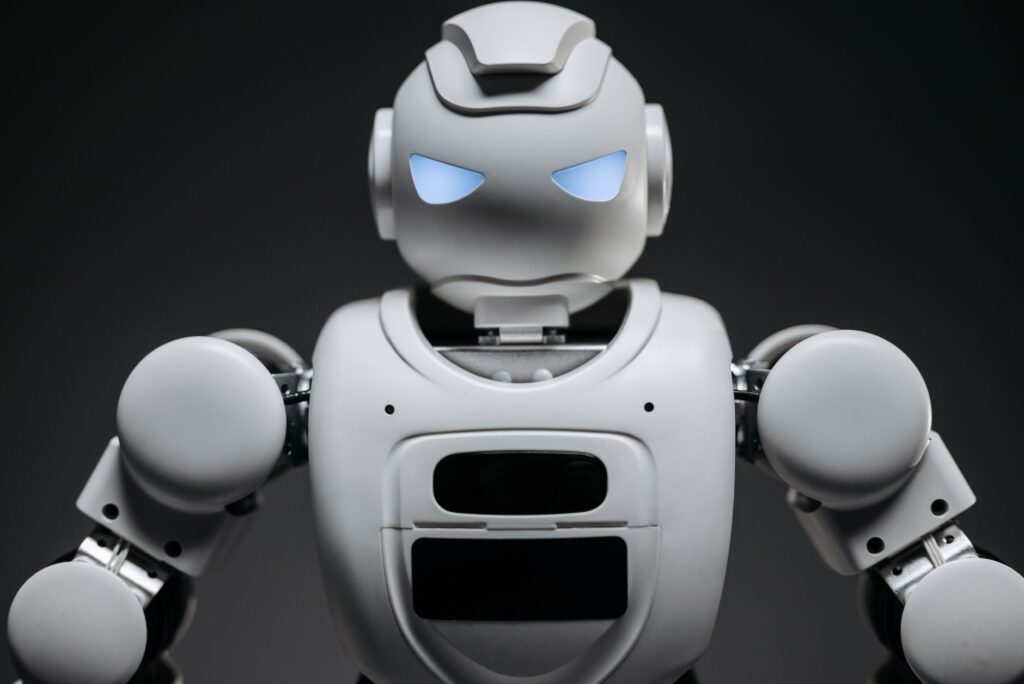
In a steel‑panelled warehouse in San Francisco, a robot hands me a fresh cup of coffee. That’s not the headline‑grabber — robots have been serving coffee for more than a decade — but the brain behind that brew is also folding shirts, peeling carrots and cleaning kitchens, all in the time most toddlers are just learning to walk.
Key Takeaways
- Physical Intelligence, founded 2024, is building a vision‑language‑action (VLA) control system that can run many robot bodies.
- The company’s recent model π0.7 cooked sweet potatoes in an air‑fryer without prior exposure to that appliance.
- VLAs let robots translate verbal instructions into motor commands, cutting the data needed for each new task.
- Physical Intelligence’s progress has outpaced its own expectations, moving faster than the typical two‑year timeline for robotics startups.
- Big players like Amazon and Google DeepMind are watching, and several well‑funded startups are racing to the same goal.
Physical Intelligence’s Approach to General Robot Intelligence
What sets this team apart isn’t a single humanoid platform; it’s a software stack that can be dropped into any robot, from a kitchen aide to a warehouse picker. Sergey Levine, a co‑founder and professor at UC Berkeley, says, “In most domains, solving more problems only makes things harder, but in AI, it actually makes it easier, because then you have more diverse sources of knowledge to learn from.” That paradoxical logic is what fuels their push for a truly general robot mind.
Vision‑Language‑Action Models: From Words to Moves
VLAs borrow the breadth of large language models and repurpose it for motor control. Ingmar Posner of Oxford University explains, “[VLAs] are probably the most direct translation of the excitement that we have from large language models,” and adds, “Rather than predict the next word, these systems predict the next robotic move needed to complete a particular task.” In practice, that means you can tell a robot to “fold the shirt” and the system will generate a sequence of joint trajectories that achieve the fold.
Data‑Efficiency Through Self‑Supervision
Training robots has always been data‑hungry. Levine notes that gathering enough real‑world examples often feels larger than the task itself. “Even though, in principle, it should be automatic, in practice, the amount of work required to get the data for your particular application was larger than the work needed to just do everything by hand,” he says. VLAs aim to shrink that gap by letting robots teach themselves from diverse, simulated environments and a modest set of real‑world demonstrations.
Weekly‑Rotated Testbeds
Physical Intelligence’s staff spend their days arranging makeshift supermarkets, bedroom sets and kitchens, re‑decorating each week. Those mutable stages force the robots to confront new object layouts, lighting conditions and clutter patterns, which in turn teaches the models to generalise beyond any single training scene.
Real‑World Pilots: From Lab to Lived‑In Homes
Beyond the staged warehouses, the company is slipping its bots into actual homes. Early feedback shows that the machines can handle the messiness of lived‑in spaces — a spilled cereal box, a dog‑wiggled chair, a half‑open fridge door — without crashing or calling for human assistance. That incremental exposure is what the team believes will bridge the gap between lab‑grade competence and everyday usefulness.
One striking demonstration came from the π0.7 model, which cooked sweet potatoes in an air fryer after receiving step‑by‑step verbal instructions. The robot had never seen an air fryer before, yet it managed the temperature, timing and flipping sequence, proving that the VLA approach can extrapolate to unseen appliances.
Industry Reaction and the Funding Landscape
Physical Intelligence isn’t operating in a vacuum. A slew of startups with billions of dollars in funding are also chasing the general‑purpose robot dream, while established giants like Amazon and Google DeepMind have announced their own research arms dedicated to flexible robotic control. The competitive pressure is palpable, and it’s pushing the whole field to iterate faster.
- Start‑ups with large capital injections are seeking similar VLA pipelines.
- Amazon’s robotics division is expanding its warehouse‑automation portfolio.
- Google DeepMind is publishing papers on multi‑task robot learning.
Speed of Progress vs. Historical Expectations
Levine admits that the team’s timeline has surprised even the most optimistic among them. “It’s actually gone quite a bit quicker than we thought,” he says, referencing the two‑year span since the company’s inception. That rapid pace contrasts with the slower, more incremental advances typical of robotics labs, where hardware constraints often bottleneck software breakthroughs.
Moravec’s Paradox Remains a Hurdle
Hans Moravec’s 1988 observation that it’s easy for machines to ace chess but hard to master a toddler’s motor skills still looms over the field. Physical Intelligence’s VLA strategy is a direct attempt to sidestep that paradox by feeding the robot a richer, more varied knowledge base, but the question of how much data is truly needed remains open.
Historical Context: From Task‑Specific Bots to Generalist Minds
Early commercial robots focused on narrow, repeatable chores — pick‑and‑place in factories, pallet‑stacking in warehouses, or coffee‑serving in cafés. Those systems required hand‑crafted pipelines for perception, planning and actuation, and each new task meant rebuilding the stack from scratch. Over the past decade, breakthroughs in deep learning gave developers the tools to replace hand‑tuned perception modules with neural networks that could recognize objects in cluttered scenes.
Parallel to that, large language models transformed how software understood text, enabling everything from chatbots to code generators. The convergence of visual perception and language understanding sparked the idea of a single model that could consume both image streams and textual commands. Physical Intelligence’s VLA stack is the latest embodiment of that vision, aiming to turn a single piece of software into the brain for any robot body.
What differentiates today’s effort from earlier attempts is the emphasis on self‑supervision. Instead of collecting millions of labelled robot trajectories, teams now let robots explore simulated worlds, collect their own data, and then fine‑tune on a handful of real demonstrations. That shift mirrors the broader AI trend of moving from supervised to unsupervised and reinforcement‑learning regimes.
Competitive Landscape: Who’s Racing to the Same Finish Line?
Beyond the startups mentioned earlier, a number of research labs are publishing papers on multi‑task robot learning, each claiming incremental gains in flexibility. Those papers often share a common theme: a single neural architecture can be reused across tasks, reducing the engineering overhead that historically slowed robot adoption. The fact that Amazon and Google DeepMind have publicly committed resources to the problem signals that the market sees commercial upside in a VLA‑driven approach.
Start‑ups with deep pockets are betting that a unified software stack will become a platform on which hardware manufacturers can build differentiated products. If that bet pays off, the next generation of robot vendors may sell bodies that are largely interchangeable, letting customers pick the form factor that best fits their environment while relying on a common brain for intelligence.
What This Means For You
If you’re building applications that rely on robot assistants, the emerging VLA stack could let you integrate a single software layer across multiple hardware platforms, saving you the trouble of writing bespoke controllers for each device. You’ll also be able to prototype new tasks by simply writing natural‑language instructions, letting the model generate the motion plan on the fly.
Developers should start experimenting with open‑source vision‑language models now, because the ecosystem is likely to coalesce around a few standard APIs. Early adopters will have a head‑start when the technology matures enough for commercial deployment, and they’ll be better positioned to influence the next wave of robot‑software standards.
Scenario 1: Rapid Prototyping in a Smart Kitchen
A startup creates a countertop robot that can assist with meal prep. Instead of hand‑coding a “chop carrots” routine, the team writes a short instruction: “chop the carrots into bite‑size pieces.” The VLA layer translates that sentence into a series of arm motions, grip adjustments and safety checks. Within a day, the prototype can handle a new vegetable without any additional code.
Scenario 2: Adaptive Fulfilment in a Warehouse
A logistics company wants to retrofit its existing mobile manipulators with a more flexible control system. By deploying the VLA software, the robots can interpret commands like “pick the blue box from shelf three and place it on the conveyor” even if the shelf layout changes overnight. The same software runs on both older and newer robot frames, reducing the need for separate firmware updates.
Scenario 3: Personalized Assistance for Elder Care
A health‑tech firm envisions a bedside robot that can fetch medication, adjust blankets and respond to spoken requests. Using the VLA model, a caregiver can simply say, “bring me my glasses,” and the robot will locate the glasses, plan a safe path around the room, and hand them over. The approach eliminates the lengthy integration cycles that traditionally plagued assistive‑robot deployments.
Each of these scenarios hinges on the ability to turn a sentence into a motion plan without extensive data collection for every new object or environment. That capability could reshape how product teams think about robot development, shifting the focus from low‑level engineering to higher‑level task design.
Key Questions Remaining
Even as the VLA concept gains traction, several uncertainties linger. First, the balance between simulated self‑supervision and real‑world fine‑tuning remains an open research problem. Will simulated experience be enough to cover the nuances of friction, compliance and unexpected obstacles that only appear in a lived‑in setting?
Second, the safety implications of letting a model generate arbitrary motion plans need rigorous validation. Current demos show graceful handling of everyday objects, but scaling that reliability to industrial settings will require new testing frameworks.
Third, the economics of a universal software stack versus specialized, optimized controllers are still being worked out. If a VLA layer can run on many hardware, hardware manufacturers might need to rethink pricing and support models.
Finally, the race among startups, cloud giants and academia could lead to fragmented standards. A community consensus on interfaces, data formats and evaluation metrics will be crucial to avoid duplicated effort and ensure interoperability.
Will the VLA‑driven approach finally deliver the versatile, household‑ready robots that have long seemed like science‑fiction, or will the data and perception challenges still keep them in the lab? Only time — and a lot of coffee‑making robots — will tell.
Sources: New Scientist Tech, original report