




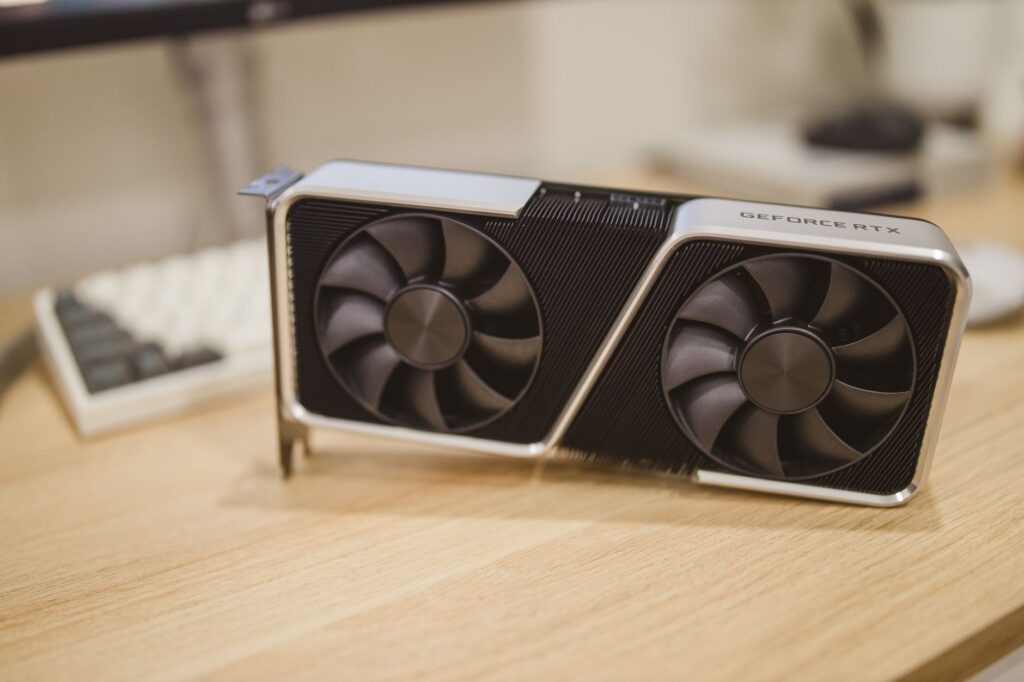
Claude in Microsoft Foundry is now running on NVIDIA GB300 Blackwell Ultra GPUs in Azure, and the rollout is officially marked as General Availability. The service uses NVIDIA GB300 NVL72 systems paired with Quantum‑X800 InfiniBand networking, giving enterprises a new way to spin up autonomous, domain‑specific AI agents. It’s a move that reflects how quickly agentic AI is moving from experimental labs into production workloads, and it forces developers to rethink how they provision compute for specialized agents.
Key Takeaways
- Anthropic’s Claude models are generally available on Azure, powered by NVIDIA GB300 Blackwell Ultra GPUs.
- The hardware stack includes NVL72 servers and Quantum‑X800 InfiniBand, promising higher inference efficiency.
- NVIDIA’s Secure Agent Workspace Reference Design adds governance at the infrastructure layer.
- Verified agent skills let enterprises embed domain‑specific abilities directly into Claude agents.
- The partnership builds on a strategic announcement made in November between Microsoft, NVIDIA, and Anthropic.
Historical Context
The November announcement set the stage for a three‑way collaboration that blended Anthropic’s language expertise with Microsoft’s cloud reach and NVIDIA’s hardware leadership. Prior to that, each player operated largely in parallel: Anthropic focused on model research, Microsoft expanded its AI services, and NVIDIA rolled out successive GPU generations aimed at inference workloads. The convergence of those trajectories created a natural pathway toward a joint offering that could ship today rather than in a distant future.
That strategic alignment wasn’t a sudden pivot. Over the past few years, both Microsoft and NVIDIA have been investing heavily in AI‑centric compute, launching dedicated cloud instances and reference architectures. The November pact simply formalized an already‑evolving ecosystem, giving customers a single point of contact for hardware, software, and model licensing. By the time General Availability arrived, the underlying engineering teams had already validated the integration in internal pilots, proving that the stack could sustain enterprise‑scale workloads.
Claude in Azure: What the GB300 Means for Enterprise AI
When you hear “GB300,” you should think of a GPU that’s purpose‑built for heavy‑weight AI inference, not just a graphics card for gamers. The Blackwell Ultra generation pushes the envelope on tensor performance, and that translates into faster response times for Claude agents that need to act autonomously across business domains. It’s not just raw speed; the efficiency gains shrink the total cost of ownership, which is something every CIO worries about when budgeting for AI projects.
Why agentic AI needs raw compute
Agentic AI isn’t a single monolithic model; it’s a hierarchy of specialized sub‑agents that each perform a slice of a larger task. Those sub‑agents often run in parallel, and they need low‑latency access to the same GPU resources to avoid bottlenecks. Because the GB300 can handle multiple high‑throughput streams, developers can now design more complex workflows without fearing that inference will become a choke point.
Hardware Edge: GB300 Blackwell Ultra Specs
The GB300 chips sit inside NVIDIA’s NVL72 server chassis, which is the form factor Microsoft chose for its Azure Foundry offering. Those servers are linked by Quantum‑X800 InfiniBand, a networking layer that delivers sub‑microsecond latency between nodes. In practice, that means a Claude agent can query a sibling agent on a different VM and get a reply almost instantly, keeping the overall orchestration fluid.
- GB300 – Blackwell Ultra GPU architecture optimized for AI inference.
- NVL72 – Server platform that houses the GB300 cards.
- Quantum‑X800 – InfiniBand networking delivering ultra‑low latency.
Those three components together form what NVIDIA calls a “high‑density AI engine,” and the claim is that enterprises will see measurable improvements in both throughput and energy consumption. It’s a claim that the blog post backs with the hardware details, but we’ll have to watch early adopters to see how it plays out in the wild.
Integration Stack: Secure Agent Workspace and Verified Skills
NVIDIA isn’t just handing over raw GPUs; it’s also providing a reference design called the Secure Agent Workspace. The design outlines how to run autonomous agents in a governed environment where identity, network access, credentials, and runtime policy are controlled at the infrastructure level. That’s a mouthful, but in plain English it means you can lock down who can spin up a Claude agent, what data it can touch, and how long it can run.
Verified agent skills
Another piece of the puzzle is NVIDIA‑verified agent skills. These are pre‑built modules that give Claude agents domain‑specific capabilities – for example, a finance‑oriented skill that knows how to read balance sheets, or a supply‑chain skill that can parse shipping manifests. Because the skills are verified, enterprises can trust that the agent’s output aligns with corporate compliance requirements.
Claude in Microsoft Foundry accelerated by NVIDIA GB300 GPUs on Azure builds on the strategic partnership Microsoft, NVIDIA and Anthropic announced in November.
Business Impact: Cost, Performance, and Governance
From a CFO’s perspective, the headline is “lower total cost of ownership.” Faster inference means you need fewer GPU hours to serve the same number of requests, and the energy efficiency of the Blackwell Ultra line cuts electricity bills. For developers, the performance boost translates into tighter SLAs and the ability to ship more ambitious agentic applications without hitting a wall.
Governance is another angle that can’t be ignored. The Secure Agent Workspace Reference Design embeds policy enforcement deep into the stack, so you aren’t relying on ad‑hoc scripts to keep data safe. That’s a relief for security teams that have been scrambling to retrofit compliance onto AI workloads.
- Inference speed improvements reduce GPU‑hour spend.
- Energy‑efficient hardware lowers operational expense.
- Built‑in governance satisfies compliance auditors.
- Verified skills accelerate time‑to‑value for domain‑specific agents.
Roadmap and Developer Onboarding
If you’re a developer looking to get your hands on this stack, the first step is to visit the Claude in Microsoft Foundry portal. The site offers documentation that walks you through provisioning a GB300‑backed instance, attaching the Secure Agent Workspace, and selecting from the catalog of verified skills. It’s a fairly straightforward process, but you’ll still need to understand Azure’s identity management model to make the most of the governance features.
Microsoft has also published a set of sample workloads that illustrate how to chain multiple Claude sub‑agents into a single business process. Those samples show, for instance, a ticket‑resolution bot that first classifies an incoming request, then hands it off to a finance‑focused sub‑agent to verify reimbursement eligibility, and finally routes the ticket to a human for final approval. The whole pipeline runs on the same GB300‑powered cluster, which keeps latency low and simplifies monitoring.
What This Means For You
For developers, the immediate benefit is a clear path to building high‑performance, autonomous agents without having to stitch together disparate GPU resources. You can spin up a Claude model on Azure, attach the Secure Agent Workspace, and start pulling in verified skills that already comply with industry standards. That reduces both the engineering effort and the risk of non‑compliance.
For enterprise architects, the partnership offers a compelling case for standardizing on a single hardware vendor for AI workloads. By consolidating inference onto NVIDIA GB300 GPUs, you gain predictable performance metrics, easier budgeting, and a tighter security posture. The reference design also means you can enforce policy at the hardware level, which is a step up from the usual software‑only controls.
Looking ahead, the question isn’t whether agentic AI will become part of the enterprise stack, but how quickly organizations can adopt a governed, high‑performance solution like Claude in Azure. Will the industry move toward a single‑vendor AI backbone, or will it stay fragmented across clouds and hardware providers?
Concrete Use Cases for Developers
Imagine a customer‑support workflow that begins with a natural‑language intake form. A Claude sub‑agent parses the request, extracts intent, and then delegates to a compliance‑checked skill that validates any attached documents. The next sub‑agent contacts a billing service, calculates any applicable fees, and returns a concise answer to the user—all within a single transaction. Because the underlying GB300 cluster can sustain multiple parallel inferences, the end‑to‑end latency stays well below the threshold that would frustrate users.
Another scenario involves a data‑enrichment pipeline for a marketing platform. Raw lead data lands in a storage bucket, triggering a Claude orchestrator that spins up three specialized agents: one cleanses address fields, another enriches firmographic details, and a third scores leads based on historical conversion patterns. The verified skills ensure each step adheres to privacy policies, and the low‑latency InfiniBand fabric lets the agents share intermediate results instantly, keeping the pipeline fast enough for real‑time campaign activation.
A third example targets the finance department. A quarterly reporting bot pulls transaction logs, then invokes a Claude agent equipped with a verified accounting skill. That agent reconciles entries, flags anomalies, and drafts a summary report for review. Because the Secure Agent Workspace enforces strict credential boundaries, the bot never sees raw financial data outside the approved compute enclave, satisfying audit requirements while delivering results in minutes instead of days.
Key Questions Remaining
- How will pricing models evolve as enterprises scale from pilot projects to enterprise‑wide deployments?
- What additional governance controls might be layered on top of the Secure Agent Workspace to address sector‑specific regulations?
- Will future GPU generations maintain the same balance of raw throughput and energy efficiency, or will new trade‑offs emerge?
- How will the ecosystem of verified skills grow, and which domains will see the earliest adoption?
Sources: NVIDIA Blog, TechCrunch