




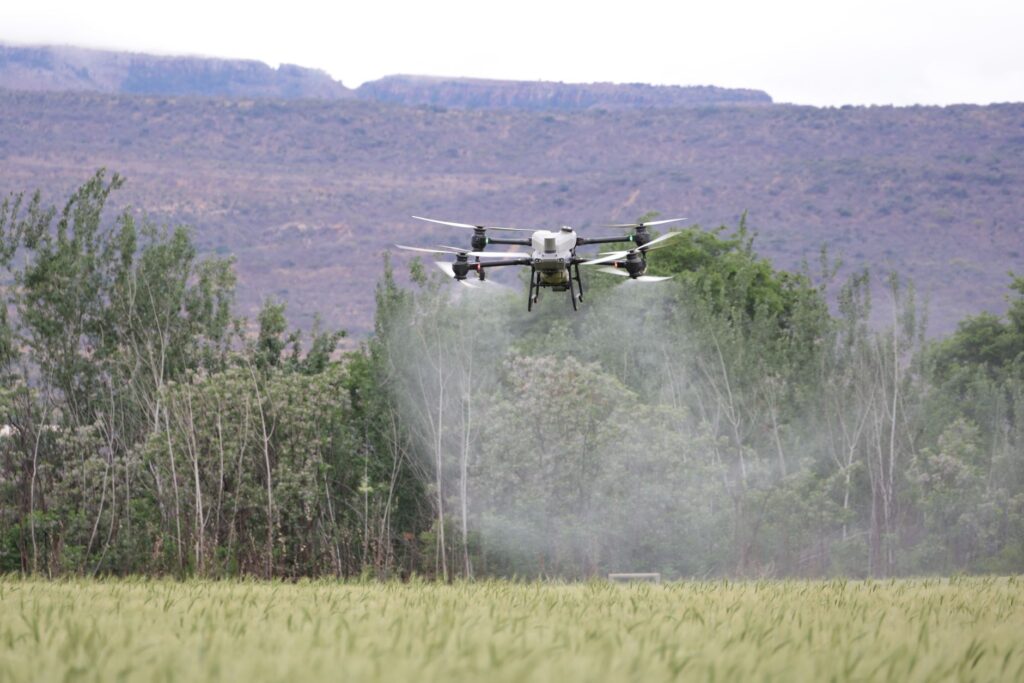
Quantum Systems just announced a $1.2 billion Series D, pushing its post‑money valuation to about $8 billion and underscoring how defense autonomous drones are becoming a hot ticket for investors. That’s a signal that capital is chasing the promise of machines that can operate across land, air and sea without a pilot.
Key Takeaways
- Quantum Systems closed a $1.2 billion Series D, valuing the startup at roughly $8 billion.
- The round was co‑led by Blackstone, Noteus, Airbus and Advent, with participation from Fidelity, Balderton and others.
- Quantum’s systems executed over 19,000 missions in Ukraine in 2025.
- Defense tech fundraising has topped $17.4 billion so far in 2026, outpacing last year’s $11.2 billion.
- Investors are betting on AI‑enabled, cross‑domain autonomy as the next battlefield edge.
Historical Context
Autonomous platforms have been a research focus for decades, but the last five years have seen a decisive shift from lab prototypes to battlefield‑ready systems. Early experiments in the 2010s proved the concept of unmanned aerial surveillance; subsequent iterations added swarming algorithms and machine‑learning‑based target recognition. By 2020, the industry started to converge on multi‑domain ambitions, a trend reflected in the surge of capital flowing into firms that could straddle land, air and sea.
Funding data mirrors that evolution. In 2025, defense‑focused startups collectively raised $11.2 billion, a figure that more than doubled to $17.4 billion in 2026. The biggest checks that year went to U.S. incumbents: Anduril secured $5 billion in May, Saronic Technologies and Shield AI each closed rounds exceeding $1.8 billion and $2 billion respectively in March. European players also entered the fray, with Helsing attracting $1.2 billion at an $18 billion valuation and Stark pulling in €500 million (about $572 million) in June.
These numbers illustrate a market that has moved from curiosity‑driven R&D spending to a full‑scale financing engine. Investors now demand proven performance metrics—mission counts, production volumes, and profitability—rather than merely promising concepts. Quantum Systems fits that new paradigm, having logged tens of thousands of missions and reported a profit line while still scaling.
Why defense autonomous drones are attracting $1.2 billion
Investors aren’t just chasing hype; they’re backing a company that’s already proving it can ship hardware at scale. The funding round, announced on Thursday, was co‑led by Blackstone, Noteus, Airbus and Advent, and it also saw money from Bond, Fidelity Management and Research Company, Balderton and HV Capital. That’s a roster of deep‑pocketed firms that aren’t shy about putting cash where they see strategic advantage.
Funding round details
The $1.2 billion raise gives Quantum Systems a post‑money valuation of about $8 billion. That puts it squarely in the unicorn club, and the fact that the company is already profitable, according to co‑CEO Florian Seibel, makes the deal even more compelling. It isn’t every day that a defense‑focused startup can claim profitability while still scaling fast.
The market context – a wave of defense tech money
Quantum’s raise sits on a broader tide of capital flowing into defense AI and robotics. Dealroom reports that defense tech firms have already pulled in a record $17.4 billion this year, dwarfing the $11.2 billion raised in 2025. The biggest checks have gone to U.S. players: Anduril snagged $5 billion in May, while Saronic Technologies and Shield AI raised $1.8 billion and $2 billion respectively in March.
- Anduril – $5 billion (May 2026)
- Saronic Technologies – $1.8 billion (March 2026)
- Shield AI – $2 billion (March 2026)
- Helsing (Europe) – $1.2 billion at an $18 billion valuation (May 2026)
- Stark – €500 million ($572 million) (June 2026)
David Kaden, senior managing director at Blackstone, said that a structural shift in the European defense market has created significant demand for capital to support the sector’s development and the adoption of advanced technologies. That’s why firms like Blackstone are moving quickly to get a slice of the pie.
Quantum Systems’ product portfolio and operational footprint
Quantum isn’t just a cash‑collector; it’s a manufacturer with a global footprint. The company builds unmanned systems for land, air and sea, and it’s already operating factories in Germany, Ukraine, the United States, Australia, Romania, the United Kingdom and the Baltics. That diversified production base helps it hedge against supply‑chain shocks, a point the firm highlighted as a key use of the new money.
Multi‑domain unmanned systems
Its product line spans three domains:
- Land – autonomous ground vehicles for logistics and reconnaissance.
- Air – drone platforms that can swarm and share data in real time.
- Sea – unmanned surface vessels designed for patrol and mine‑countermeasure missions.
Quantum’s systems were deployed in Ukraine, where they executed over 19,000 missions in 2025, according to the company. That’s a workload that few other defense startups can claim, and it shows the technology is already battle‑tested.
Profitability and strategic positioning
Seibel told reporters that “Defense will be defined by autonomous systems that can operate together across domains in real time,” and added that Quantum is building “a next generation neo prime that could disrupt defense as we know it today.” He also emphasized that the company is profitable, a rarity in a sector where most firms are still burning cash.
“Defense will be defined by autonomous systems that can operate together across domains in real time,” Florian Seibel, co‑CEO and co‑founder, said.
That profitability isn’t just a bragging right; it means the firm can reinvest earnings into R&D rather than relying solely on external capital. It also gives investors a safety net if market conditions sour.
How the new capital will be deployed
The $1.2 billion isn’t going to sit in a vault. Quantum outlined four primary uses:
- Expand production capacity – new lines in Germany and the United States.
- Strengthen supply‑chain resilience – diversifying component sources across Europe and Asia.
- Scale delivery across allied markets – faster rollout to NATO partners.
- Invest in software and AI – deeper autonomy, better sensor fusion and real‑time decision‑making.
Those priorities line up with the broader industry push toward AI‑enabled autonomy. By bolstering both hardware and software, Quantum hopes to stay ahead of rivals who might only focus on one side of the equation.
What This Means For You
If you’re a developer working on autonomous navigation, the influx of capital signals more opportunities to partner with defense contractors. You’ll likely see tighter security clearances, but you’ll also find funding streams earmarked for advanced perception stacks, low‑latency communication protocols, and rigorous testing pipelines.
Founders building AI‑driven robotics should note that investors are rewarding profitability and real‑world deployment. You can’t just demo a prototype; you need to show you can field units at scale, manage supply chains and keep a profit line. That’s the new yardstick for defense‑tech startups.
Builders of cross‑domain platforms—those that can shift from a ground vehicle to a maritime craft without re‑architecting the core software—will find the market increasingly receptive. The $1.2 billion round underscores a willingness to bankroll projects that blur traditional domain boundaries, so long as the technology can prove itself in operational theaters.
Will the next wave of funding chase more niche capabilities, or will it keep gravitating toward platforms that can operate across land, air and sea? Only, but the stakes are rising for anyone who wants to shape the future of autonomous warfare.
Competitive Landscape
Quantum’s multi‑domain approach sets it apart from several peers that specialize in a single environment. Anduril, for example, has built a reputation around AI‑powered surveillance and targeting, largely focused on air and ground assets. Shield AI concentrates on aerial autonomy, while Saronic Technologies leans heavily on software‑centric solutions for battlefield awareness. European contender Helsing, despite its hefty valuation, still emphasizes land‑based systems and has not yet announced sea‑borne offerings. Stark’s €500 million raise reflects a focus on niche robotics rather than a full cross‑domain portfolio.
These differences matter when investors allocate capital. Firms that can demonstrate end‑to‑end capability across domains are positioned to capture larger contracts from NATO allies that demand interoperable solutions. Quantum’s global factory network also gives it a logistical edge, allowing it to ship hardware quickly to multiple theatres—a factor that can tip procurement decisions in its favor.
Nevertheless, the market remains crowded. Success will hinge on continued mission execution, incremental improvements in AI decision loops, and the ability to protect intellectual property while scaling production. Quantum’s profitability offers a cushion, but staying ahead of rivals will require relentless innovation and disciplined cost management.
Key Questions Remaining
Investors and industry observers are now looking at a set of unanswered questions that could shape the next phase of autonomous defense:
- How will regulatory frameworks evolve to accommodate cross‑domain unmanned systems operating in contested airspace and maritime zones?
- Can Quantum sustain its profit margin as it expands production capacity and enters new allied markets?
- What safeguards will be put in place to ensure AI decision‑making remains transparent and auditable under wartime conditions?
- Will the influx of capital accelerate standardization across NATO, or will divergent national requirements fragment the market?
Answers to these questions will determine whether the current funding surge translates into lasting strategic advantage for companies like Quantum, or whether the sector will encounter another correction cycle.
Sources: CNBC Tech, Financial Times