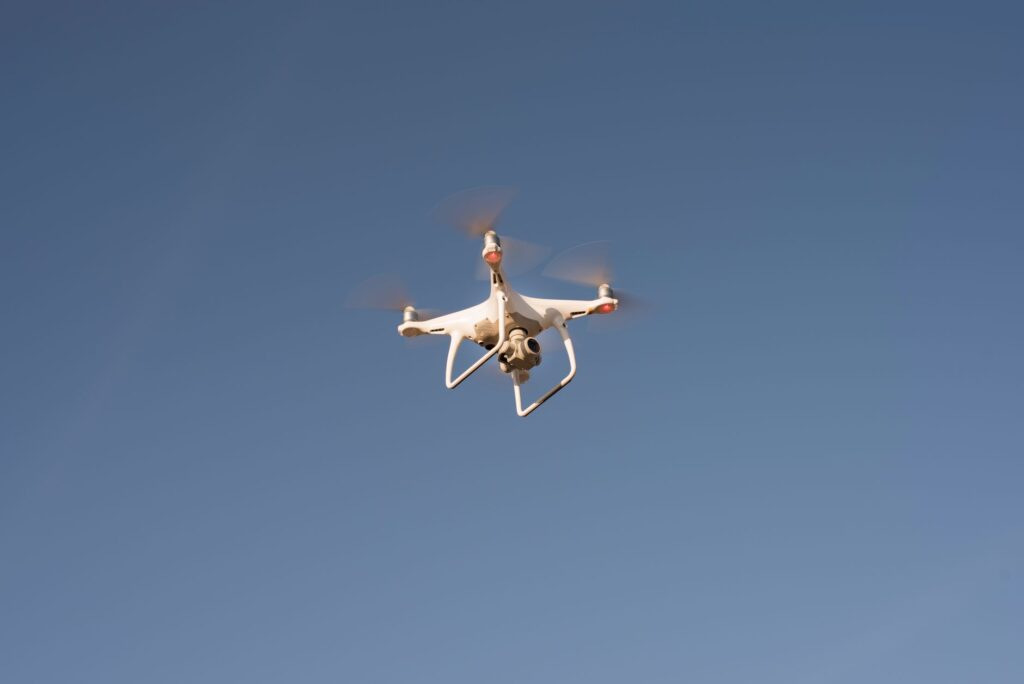



4 hours, 21 minutes, and 39 seconds of pure, unmanned flight. That’s the new drone endurance record set by Cape Town YouTuber and pilot Luke Bell, whose custom‑built multirotor hovered for a staggering 261 minutes before finally exhausting every last watt of its power pack. It’s a milestone that reshapes what hobbyists and engineers alike think is possible with battery‑driven aircraft.
Key Takeaways
- Bell’s drone stayed airborne for 4 h 21 m 39 s, surpassing his own unofficial 3 h 31 m 6 s attempt.
- Weight reduction of roughly 26 g came from swapping two‑piece clamps for single‑piece C‑style clamps.
- Continuous 1.88 m carbon‑fibre arms eliminated weak joints, boosting structural integrity.
- Live software tuning cut power draw to about 450 W while turning, versus 500 W in straight flight.
- Battery pack weighed around 5 kg with an energy density of 380 Wh/kg.
Historical Context
Long‑range drone flights have always been a tug‑of‑war between energy storage and weight. Early hobbyists tried to stretch a few minutes of flight into the half‑hour mark, often by sacrificing payload or stability. As battery technology matured, a handful of enthusiasts began chasing the one‑hour barrier, proving that careful design could push past the limits that early lithium‑polymer cells imposed.
Those incremental wins set the stage for the kind of marathon flight Bell achieved. Each step forward—whether a new frame material or a smarter flight controller—added a layer of knowledge that later builders could stack. The community’s collective experience, shared in forums and video tutorials, created a foundation where a 4‑hour hover no longer seemed absurd.
In parallel, the broader UAV market was moving toward longer missions for inspection, delivery, and research. That commercial pressure nudged hobbyists to treat endurance as a solvable problem rather than a lucky accident. Bell’s record, therefore, is both a personal triumph and the latest chapter in a longer narrative of incremental progress.
Drone Endurance Record Sets New Benchmark
Bell didn’t just break a record; he rewrote the rulebook for multirotor endurance. After months of iterative design, his aircraft finally earned official recognition from Guinness World Records, cementing the achievement in the annals of hobby aviation. It’s a reminder that persistence beats a single flash of brilliance.
His earlier prototype lingered for 3 h 31 m 6 s, but that flight never got the official stamp. Instead of resting on that laurels, Bell kept tweaking, aiming for a margin that would silence any skeptics. The result? A flight that lasted over an hour longer and earned a spot in the record books.
Hardware Overhaul: Cutting Weight and Reinforcing Structure
Every gram mattered. Viewers suggested swapping the original two‑piece clamp mounts for single‑piece C‑style clamps, shaving off roughly 26 g. That sounds tiny, but when a drone is already hovering for hours, that reduction translates into minutes of extra air time.
Bell also rebuilt the airframe with continuous 1.88 m carbon‑fibre tubes for each rotor arm. The new design removed the weak connection points that had plagued the earlier version, giving the structure a smooth strength that could endure prolonged stress.
Weight Savings from Clamp Redesign
The clamp swap was simple, yet its impact was profound. By eliminating redundant material, the drone’s total mass slipped just enough to boost lift efficiency. It’s a classic case of small changes delivering outsized results.
Carbon Fibre Arm Consolidation
Continuous carbon‑fibre arms meant fewer joints, fewer vibration sources, and a cleaner aerodynamic profile. The reinforcement of the front rotor arms added rigidity without adding noticeable weight, striking a balance that many builders chase but rarely achieve.
The battery pack, a hefty 5 kg unit rated at 380 Wh/kg, was also securely mounted using a custom system. That ensured the pack stayed stable throughout the marathon flight, even as power draw fluctuated.
Competitive Landscape
While Bell’s record grabbed headlines, several parallel projects were quietly pushing the envelope. Some teams focused on fixed‑wing platforms that could stay aloft for days, trading maneuverability for endurance. Others experimented with hybrid power sources, blending fuel cells with lithium packs to extend range.
In the multirotor arena, a handful of builders pursued efficiency through aerodynamic tricks—adding fairings, refining propeller pitch, or trimming stray cables. Those approaches echo Bell’s philosophy: shave every ounce, tighten every joint, and let software do the heavy lifting.
Commercial operators have taken note, too. Enterprises that need long‑duration surveillance now evaluate whether a custom‑built multirotor can replace a fleet of smaller, more frequently serviced units. Bell’s flight shows that a well‑engineered craft can meet that demand without resorting to exotic propulsion.
Software Tuning: Live Adjustments and Power Management
Hardware alone didn’t clinch the record. Early test flights suffered from vibration that confused the flight controller’s inertial measurement units. Bell swapped the original controller for a Cube Orange Plus system, which features isolated internal IMUs, and paired it with an external antenna linked to a Here4 base unit for centimeter‑accurate positioning.
He then dove into the autopilot’s software, applying notch filter tuning to eliminate resonant frequencies that were sapping power. Those tweaks not only steadied the craft but also trimmed unnecessary consumption.
Real‑time monitoring was key. Using a Wi‑Fi link to a RadioMaster transmitter, Bell could review power logs and tweak flight settings while the drone was still aloft. That level of live feedback is rare in hobbyist circles, but it made the difference between a good flight and a record‑breaking one.
Power Consumption Insights: Turning vs Straight Flight
Data collected mid‑flight revealed an intriguing pattern: the drone burned about 500 W during straight‑line segments, but only roughly 450 W while executing turns. That 10% drop prompted Bell to alter the route, adding more frequent turns to stretch the battery life.
- Straight‑flight power draw: ~500 W
- Turning power draw: ~450 W
- Average speed: ~5.5 m/s (≈20 km/h)
- Battery capacity: 5 kg pack at 380 Wh/kg
- Total flight time: 4 h 21 m 39 s
Flying at roughly 5.5 m/s, the drone covered enough distance to keep the battery under constant load while still returning to the launch point. By the end, every remaining watt had been drained, and the craft hovered until the power was fully exhausted.
Implications for Developers and Builders
Bell’s achievement underscores that raw battery size isn’t the sole determinant of endurance. Careful hardware redesign—like shedding grams here and reinforcing joints there—combined with dynamic software tuning can yield significant gains.
For developers working on autonomous platforms, the lesson is clear: real‑time telemetry and the ability to adjust parameters on the fly can transform a marginally successful test into a record‑setting run. The integration of precise positioning systems, such as the Here4 base unit, also shows how centimeter‑level accuracy can improve stability and efficiency.
What This Means For You
If you’re building a drone for inspection, delivery, or research, consider investing time in iterative hardware refinements. Even a modest 26‑gram reduction can translate into minutes of operational window, which might be the difference between meeting a client deadline or missing it.
On the software side, embed live telemetry dashboards that let you monitor power draw, vibration signatures, and GPS accuracy in real time. That data isn’t just for post‑flight analysis; it’s a lever you can pull mid‑mission to optimise routes and conserve energy.
Bell’s record also hints at a broader trend: as battery technology plateaus, smarter engineering will become the primary avenue for extending flight times. That means developers should sharpen both their mechanical and code skills, treating each as a piece of the same puzzle.
Will the next breakthrough come from a new battery chemistry, or will it emerge from a clever software tweak that squeezes another ten percent out of existing cells? Only, but Bell’s flight shows that the latter is already within reach.
Key Questions Remaining
- How will emerging carbon‑nanotube composites affect frame weight without compromising rigidity?
- Can future firmware updates introduce adaptive power‑management algorithms that automatically switch between straight‑line and turning flight modes for optimal efficiency?
- What safety mechanisms are needed when a drone operates near its absolute power limit, especially in commercial settings where payloads are non‑trivial?
- Will regulatory bodies adjust flight‑time limits as endurance records keep climbing, or will they focus on other aspects such as airspace integration?
Answers to these questions will shape the next generation of long‑duration UAVs. Researchers, hobbyists, and industry players all have a stake in finding those solutions.
Sources: TechRadar, BBC