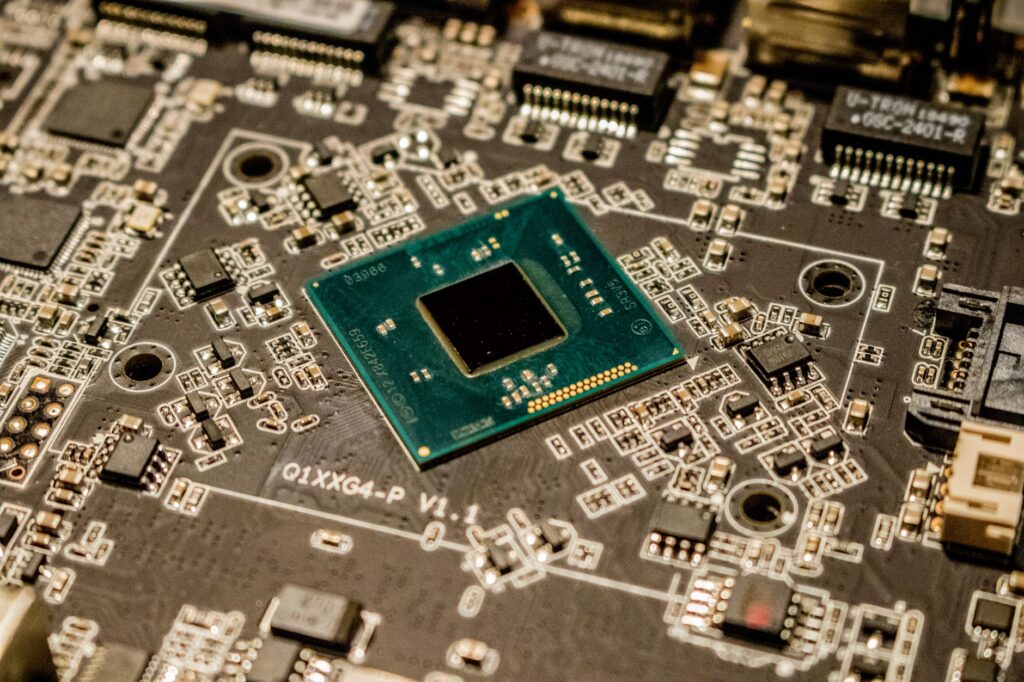



Chip stocks have rallied more than 360% in the past 12 months as investors bet on the sector’s role in powering AI. Yet volatility has spiked, prompting some to wonder if demand is cooling.
Key Takeaways
- Industry leaders describe AI compute demand as “almost unlimited” and limited only by energy.
- Supply constraints—from GPU availability to photonics—are outpacing current capacity.
- Enterprises are moving from reckless “tokenmaxxing” to disciplined “valuemaxxing” to justify spend.
- Data‑center startups and incumbents alike report sold‑out pipelines for the next five years.
- Developers should anticipate tighter access to compute and focus on ROI‑driven use cases.
AI Compute Demand Remains Near‑Infinite, Executives Say
“I somewhat think of AI demand as almost unlimited,” Pat Gelsinger told CNBC on Wednesday, noting that the only real cap is energy availability. He added, “Because how much economic value do you get for increased intelligence? Almost infinite across every industry imaginable.” That’s a bold claim, but the chorus of execs he heard seems to back it up.
Energy Is the Only Real Limiter
Gelsinger, former Intel CEO and now a general partner at Playground Global, believes that as long as power grids can keep up, compute will keep expanding. He didn’t say the world will run out of electricity tomorrow, but he warned that without more sustainable supply, growth could stall. That’s why many startups are racing to improve efficiency alongside raw performance.
Historical Context
The surge in chip valuations hasn’t happened in a vacuum. A wave of AI‑centric announcements earlier in the year set the stage for the current rally. Investors reacted to headlines touting massive model sizes and record training runs, and that optimism filtered through to the hardware side. When companies began to talk about “almost unlimited” compute, capital flowed quickly into firms that could promise more silicon or better connectivity. The result was a steep price climb that, while impressive, also introduced the volatility seen today. That backdrop helps explain why supply‑side concerns feel so urgent now.
Chip and Data‑Center Stocks Wobble, Yet Demand Stays Strong
Meta announced it would sell excess AI compute capacity, a move that nudged its stock higher but raised eyebrows about overcapacity. Elon Musk’s xAI also rented out its surplus this year, adding to the sense that some hyperscalers are pruning back. Samsung, after forecasting a gigantic rise in profit, saw its shares dip despite a 360% rally over the last year.
None of those price swings have dampened the appetite for more compute, according to Nebius CRO Marc Boroditsky: “What we’re experiencing in terms of demand is extraordinary. There’s much more demand than we’re able to fulfil, and that’s been our experience for some time now.” That’s straight from the source and underscores the mismatch between demand and supply.
Supply Constraints Across the Board
Andrew Feldman, CEO of Cerebras Systems, called the Meta and xAI sell‑offs a “unique” case. He told CNBC, “For the industry as a whole, the demand for compute far outstrips available capacity, and we’re short on data centers. I think we’re short on, as an industry, many of the inputs to compute.” That’s a clear signal that bottlenecks aren’t limited to chips alone.
Rebellions CEO Sungyun Park echoed that sentiment, saying, “AI infrastructure momentum [is] still huge.” He added, “I personally believe it’s not the signal saying that … all the hyperscalers [are overinvesting] in the infrastructure,” pointing to a broader, sustained build‑out.
Lumentum, a photonics and optical‑products supplier, said its products are sold out for the next 5 years. CEO Michael Hurlston told CNBC, “We’re trying to build up our capacity as much as we possibly can to fulfil a demand that we see out five years at this point.” Its stock is up around 600% over the last 12 months, reflecting investor appetite for companies that address these choke points.
“We’re short on data centers. I think we’re short on, as an industry, many of the inputs to compute,” – Andrew Feldman, Cerebras Systems
Competitive Landscape
The market now features a mix of entrenched players and nimble newcomers, each vying for a slice of the constrained supply. Hyperscalers like Meta and xAI have begun to off‑load spare capacity, signaling that even the biggest operators feel the pressure of excess inventory. At the same time, firms such as Samsung, Lumentum, and Cerebras are racing to expand their production pipelines, often announcing multi‑year commitments that lock in future revenue.
Startups like Nebius and Rebellions are not just participants; they’re shaping the narrative by publicly declaring sold‑out pipelines that stretch five years ahead. Their aggressive booking strategies force larger incumbents to consider partnerships or acquisitions to stay relevant. This push‑and‑pull creates a dynamic where supply shortages become a catalyst for collaboration, as well as competition.
Because the bottleneck spans chips, photonics, and data‑center real estate, no single technology can claim a monopoly on the answer. Companies that can bridge gaps—whether through more efficient cooling, better optical interconnects, or smarter workload orchestration—stand to capture market share from both sides of the aisle. The current environment rewards versatility as much as raw horsepower.
Enterprises Shift From “Tokenmaxxing” to “Valuemaxxing”
Earlier this year, many firms encouraged employees to use AI tools without regard for cost, a practice the media dubbed “tokenmaxxing.” Those tools—often from OpenAI or Anthropic—are pricey, and the rush has given way to a more measured approach. Companies now ask their CFOs to “bring the hammer down” and demand clear returns.
“The CFO bringing the hammer down and slowing spend should actually be looking for value or valuemaxxing,” Boroditsky said, adding that AI should be applied to create value that justifies the spending. “We’re seeing a shift now to more rationalization. We’ve seen it with every tech cycle, and that rationalization will definitely continue the demand,” he continued.
ROI Drives the New Discipline
Frontier models remain expensive relative to open‑source alternatives from DeepSeek or Alibaba, so firms are weighing cost against capability. Cerebras’ Feldman noted that different models will be used for different workloads, comparing a large bus to a grocery trip: “I think it’s probably the case that you don’t need a giant bus to go to the grocery store.” That metaphor captures the emerging nuance—use the right tool for the job, not the most powerful one by default.
Implications for Developers and Builders
For developers, the message is clear: expect tighter access to the latest GPUs and be ready to justify compute spend with tangible outcomes. Startups like Nebius and Rebellions are already booking capacity years out, so early engagement with data‑center partners could be a competitive edge.
Builders of AI pipelines should also watch energy costs, as Gelsinger warned that power availability may become the primary limiter. Optimizing models for efficiency—not just raw performance—could pay off when supply tightens.
What This Means For You
If you’re managing AI workloads, start auditing your cost structure now. Identify which tasks truly need the most expensive frontier models and which can be shifted to open‑source alternatives without sacrificing quality. That kind of rationalization will keep your CFO happy and your projects funded.
For engineers designing new hardware or software stacks, the sold‑out pipelines suggest a market eager for solutions that alleviate bottlenecks. Whether it’s cooling‑efficient chips, better photonics, or smarter scheduling tools, there’s a clear appetite for innovations that stretch limited compute.
Looking ahead, the key question is whether the industry can expand capacity fast enough to keep pace with the “almost unlimited” demand Gelsinger describes. If supply lags, we might see price spikes or a re‑allocation of workloads to more efficient models. That’s the catch.
Key Questions Remaining
- Will energy‑grid upgrades keep pace with compute growth, or will power scarcity become the dominant constraint?
- How will pricing evolve if demand continues to outstrip supply across chips, photonics, and data‑center space?
- What role will open‑source models play in a market that’s increasingly focused on ROI and efficiency?
- Can the industry’s current pipeline commitments translate into real‑world capacity expansions, or will unforeseen bottlenecks delay delivery?
- Will the shift from tokenmaxxing to valuemaxxing lead to lasting changes in how enterprises budget for AI, or is it a temporary correction?
Sources: CNBC Tech, CNBC