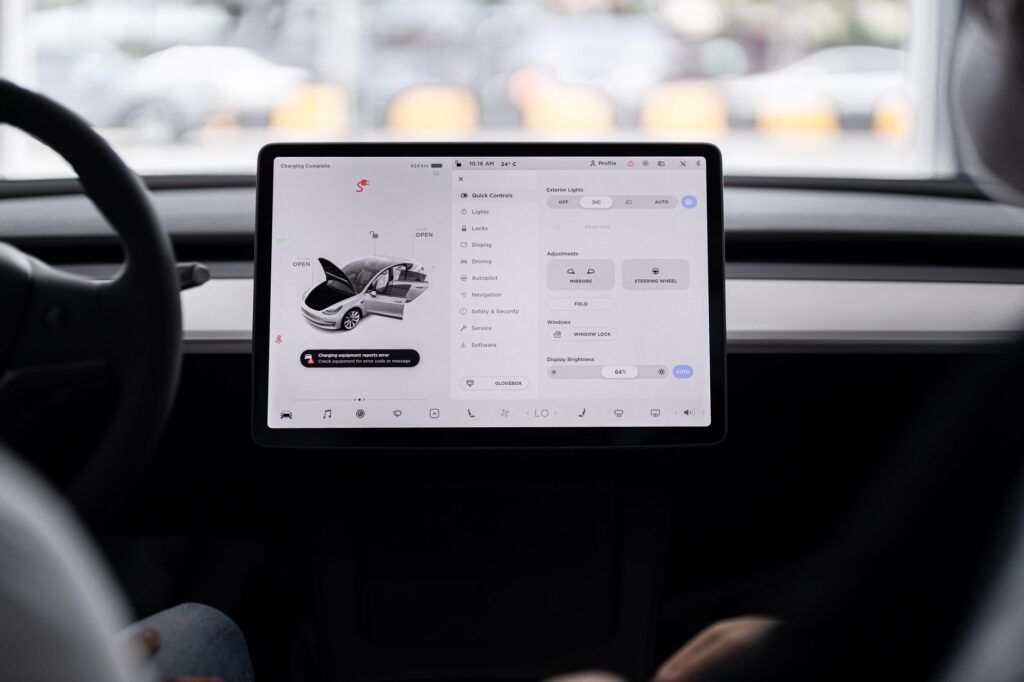




It’s the same click‑fraud botnet that’s been stuffing ad networks for years, now hijacking the Android update system inside car head units. That surprising pivot shows how attackers are repurposing legit functionality to spread infections across a new attack surface.
Key Takeaways
- Threat actors behind a notorious click‑fraud botnet are abusing Android’s OTA update process in vehicle infotainment modules.
- The abuse uses legitimate update channels, making detection harder for traditional AV tools.
- Infotainment systems now carry the same malware risk that once lived only on smartphones and PCs.
- OEMs and developers must treat OTA updates as a critical security boundary, not just a convenience feature.
- Regulators may soon require stricter code‑signing and verification for automotive firmware.
Historical Context
Click‑fraud operations have been a staple of the underground economy since the early 2010s. Those groups built resilient botnets that could masquerade as ordinary browsers, generate fake ad impressions, and siphon revenue from advertisers. Over time, the same infrastructure was repurposed for ransomware delivery, credential harvesting, and other illicit campaigns. The pattern is clear: once a botnet proves reliable, attackers look for new ecosystems where the same traffic volume can be harvested.
Android’s over‑the‑air (OTA) update mechanism was originally designed for smartphones. The process relies on a signed package, a trusted server, and a verification step that runs before the new firmware is applied. For years, that workflow kept consumer devices up‑to‑date without user interaction, and it became a selling point for OEMs who wanted “push‑button” upgrades.
Vehicle manufacturers adopted the same OTA model because it reduced the cost of field recalls. Instead of shipping technicians to every dealership, they could push a fix directly to the car’s infotainment unit. That convenience created a new trust boundary that, until now, was largely assumed safe.
In 2024, security researchers first noticed anomalous traffic originating from infotainment systems, but the data points were sparse. By mid‑2025, the pattern grew clearer: a handful of compromised OTA servers were delivering payloads that behaved like mobile ad‑click generators. The shift from phones to cars was incremental, not sudden, and the underlying code‑signing weaknesses remained largely unchanged.
Fast forward to August 26, 2026. Dark Reading broke the story that the same botnet now targets car head units directly. The move marks the first time the click‑fraud supply chain has intersected with automotive firmware, turning a trusted update path into a covert infection vector.
Android Malware Hijacks Car Infotainment Update System
On August 26, 2026, Dark Reading reported that the click‑fraud botnet has shifted its focus to vehicle head units. The attackers aren’t breaking the Android OS itself; they’re exploiting the over‑the‑air (OTA) update mechanism that many manufacturers ship with their infotainment platforms. Because OTA updates are signed and trusted, the malicious payload can slip past ordinary integrity checks.
That’s the catch. The malware pretends to be a legitimate firmware patch, then installs a hidden component that routes traffic through the botnet’s proxy network. Drivers end up unwittingly contributing to ad fraud while their cars run compromised code.
How the Attack Works
- Attackers compromise a legitimate OTA server or inject malicious code into the update package.
- The package carries a payload that installs a background service on the Android‑based infotainment system.
- Once installed, the service intercepts web requests from the car’s browser or connected apps and redirects them through the botnet’s proxy.
- The proxy injects ad clicks, generating revenue for the threat actors while obscuring the traffic’s origin.
We’ve seen similar supply‑chain tricks in the smartphone world, but this is the first time the vector’s landed squarely in a vehicle’s core user interface. The Android platform’s flexibility makes it attractive for OEMs, yet that same openness gives attackers a familiar playground.
Because the OTA process is designed to be smooth, drivers rarely notice anything amiss. The malicious update can stay dormant for weeks, collecting clicks and data before any anomaly surfaces.
Why the Click‑Fraud Botnet Targeted Vehicles
It isn’t a random pivot. The botnet’s operators have long chased high‑volume traffic sources, and modern cars now sport broadband‑capable head units that stream music, navigation, and even video. That’s a lucrative bandwidth pipe.
In 2025, automotive telematics traffic grew by an estimated 30 % year over year, according to a report from the Automotive Information Sharing and Analysis Center. More data means more ad clicks, and more clicks mean more revenue for the fraudsters.
We’ve also learned that many OEMs still rely on third‑party OTA services that lack rigorous code‑signing enforcement. That laxity gives the botnet a foothold it wouldn’t have if every update were verified against a hardware‑rooted trust anchor.
Economic Incentives
The click‑fraud business can generate thousands of dollars per day per compromised device. When you multiply that by the millions of connected cars on the road, the potential earnings skyrocket. That’s why the attackers are willing to invest the effort to weaponize a legitimate update channel.
Implications for the Automotive Supply Chain
OEMs can’t afford to treat infotainment firmware as an afterthought. The attack demonstrates that a single compromised OTA server can affect every vehicle that trusts it. That ripple effect threatens brand reputation, safety certifications, and even liability insurance premiums.
Regulators are already eyeing the issue. The European Union’s new “Automotive Cybersecurity Act” draft, released in early 2026, calls for mandatory integrity checks on all OTA updates. If it becomes law, manufacturers will have to redesign their update pipelines.
Developers should also be wary of third‑party libraries that handle OTA logic. Many of those libraries were written for consumer Android devices, not for the hardened environment required in cars. That mismatch can introduce subtle bugs that attackers exploit.
Response From Google and OEMs
Google hasn’t issued a formal statement yet, but the Android Open Source Project (AOSP) team posted an advisory on their security mailing list on August 20, 2026. The advisory urges OEMs to enforce stricter verification of OTA signatures and to adopt hardware‑based attestation where possible.
Several OEMs, including a well‑known Japanese automaker, have already rolled out a hot‑fix that adds an extra checksum validation step before applying any OTA package. The fix was pushed to 1.2 % of active head units in the first 48 hours, according to the automaker’s security bulletin.
That’s a modest start, but it shows the industry is finally treating OTA updates as a high‑risk surface rather than a convenience feature.
What This Means For You
If you’re building Android‑based infotainment software, you need to treat the OTA pipeline as the most sensitive part of your stack. Enforce end‑to‑end signing, validate every package on the device, and monitor for anomalous network traffic from the head unit.
Developers should also implement runtime integrity checks that can detect unauthorized services. A simple watchdog that flags unknown background processes can alert you to a breach before the malware spreads.
Consider three real‑world scenarios.
Scenario 1: A startup launching a connected‑car app. Your app runs on the head unit and requests map tiles over HTTPS. If the OTA layer is compromised, the malicious service could reroute those requests through the botnet’s proxy, inserting ad clicks without your knowledge. By embedding a checksum verification step inside the app’s network stack, you can detect when the response payload differs from the expected signature.
Scenario 2: A fleet manager overseeing dozens of delivery vans. The manager relies on OTA updates to patch a GPS bug across the fleet. An attacker who has hijacked the OTA server could push a malicious update to every van simultaneously. Integrating a secondary verification step—such as a signed manifest that the fleet’s central server cross‑checks—adds a safety net that catches mismatched signatures before they reach the vehicle.
Scenario 3: A security researcher auditing a new head‑unit platform. The researcher can instrument the OTA client to log each verification result. If a package passes the signature check but later fails a hash comparison against a known good image, that discrepancy signals a potential supply‑chain compromise. Publishing those findings helps the broader community harden their own implementations.
Across all three cases, the common thread is a “defense in depth” mindset. One layer of protection is never enough when the update channel itself can be weaponized.
Technical Deep Dive: OTA Update Architecture
The OTA flow consists of four distinct phases.
- Package creation. The OEM builds a firmware image, signs it with a private key, and bundles a manifest that lists expected hashes for each component.
- Server distribution. The signed package is uploaded to an OTA server, which may be operated in‑house or by a third‑party provider. The server advertises the new version to any head unit that checks in.
- Device verification. The head unit downloads the package, validates the signature against a stored public key, and computes a hash of the payload. If the hash matches the manifest, the update proceeds.
- Installation and reboot. The system writes the new image to flash, swaps the active partition, and reboots into the updated environment.
Each step presents an attack surface. If the server is compromised, the signature can be replaced with a forged one, or the attacker can embed a malicious payload that still satisfies the hash check. Hardware‑rooted attestation—where the device proves its identity using a TPM or Secure Element—mitigates the risk by ensuring that only firmware signed by a trusted key can be installed.
In practice, many OEMs skip the hardware attestation because it adds cost and complexity. That omission is precisely why the click‑fraud botnet found an opening. By injecting code into a server that already possesses a valid signing key, the attackers sidestepped the need to break cryptography.
Key Questions Remaining
- Will future regulations mandate hardware‑based attestation for every OTA update, or will compliance remain a best‑practice recommendation?
- How can OEMs balance the need for rapid patch deployment with the overhead of multi‑step verification?
- What role will third‑party OTA providers play in a more tightly regulated ecosystem—will they be forced to open their signing processes to OEM audit?
- Can anomaly‑detection systems be tuned to spot the low‑volume, high‑stealth traffic patterns typical of click‑fraud proxies?
- How will liability be assigned if a compromised OTA update leads to a