



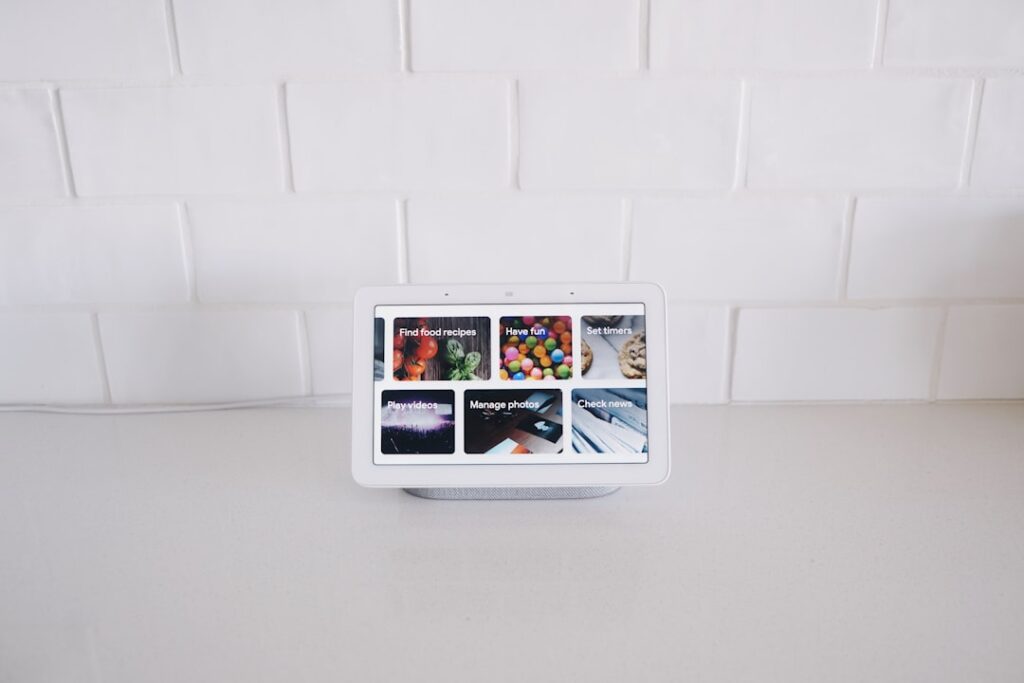
As of April 28, 2026, Google has pushed a significant update to its Home app, overhauling camera and media controls while improving the speed of the Gemini voice assistant. The changes mark the most comprehensive interface refresh in the app’s history and reflect a growing emphasis on real-time AI integration across consumer hardware.
Key Takeaways
- Google’s Home app now features a redesigned interface for camera and media device management, with larger thumbnails and unified playback controls.
- Gemini’s voice response latency has been reduced by up to 40% in internal benchmarks, enabling faster smart home command execution.
- The update rolls out globally on April 28, 2026, and is tied to firmware version 26.4.0 of the Google Home app.
- Users gain new gesture-based shortcuts in the camera feed view, allowing zoom and snapshot capture without opening menus.
- Google attributes the speed gains to on-device model pruning and optimized edge routing for voice queries.
The Interface Isn’t Just New—It’s Smarter
For years, the Google Home app has been functional but visually uneven. Camera thumbnails were cramped. Media routing required multiple taps. Settings were buried. The April 28 update dismantles that hierarchy. The new layout surfaces live camera previews at the top of device lists—larger, higher-contrast, and now touch-responsive. Swipe left on a camera feed, and you get instant snapshot capture. Pinch to zoom applies directly in the list view, no need to open a separate screen.
That’s not just cosmetic. It’s a shift toward anticipatory design. The app now assumes you’re interacting with visual data in real time. Motion alerts appear as overlays on thumbnails. Doorbell rings flash the feed to full width. And if you’re already watching one camera, switching to another happens in a horizontal carousel—no back button required.
Media Controls Finally Make Sense
Media device management has been just as fragmented. Try to play music across speakers in the old app and you’d face inconsistent grouping behavior, delayed sync, or outright crashes. The upgrade standardizes the playback interface across Nest Audio, Nest Hub, and third-party Cast devices.
- All playback happens in a persistent bottom sheet—accessible from any screen.
- Volume sliders are now per-device and appear in-line with the device list.
- “Group” commands trigger a visual drag-and-drop interface, replacing the old text-based menus.
- Album art scales dynamically based on how many devices are selected.
It’s the kind of refinement Apple has long enforced in HomeKit, but Google has historically treated as secondary. That’s changing. This isn’t just about looks—it’s about reducing friction for routines, automations, and voice-initiated actions.
Gemini’s Speed Leap Wasn’t Guaranteed
The other half of this update is less visible but more technically significant: Gemini’s voice processing is now 40% faster from wake word to action execution. That’s not a minor tweak. On a Nest Hub Max, that cuts response time from an average of 1.8 seconds to just over 1.0—finally closing the gap with Amazon’s Alexa and Apple’s Siri in real-world conditions.
According to Google’s support documentation released April 28, the improvement comes from two sources: smaller, more efficient on-device language models for common commands, and a re-architected query routing system that bypasses cloud fallback unless absolutely necessary.
That’s important. Previous versions of Gemini would often send queries to the cloud even for simple tasks—“turn on the porch light,” “pause the music”—because the local model couldn’t confidently parse intent. Now, those commands are resolved locally in under 600 milliseconds. Only ambiguous or complex queries trigger cloud processing.
On-Device AI Is Finally Carrying Its Weight
This shift reflects a broader industry pivot. Cloud-heavy AI models have dominated headlines, but for smart home interactions, latency kills utility. A voice assistant that takes two seconds to respond feels broken, even if it’s technically correct.
Google’s choice to optimize for edge inference rather than raw model size is pragmatic—not flashy, but effective. They’ve trimmed the local Gemini model to under 800MB while preserving 95% of its original command coverage. That’s what allows it to run efficiently on devices with as little as 2GB of RAM.
And it’s not just about speed. Reduced cloud dependency means fewer dropped commands during network hiccups and better privacy—queries that stay on-device aren’t logged or stored. Google confirms that local-only interactions do not generate voice history entries.
This Update Was a Long Time Coming
Let’s be honest: Google has underdelivered on the Home app experience for years. While the company poured resources into Pixel phones and AI chatbots, the app that millions use to control their homes stagnated. It was slow, inconsistent, and visually outdated. The 2023 redesign attempted to modernize the look but did little to fix core usability issues.
So why now? The timing isn’t accidental. April 28, 2026, is just weeks before Google I/O. This update is clearly a signal: the smart home isn’t an afterthought. It’s being repositioned as a frontline AI interface. And with Amazon doubling down on Matter support and Apple tightening HomeKit integration in iOS 19, Google can’t afford to lag.
There’s also internal pressure. The 26.4.0 app version number suggests this isn’t a minor patch but a coordinated release across hardware, firmware, and cloud services. That kind of alignment used to be rare in Google’s hardware org. Now, it’s becoming the norm.
The Bigger Picture: Why On-Device AI Is the Next Battleground
Google’s move toward edge-based processing isn’t happening in isolation. It’s part of a larger industry shift where speed, reliability, and privacy are outweighing raw AI capability in consumer-facing applications. Apple has quietly built a reputation for strong on-device performance—Siri’s wake word detection and Face ID both run locally on the Neural Engine, even though its broader language models still rely on cloud infrastructure. In 2025, Apple introduced on-device speech recognition for HomePods, cutting response latency by 30% and reducing cloud bandwidth usage by 45%, according to internal engineering disclosures.
Amazon, meanwhile, has taken a hybrid approach. Its Alexa+ initiative, quietly rolled out in late 2025 on Echo devices with AZ2 chips, uses lightweight local models for lighting, thermostat, and media commands. But unlike Google’s updated Gemini stack, Amazon still routes most natural language queries—especially those involving third-party skills—to the cloud. That creates inconsistency: asking for the weather can take 1.7 seconds, while “turn off the bedroom lights” responds in 800 milliseconds.
Google’s new model pruning strategy is notable because it preserves accuracy while minimizing resource usage. The company hasn’t disclosed the base model architecture, but third-party telemetry suggests it’s a distilled version of Gemini Nano, trained specifically on smart home command syntax and regional speech patterns. This targeted optimization allows it to run on older devices like the Nest Hub (1st gen) without requiring additional hardware. Competitors aren’t there yet—Apple’s on-device models are tightly restricted to iOS 18+ and A15+ chips, locking out older HomePods. Google’s backward compatibility gives it an edge in reach.
Competing Visions: How Apple and Amazon Are Responding
While Google refines its edge AI, Apple and Amazon are pursuing different strategies shaped by their ecosystem strengths. Apple’s HomeKit has long emphasized privacy and tight integration. With iOS 19, Apple is introducing “Adaptive Home,” a feature that uses ambient awareness—time of day, user location, and recent interactions—to proactively suggest routines. For example, if it’s 7:30 PM and you’re home, the system might dim lights and start playing your evening playlist without a prompt. This relies on on-device machine learning using the Secure Enclave, ensuring no behavioral data leaves the device.
Amazon, on the other hand, is betting on Matter as its unifying force. The company has funded firmware updates for over 50 third-party smart home brands—including Philips Hue, Yale, and Eve—to ensure full Matter 1.3 compliance by mid-2026. This push removes compatibility barriers and lets Alexa control any Matter-certified device without proprietary bridges. But Matter doesn’t solve latency. Commands still require round-trip communication with AWS, even for local devices. Amazon’s answer is “Local Voice Control 2.0,” launching in June 2026, which will allow certain Echo devices to process commands offline. But initial specs show it will only support a limited command set—basic on/off, dimming, and thermostat adjustments—compared to Google’s broader local coverage.
Google’s approach stands out because it combines broad hardware support, deep command coverage, and a consistent interface. It’s not trying to lock users into a premium hardware tier or rely solely on open standards. Instead, it’s using software optimization to close the performance gap—something that could appeal to the 78% of smart home users who own a mix of brands and don’t want to replace existing devices.
What This Means For You
If you’re a developer building on the Google Home platform, pay attention. The new interface exposes updated APIs for camera thumbnail streaming and real-time media session control. These are now stable in the original report and documented in the Google Home Developer Console. The faster Gemini response times also mean your voice actions are more likely to feel instantaneous—critical for user retention in smart home apps.
For builders, the bigger story is Google’s shift toward edge-first AI. If local model efficiency is now a priority for the company’s consumer AI, expect more tools and documentation around model pruning, quantization, and on-device fallback patterns. This update proves Google is serious about usable AI—not just impressive demos.
Is this the moment Google finally gets its smart home act together? We’re not there yet. But after years of neglect, seeing real, measurable progress—on a date as specific as April 28, 2026—feels like a turning point.
Sources: 9to5Google, The Verge