

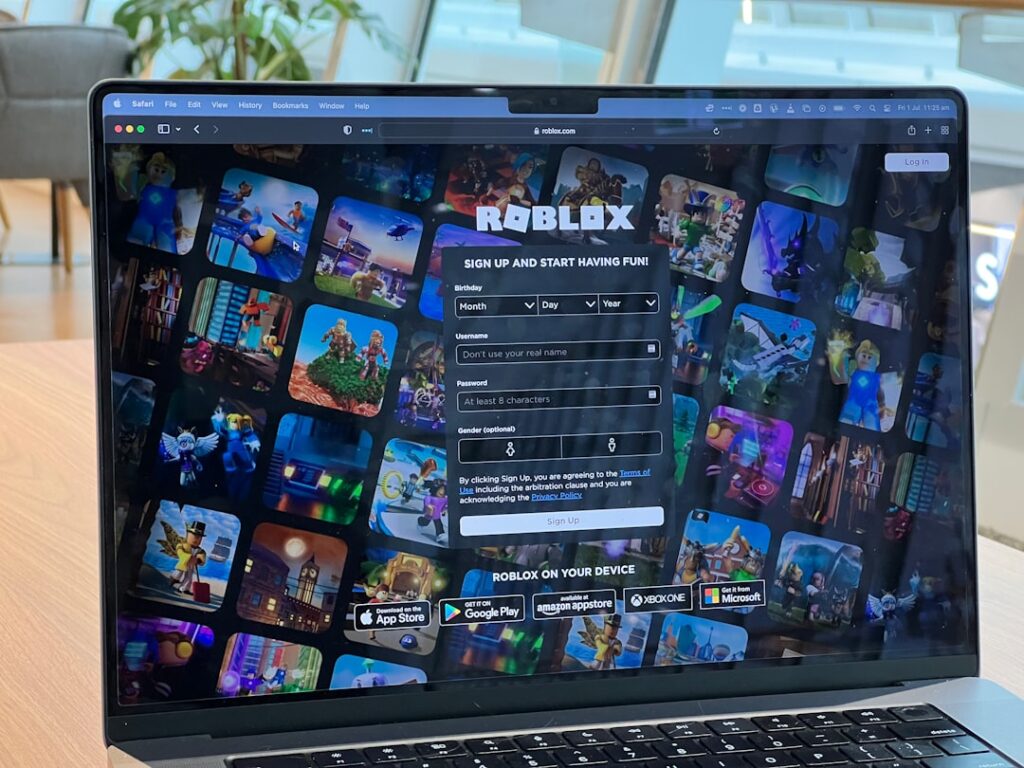
610,000 Roblox accounts were compromised in a cybercrime operation dismantled by Ukrainian authorities on April 30, 2026. The arrests of three individuals marked the culmination of a months-long investigation into a profit-driven hacking ring that weaponized stolen gaming credentials. The scheme, while targeting a platform often associated with children and casual play, revealed a sophisticated backend of automation, resale infrastructure, and digital identity theft. This wasn’t a case of teenage script-kiddies testing their skills. It was a coordinated, monetized breach at scale.
Key Takeaways
- Ukrainian police arrested three individuals on April 30, 2026, in connection with a large-scale Roblox account hijacking operation.
- The hackers compromised 610,000 Roblox accounts, a number verified by law enforcement and reported in the original report.
- They sold the stolen accounts for a total profit of $225,000, turning playground avatars into tradable commodities.
- The case highlights how gaming platforms, especially those with younger users, are now prime targets for organized cybercrime.
- Roblox’s virtual economy, built on limited-edition items and digital scarcity, creates real-world financial incentives for attackers.
Not Just Loot Boxes — This Was a Black Market
Let’s be clear: $225,000 isn’t petty theft. That’s a serious haul for a criminal enterprise, especially one focused on a game often dismissed as kids’ entertainment. The hackers didn’t just break in and change passwords. They built a pipeline. Accounts were harvested, stripped of valuable in-game items — limited-edition hats, rare accessories, developer-created assets — then flipped on underground forums and third-party marketplaces. Some were resold outright. Others were held for ransom, with demands sent to the original users.
Roblox’s economy runs on Robux, the platform’s digital currency. While Robux itself can’t be directly cashed out, high-value accounts with rare items can be sold for real money. A single limited-edition avatar accessory, if old enough and scarce enough, can trade for hundreds or even thousands of dollars. The attackers knew this. They didn’t target random kids for fun. They targeted accounts with histories, with collections, with value.
And they were efficient. The scale — 610,000 accounts — suggests automation. Phishing kits, credential-stuffing tools, botnets scanning for reused passwords: these aren’t DIY scripts. This was industrialized account theft, repurposed for the gaming economy. Cybersecurity researchers at Kaspersky observed similar infrastructure in a 2024 operation targeting Steam and Epic Games accounts, where attackers used modular phishing frameworks capable of rotating domains and evading detection. The tools used in the Roblox case likely originated from the same ecosystem of crimeware-as-a-service platforms, which sell ready-made phishing kits for as little as $50 on dark web marketplaces.
Ukraine’s Crackdown Wasn’t Just About Roblox
The arrests didn’t happen in a vacuum. Ukraine’s Cyberpolice have spent the past three years rebuilding credibility after criticism over slow responses to cybercrime. Since 2023, they’ve increased coordination with international agencies, particularly on cross-border digital fraud. This case was part of that shift — a public demonstration of capability.
Investigators didn’t just follow the money. They traced infrastructure. The hackers used a network of bulletproof hosting providers based in Eastern Europe to manage their phishing domains and resell platforms. These domains mimicked Roblox’s login page, tricking users into handing over credentials. Ukrainian authorities worked with regional partners to seize servers and preserve logs, which ultimately led to the suspects. The operation involved cooperation with Europol and the UK’s National Cyber Security Centre (NCSC), both of which provided digital forensics support and helped map the financial trail through cryptocurrency mixers and prepaid card networks.
The takedown also revealed connections to a broader network of digital fraud. One of the seized servers hosted phishing pages for over a dozen platforms, including Discord, Fortnite, and Minecraft. This indicates that the group wasn’t exclusively focused on Roblox but treated it as one of many viable revenue streams in the youth-targeted gaming space. The modular nature of their attack setup means that disabling one campaign doesn’t eliminate the threat — it just forces a pivot.
How Were the Accounts Stolen?
According to the investigation summary, the primary method was phishing. Users received messages — often disguised as official Roblox notifications — prompting them to “verify” their accounts. Clicking led to a near-identical copy of the login page. Once credentials were entered, the attackers had access.
- Phishing domains were active for an average of 14 days before takedown.
- Attackers used domain names with subtle misspellings, like “robl0x-login[.]com” or “secure-roblox[.]net”.
- Two of the suspects had prior records for credit card fraud, suggesting a pivot from financial theft to digital asset exploitation.
- No evidence was found of a breach within Roblox’s internal systems — the compromise was user-side.
Roblox’s Security Isn’t the Whole Story
Yes, Roblox could do more. Two-factor authentication is available, but not mandatory. The company has historically prioritized accessibility over security, especially since a large portion of its user base is under 13. But placing the blame solely on Roblox misses the larger point: this attack succeeded because of user behavior, not platform failure.
Most of the compromised accounts used weak passwords — things like “password123” or “roblox12345” — and many were reused across other sites. The attackers likely started with credential dumps from previous breaches (think: hacked gaming forums, compromised email providers) and ran them against Roblox’s login system. That’s called credential stuffing, and it works because people don’t change their passwords. Security researchers at Akamai reported that in 2025 alone, they observed over 138 billion credential stuffing attempts across all industries, with gaming platforms accounting for nearly 27% of the total — a 34% increase from the previous year.
Roblox has detected and blocked millions of automated login attempts monthly. But it can’t stop users from typing their credentials into fake websites. That’s on us — the users, the parents, the developers building adjacent tools.
The Real Vulnerability: Digital Identity Fatigue
We’re all managing too many accounts. Email, banking, social media, streaming, gaming — each with its own password rules, its own 2FA prompts, its own risk profile. At some point, people stop caring. They reuse passwords. They click through warnings. They trust links that look right.
That’s what the hackers exploited. Not a flaw in Roblox’s code, but a flaw in human attention. The attackers didn’t need zero-days or advanced exploits. They used psychological manipulation — urgency, familiarity, mimicry — to get users to do the work for them.
The Bigger Picture: Why Gaming Platforms Are Now Cybercrime Hubs
Gaming platforms are no longer just entertainment. They’re economies. Roblox reported $710 million in revenue in Q1 2026, driven largely by Robux transactions. Microsoft’s Minecraft Marketplace generates an estimated $400 million annually from player purchases. These platforms host digital assets that are bought, sold, and traded — often with real-world value. But unlike banks or e-commerce sites, they haven’t been subject to the same regulatory scrutiny or security expectations.
That’s changing. In 2025, the European Union began drafting amendments to the Digital Services Act to include virtual asset protections, prompted in part by rising reports of account theft in games like Roblox and Fortnite. The U.S. Federal Trade Commission has also opened investigations into third-party marketplaces that facilitate the resale of stolen gaming accounts, including sites like PlayerAuctions and G2G, where compromised Roblox profiles were listed during the operation.
Meanwhile, companies like Sony and Valve have started investing in dedicated anti-fraud teams. Sony’s PlayStation Network now employs behavioral analytics to flag suspicious trades, while Valve has implemented stricter identity verification for Steam Community Market sellers. Roblox has lagged behind in public disclosures about its internal fraud detection systems, though it confirmed in a 2025 investor call that it was expanding its security team by 40% over the next two years.
Industry Response: What Competitors Are Doing Differently
Other platforms have learned from past breaches. In 2023, Epic Games — maker of Fortnite — suffered a wave of account takeovers after a third-party authentication flaw in its launcher. The company responded by rolling out mandatory two-factor authentication for all accounts with more than $10 in V-Bucks balance. They also partnered with cybersecurity firm Cloudflare to implement real-time bot detection at login, reducing automated attacks by 89% within six months.
Discord, frequently used by gamers for voice chat and community building, has taken a different approach. Since 2024, it has offered a free password manager integration and conducts regular phishing simulation campaigns for its user base. It also displays prominent warnings when users click on links in direct messages that resemble login pages.
These measures aren’t perfect, but they reflect a shift toward proactive defense. Roblox, by contrast, still allows account creation without email verification for users under 13 — a policy justified by COPPA compliance but one that creates a blind spot for abuse. While the company does offer a Family Safety Link for parental oversight, adoption remains low. According to a 2025 Common Sense Media report, only 18% of parents with children on Roblox were aware of the tool, and fewer than 7% had it enabled.
What This Means For You
If you’re a developer building user-facing platforms, this case should be a wake-up call. You can’t assume your users will act securely. You have to design for the worst-case scenario: passwords will be weak, they will be reused, and your users will click on phishing links. That means enforcing 2FA by default, especially for accounts with stored value or personal data. It means monitoring for anomalous logins — like a user suddenly accessing their account from Kazakhstan after years in California. It means designing login flows that make spoofing harder, with clear visual indicators of legitimacy.
If you’re a founder or product lead, stop treating security as a compliance checkbox. This wasn’t a data breach in the traditional sense — no Social Security numbers or credit cards were stolen. But digital assets have real value, and your users will hold you accountable when those are lost. A hacked Roblox account might seem trivial until it’s your kid crying because their rare avatar is gone forever. Trust erodes fast when that happens.
Someone built the tools that made this theft possible. Someone designed the phishing pages to look authentic. Someone managed the backend marketplace. These weren’t random hackers in a basement. They were operators. And they’re still out there — just not these three.
Sources: BleepingComputer, The Record by Recorded Future, Akamai State of the Internet Report 2025, Common Sense Media 2025 Parenting in the Digital Age Survey, Roblox Q1 2026 Earnings Report, Europol Joint Cybercrime Report 2026