
Humanoid Robots Test Wayfinding at Narita Airport
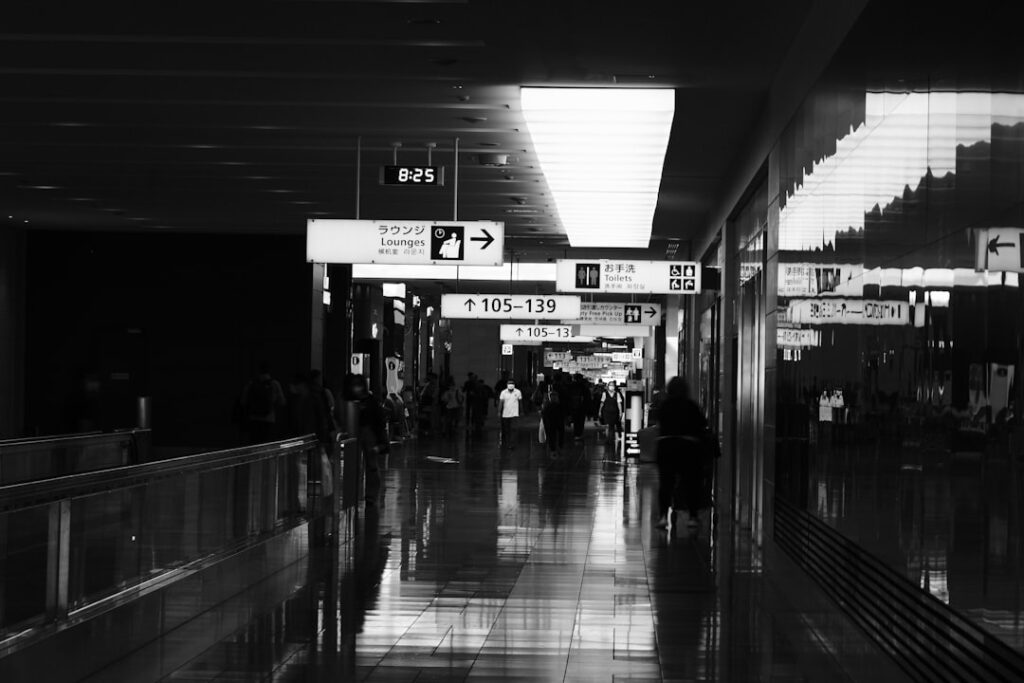
2,000 travelers pass through Terminal 1 at Narita Airport every hour. Starting May 03, 2026, some of them will be guided not by staff, but by a 1.8-meter-tall humanoid robot with jointed limbs, a rotating torso, and a screen-face that displays a calm, animated expression.
Key Takeaways
- Toyota’s T-HR3 Humanoid Robots begin real-world testing at Narita International Airport on May 03, 2026.
- The pilot program focuses on wayfinding and baggage assistance, not security or passenger screening.
- Robots operate under remote human supervision, using haptic feedback suits to mirror operator movements.
- This is Japan’s first airport deployment of full-size Humanoid Bots for frontline passenger interaction.
- If successful, the trial could expand to 10 robots by Q4 2026.
The Quiet Test at Gate 17
At 7:14 a.m. on May 03, a T-HR3 unit powered on inside a service corridor near Gate 17. It stood motionless for 90 seconds while systems synchronized. Then, it stepped forward—first a left foot, then right—into the main concourse. A traveler paused, phone raised. The robot turned its head with a near-silent whir and said in polite, gender-neutral Japanese: “May I help you find your gate?”
This wasn’t a viral stunt. It was the first public shift of a six-week pilot program run by Toyota in partnership with the Narita Airport Authority. The goal isn’t to replace workers. It’s to see whether a humanoid form factor—two arms, two legs, a head on top—can navigate crowded terminals better than wheeled kiosks or drones.
And yes, the irony isn’t lost on anyone: robots built in the image of humans are being tested in a country where human service culture is already near perfection.
Industry Context: Robots in Airports
Non-Humanoid Robots already work in airports. LG’s CLOi units roll through Incheon, providing wayfinding assistance. Amazon’s Digit handles cargo at CVG, improving efficiency for logistics teams. But they’re limited by stairs, narrow aisles, and passenger psychology. People don’t trust a box on wheels to carry their suitcase. They do, however, instinctively respond to something that walks like them.
The success of these deployments has paved the way for more advanced robots like Toyota’s T-HR3. By pushing the boundaries of humanoid robotics, Toyota aims to create a new standard for airport interactions.
But there are concerns about the impact of robots on the workforce. As airports face labor shortages, will robots become a necessary solution or a threat to human jobs?
Why Humanoid? Why Now?
Toyota isn’t claiming breakthrough AI. The T-HR3 doesn’t “think” its way through crowds. It’s teleoperated. A human technician in a backroom control pod wears a haptic suit that captures arm, leg, and head movements. When the operator lifts their right arm, so does the robot. When they turn, the robot mirrors it with a 0.3-second lag.
That’s not autonomy. It’s embodied remote control. But it’s a pragmatic bridge. Full autonomy in chaotic human spaces remains years away. Teleoperation sidesteps the problem—use AI where it works (vision, path prediction), but keep humans in the loop for judgment.
Designing for Trust, Not Just Function
The robot’s face is a 12-inch OLED panel showing simplified eyes and a mouth that moves in sync with speech. No attempt at photorealism. No uncanny valley. Just enough expression to signal intent: a slight nod when acknowledging, a tilt when listening.
Its hands are five-fingered, capable of gripping standard luggage handles. It can’t lift more than 10 kilograms, so it won’t carry checked bags. But it can guide a rolling suitcase alongside a passenger, stopping when they stop, turning when they turn.
“It’s not about strength,” said Takahiro Mizushima, Toyota’s robotics project lead, in a briefing before launch. “It’s about establishing coordination through motion.”
The Bigger Picture: Robots in Japan
Japan has long treated robotics as cultural infrastructure. From ASIMO to PARO, the emphasis has been on coexistence, not replacement. But the country also faces a labor shortage of 1.5 million service workers by 2030, according to the Japan Productivity Center.
Airports are ground zero. Narita expects 48 million passengers in 2026. That’s up 19% from 2023. Hiring hasn’t kept pace. The trial isn’t just about tech. It’s about workforce arithmetic.
But there’s tension. Travelers appreciate efficiency. But they also value the quiet dignity of a bowing attendant, the glance that anticipates need. Can a robot replicate that? Or does it just simulate it well enough to fill the gap?
“We’re not building machines to mimic humans,” Mizushima said. “We’re building interfaces between humans and environments. The body is the interface.”
The Limits of the Test
The robots aren’t making decisions. They can’t process unstructured requests like “Where’s a good ramen place?” They run pre-loaded routes between check-in zones and gates. Their language database covers 120 airport-specific phrases: directions to security, restroom locations, flight status lookup (via voice query to backend systems).
If a passenger asks something outside that set, the robot responds: “I’ll connect you with an agent.” A video call opens on its chest screen to a live human at the information desk.
That’s the system’s escape hatch. And it’s used often. In early internal trials, 43% of interactions triggered a handoff. Toyota’s not hiding that. They’re measuring success differently: dwell time, passenger compliance, incident reports.
- Operating hours: 6 a.m. to 10 p.m. seven days a week
- Number of units: 2 at launch, expandable to 10
- Staff per robot: 1 teleoperator, 1 field technician
- Power life: 4 hours per charge; autonomous return to docking station at 20%
- Incident protocol: immediate shutdown if collision force exceeds 5 newtons
What Competing Companies Are Doing
Competing companies like SoftBank Robotics and Honda Robotics are also developing humanoid robots for airport applications. SoftBank’s Pepper robot is already being used in customer service roles, while Honda’s walking robot is being tested for logistics and delivery tasks.
These companies are investing heavily in robotics research and development, with a focus on creating more advanced and capable robots. Toyota’s T-HR3 is just one example of the many humanoid robots being developed for airport applications.
The Technical Dimensions of the Trial
The trial is being conducted in a controlled environment, with a focus on monitoring the robots’ performance and gathering data on how passengers interact with them.
The robots are equipped with advanced sensors and cameras, which allow them to navigate the airport safely and efficiently. They also feature advanced language processing capabilities, which enable them to understand and respond to passenger requests.
The trial is being conducted in partnership with the Narita Airport Authority, which is providing valuable insights and feedback on the robots’ performance.
Why It Matters Now
The trial is significant because it represents a major step forward in the development of humanoid robots for airport applications.
The success of the trial could pave the way for the widespread adoption of humanoid robots in airports, which could improve the passenger experience and increase efficiency.
The trial is also significant because it highlights the importance of collaboration between technology companies and airport authorities in the development of new technologies.
What This Means For You
If you’re building AI agents or embodied systems, this trial is a masterclass in constrained deployment. Toyota isn’t chasing autonomy for its own sake. They’re using teleoperation to gather behavioral data—how people react to approach angles, hand gestures, voice volume in noisy spaces. That dataset will train future models. Expect publishable papers by 2027.
For developers, the takeaway is clear: real-world robotics is less about breakthrough algorithms and more about failure containment, user psychology, and operational logistics. The stack isn’t just code. It’s power, torque, friction coefficients, and social norms. If your roadmap doesn’t include haptic feedback latency or fall recovery protocols, you’re not building for reality.
What happens when a robot doesn’t just assist—but decides?
What Happens When a Robot Falls?
It hasn’t yet. But Toyota ran 400 simulated fall scenarios before deployment. In every case, the robot’s software triggers a controlled collapse—pulling limbs inward, lowering center of gravity, minimizing impact radius.
The real risk isn’t physical damage. It’s perception. One viral video of a robot sprawled on tile, limbs twitching, could undo years of careful trust-building.
That’s why the control rooms have panic buttons. Operators can freeze or recall robots with a single command. And why the trial avoids peak hours. The busiest time for testing? 10:30 a.m. on a Tuesday—deliberately off-peak.
What’s Next for Toyota’s T-HR3?
The T-HR3 trial is expected to continue until the end of June, with a focus on gathering more data and refining the robots’ performance.
After the trial, Toyota plans to analyze the data and make any necessary adjustments to the robots before expanding the program to more airports.
The ultimate goal is to create a fleet of humanoid robots that can navigate airports safely and efficiently, improving the passenger experience and increasing efficiency.
Conclusion
The T-HR3 trial represents a significant milestone in the development of humanoid robots for airport applications.
The success of the trial could pave the way for the widespread adoption of humanoid robots in airports, which could improve the passenger experience and increase efficiency.
As the robotics industry continues to evolve, we can expect to see more advanced and capable robots being developed for a wide range of applications.
But for now, the focus remains on the T-HR3 trial and its potential to revolutionize the way we interact with robots in airports.
Sources: AI Business, The Japan Times