
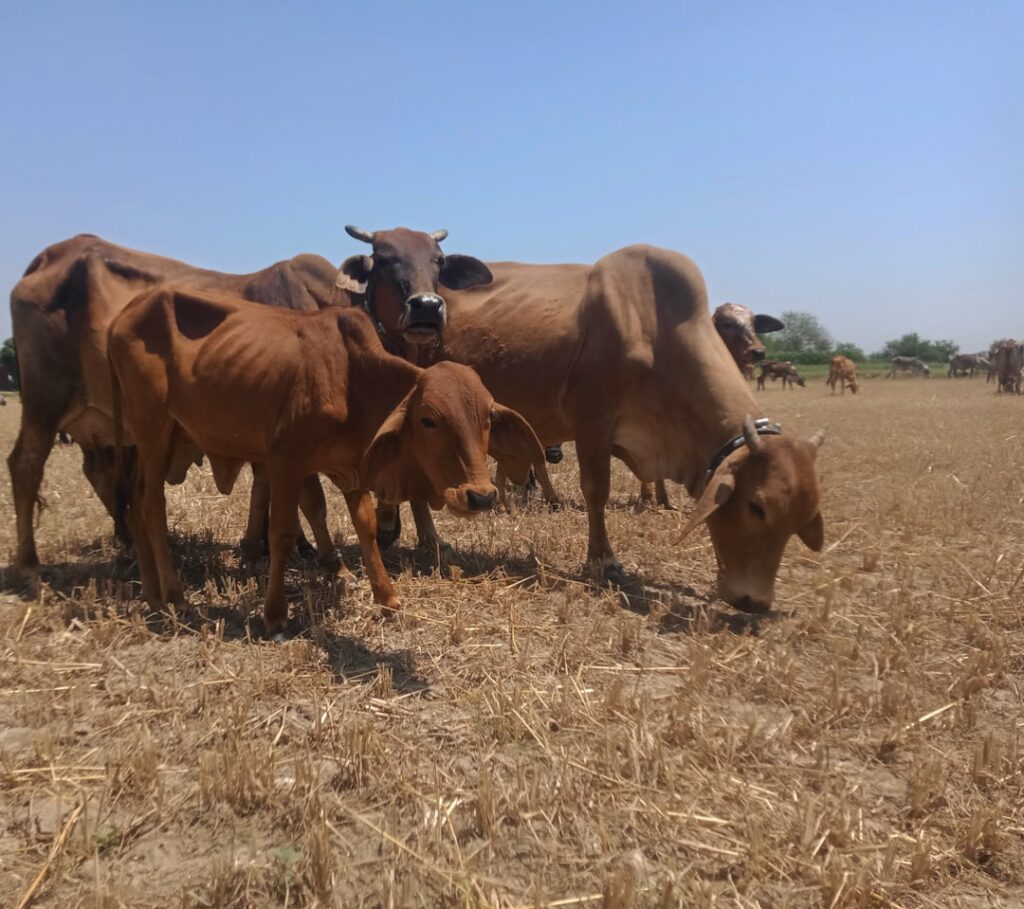
2,400 acres. That’s the size of the solar ranch in Fayette County, Tennessee, where rows of photovoltaic panels now rise and fall like mechanical tides over pastures dotted with Black Angus cattle. This isn’t just another solar farm. It’s the first in the U.S. to use adjustable panel systems that shift height and angle in real time—controlled by ingenious sensors that track weather, sunlight, and animal movement. The result? Cattle get shade when it’s hot, grass gets light when it needs to grow, and the panels generate maximum power without sacrificing pasture. If the model scales, it could help offset $1 billion in annual U.S. agricultural revenue declines, according to an original report from TechRadar published May 05, 2026.
Key Takeaways
- The Tennessee solar ranch spans 2,400 acres and integrates cattle grazing with solar energy production.
- Adjustable solar panels use sensors to optimize shade, sunlight, and energy output based on real-time conditions.
- The project could help offset $1 billion in U.S. agricultural losses tied to land degradation and climate stress.
- This is the first U.S. solar ranch to deploy dynamic panel adjustment at commercial scale.
\li>Cattle under the panels show lower heat stress and improved weight gain, boosting rancher income.
Not Just Solar Panels—A Living System
Most solar farms fence out life. Grass is mowed, critters are shooed, and the land underneath becomes a sterile zone beneath rigid, fixed panels. But in Tennessee, the opposite is happening. The solar ranch operates on a principle called agrivoltaics—the co-location of agriculture and solar energy production. What makes this one different is scale and intelligence.
The panels aren’t static. They tilt and rise—some as high as 12 feet—using motorized trackers. On a scorching afternoon, they lower to create broad shade canopies over the pasture. When clouds roll in or at night, they retract to let rain and diffuse light reach the soil. This isn’t scheduled. It’s responsive. A network of ground-level sensors measures temperature, humidity, solar irradiance, and even cattle density in each zone. That data feeds into a control system that adjusts the array in near real time.
It’s not just about energy efficiency. It’s about animal welfare, forage regrowth, and soil health. And by aligning those with power generation, the ranch delivers dual revenue: electricity to the grid and beef to market.
Why Cattle Care About Solar Panel Angles
Here’s the unexpected truth: shade matters more than you think. Cattle are heat-sensitive. When temperatures climb above 80°F, their respiration rates increase, feed intake drops, and weight gain slows. In the South, summer heat routinely cuts into ranch profits.
But under the adjustable panels, shaded zones stay up to 15°F cooler. Ranchers report that cattle spend 30% more time grazing under the arrays compared to open fields. That translates directly into faster weight gain and better feed conversion ratios. One local producer, interviewed in the TechRadar report, said his herd’s average daily gain increased by nearly half a pound—a significant lift in an industry where margins are razor-thin.
- Shaded cattle experience 15°F lower ambient temperatures
- Grazing time up 30% under solar arrays
- Forage productivity improved by 20% due to moderated microclimate
- Panel efficiency up 5% from reduced heat stress on photovoltaics
- Land use now generates two income streams per acre
The $1 Billion Hole in U.S. Agriculture
U.S. agriculture is losing ground—literally. Since 2020, over 10 million acres of farmland have been lost to development, drought, or soil exhaustion. In 2026, the USDA projects a $1 billion annual shortfall in agricultural productivity tied to climate degradation and land-use pressures. Small and mid-sized ranchers are especially vulnerable. Many can’t compete with industrial feedlots or afford irrigation upgrades.
This solar ranch offers a lifeline. By turning idle or marginal pasture into dual-use land, it gives ranchers a way to diversify income without selling out to developers. Leasing land to solar operators isn’t new. But past arrangements often meant fencing off huge tracts, removing livestock, and losing grazing rights. That trade-off made many ranchers reluctant.
Now, they’re partners in energy production. The solar operator pays a lease—typically $500 to $800 per acre annually—but the rancher keeps using the land. In some cases, they’re hired back to manage grazing. That’s not just compensation. It’s continuity.
And because the panels reduce evaporation and protect soil from erosion, pasture quality improves over time. That’s a rare win: infrastructure that heals the land it occupies.
Why This Isn’t Just a Farming Story
Because the sensors and control systems here aren’t just monitoring sun and shade. They’re generating data—tons of it. Soil moisture, ambient heat, animal movement patterns, panel output, grass cover density. All fed into a central platform that optimizes operations across energy and agriculture.
That’s where this becomes a tech story. The backend isn’t off-the-shelf SCADA. It’s a custom IoT stack built on low-power wireless sensors, edge computing nodes, and machine learning models that predict optimal panel positions 24 hours in advance. The system learns. It compares weather forecasts with historical forage growth and cattle behavior to decide: Should we shade the south pasture at noon? Or lift the panels to dry the soil after last night’s rain?
Developers involved in the project describe it as a “distributed decision engine.” No central AI makes all the calls. Instead, clusters of sensors negotiate locally, then report up. It’s not sentient. But it’s adaptive. And it’s proving that resilience can be algorithmic.
Who’s Behind the Sensors?
The technology was developed by a Nashville-based startup called SunDuo, working in partnership with the University of Tennessee’s Institute of Agriculture. SunDuo specializes in agrivoltaic control systems. Their platform, called HelioLink, integrates with existing solar trackers and adds pasture intelligence.
They didn’t build the panels. They built the brain. And they’ve open-sourced parts of the sensor firmware to encourage adoption. But the predictive model—the part that balances energy yield with grass growth—is proprietary. That’s their edge. And if the Tennessee ranch proves profitable, they’ll have demand.
The Risk in the Rows
Not every rancher is convinced. Some worry the sensors will fail. Others fear dependency on a tech vendor they can’t audit. And there’s a cultural hesitation: the idea that solar companies will eventually push them out, once the land proves valuable.
There’s precedent. In California and Arizona, early agrivoltaic pilots collapsed when energy operators decided grass wasn’t worth the maintenance. Panels stayed fixed. Understory vegetation died. Grazing stopped. The “dual-use” promise evaporated.
Tennessee’s model tries to prevent that by building shared incentives. Lease agreements include clauses requiring continued grazing. SunDuo’s system is designed to be transparent—ranchers get access to all sensor data, not just summaries. And the university provides third-party monitoring.
But long-term stability isn’t guaranteed. What happens when the 25-year power purchase agreement ends? Who owns the data? Who maintains the sensors? These are questions without clear answers. And they matter because this isn’t just an experiment. It’s someone’s livelihood.
What This Means For You
If you’re building IoT systems, this project shows that hardware is no longer the bottleneck. The sensors are cheap, the networks are stable, and edge computing is mature. The real challenge is integration—tying environmental feedback loops into economic outcomes. Can your system optimize not just efficiency, but fairness? Can it serve two masters: energy yield and animal welfare?
For founders, the opportunity is in platform design. SunDuo isn’t selling panels. They’re selling control logic. That’s a higher-margin, more defensible business. And if agrivoltaics spreads, the demand for intelligent land-use orchestration will grow. The bottleneck shifts from deployment to trust: Who do farmers believe? Who gives them control?
Here’s what’s remarkable: a solar ranch in Tennessee is quietly testing a new kind of infrastructure—one that doesn’t extract from the land, but negotiates with it. That’s not a slogan. It’s what happens when sensors talk to grass, and algorithms learn to share.
Will future land-use systems be managed by models trained on both kilowatt-hours and cow behavior?
Sources: TechRadar, University of Tennessee Institute of Agriculture