




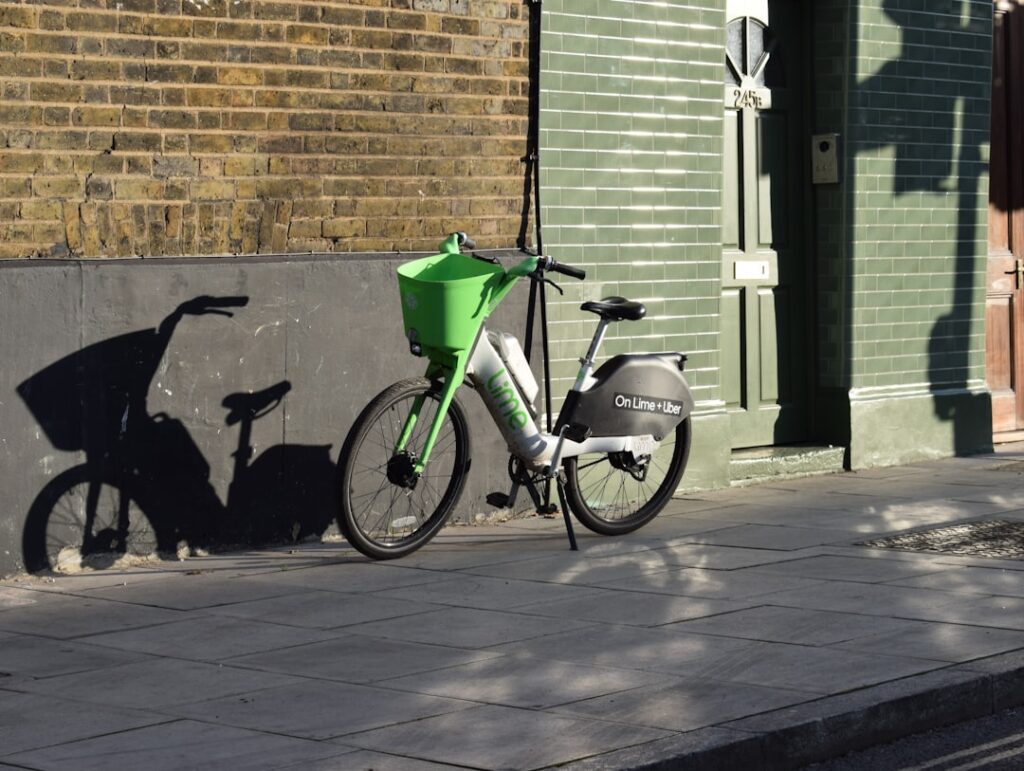
Five years after its last major funding round, and after a near-collapse in 2020, Lime — the Uber-backed micromobility company — officially filed for an initial public offering on May 09, 2026. The company plans to list on Nasdaq under the ticker symbol “LIME,” according to its S-1 filing, though it hasn’t disclosed pricing, share count, or expected valuation. That absence speaks volumes: this isn’t a victory lap. It’s a recalibration, and the market will be watching closely.
Key Takeaways
- Lime filed for IPO on May 09, 2026, with plans to trade on Nasdaq as “LIME.”
- No financial terms were released — no share price, volume, or expected valuation.
- The company has not turned a profit, though revenue grew 23% year-over-year in 2025.
- Uber remains a major investor, but operational ties have weakened over time.
- This marks the first attempted micromobility IPO from a major U.S. player since Bird’s failed 2022 bid.
Historical Context
The micromobility space has been on a rollercoaster since 2019, when Lime, Bird, and other players began expanding rapidly. Back then, the industry was all about growth at any cost. The concept of profitability was rarely discussed. It wasn’t until 2020 that the reality of burn rates and unsustainable growth hurt many players. Lime, however, managed to pivot and focus on profitability.
Lime’s pivot began with a massive downsizing in 2020. The company laid off 260 people and exited 120 cities. This move was a necessary step towards survival. The company had expanded too quickly, and it was hemorrhaging cash. In a span of three years, Lime went from operating in 150 cities to just 60. This drastic reduction in operations helped the company regain stability.
micromobility IPO Silence Isn’t Golden
You don’t file for an IPO without a plan. But you also don’t file without numbers when you’ve got good ones. Lime didn’t just withhold projections — it released nothing. No revenue, no EBITDA, no user count. The only data point in the public record is from third-party estimates: $410 million in revenue for 2025, up from $333 million the year before. Growth, yes. But not breakout speed.
That silence isn’t accidental. It’s strategic. The S-1 is a placeholder, not a prospectus. The SEC lets companies file confidentially under the JOBS Act, which Lime likely used before going public with the filing. But going public with zero terms? That’s a signal: they’re testing the waters, not diving in.
And the waters are rough. The last time a micromobility company tried this — Bird, in 2022 — it crashed. Valuation collapsed. Investors bailed. The stock, briefly traded under “BRDS,” delisted within a year. Lime isn’t the first to try, but it’s the first to survive long enough to try again.
From Near-Death to Nasdaq
Lime’s path to this moment wasn’t linear — it was survival-driven. In 2020, the company laid off 260 people, exited 120 cities, and nearly went under as pandemic lockdowns killed short-trip demand. It wasn’t the model that failed, though — it was the timing. And the burn rate. Lime had expanded to 150 cities by 2019, chasing growth while hemorrhaging cash.
That year, it raised $335 million at a $2.4 billion valuation. Investors included Uber, GV, and Ito dumb down. But by 2021, the reckoning hit. The company restructured, slashed costs, and refocused on profitability. It worked — sort of. Lime didn’t die. But it didn’t dominate, either.
Uber’s Fading Shadow
Uber’s role here is ironic. It invested early, pushed Lime as part of its broader urban mobility vision, and even integrated scooter rentals into its app. But that integration fizzled by 2023. Uber pulled scooters from its U.S. interface, citing low engagement. Lime kept operating, but without the distribution muscle of Uber’s 100 million active users.
So while Uber remains a shareholder, it’s no longer a growth engine for Lime. That’s a problem. Because if the parent platform doesn’t believe in the model, why should public markets?
The Unit Economics Grind
Micromobility lives or dies on five things: scooter lifespan, rider frequency, parking fines, maintenance cost, and city permits. Lime’s 2025 investor updates — leaked to original report — showed some progress: average scooter life now hits 28 months, up from 14 in 2020. Repair costs fell 37%. Cities like Paris, Madrid, and Austin renewed multi-year contracts.
But challenges remain. Vandalism still costs $18 million annually. Permit fees vary wildly — $500 per scooter in some cities, $2,000 in others. And ridership hasn’t rebounded to 2019 levels, even as urban populations return. The average user only takes 1.8 trips per month. That’s not habit formation — it’s occasional use.
- Average scooter lifespan: 28 months (up from 14 in 2020)
- Repair cost per unit per year: $160 (down 37% since 2021)
- Estimated 2025 revenue: $410 million
- Active markets: 60 cities across 15 countries
- Rider frequency: 1.8 trips per user per month
The IPO That Isn’t About Money
Here’s what most aren’t saying: Lime doesn’t need the cash. It’s not burning through $100 million a quarter like it did in 2019. It’s not raising to fund expansion — it’s not expanding. Its 2025 capex was just $42 million. This IPO isn’t about fueling growth. It’s about exit liquidity for early investors and employees.
That changes the narrative. This isn’t a “disrupt urban transport” play. It’s a “let’s get some returns” play. And that’s not a bad thing — it’s honest. But public markets reward vision, not just survival.
The company won’t disclose who’s cashing out until the next S-1 amendment. But insiders — including co-founders Toby Sun and Brad Bao — have held shares for nearly a decade. So have early employees. There’s pressure to deliver. And the easiest way to do that? Go public, even if the fundamentals are mid-tier.
Competitive Landscape: Fragmentation and Regulation
Lime’s IPO may be a milestone for the micromobility industry, but it also highlights the fragmented nature of the market. There are over a dozen players operating in the U.S. alone, each with their own business model and revenue streams. The competition is fierce, and it’s only getting more intense.
Regulation is another factor that’s driving consolidation in the industry. Cities are cracking down on permits, fines, and other regulations. This is forcing players to adapt and diversify their business models. For instance, Lime has turned to subscription-based pricing and partnerships with major retailers to generate revenue.
As the market continues to mature, we can expect to see more consolidation and regulation. Players that can adapt and innovate will thrive, while those that can’t will struggle to survive.
Adoption Timeline: A Look at the Road Ahead
The adoption timeline for micromobility is complex and influenced by various factors, including urban planning, infrastructure, and consumer behavior. While Lime has been a pioneer in the space, it still faces significant challenges in terms of adoption and revenue growth.
According to a report by TechCrunch, the micromobility market is expected to reach $100 billion by 2028. However, this growth will be driven by players that can adapt to changing regulations, consumer behavior, and urban planning.
Lime’s IPO may be a step towards maturity for the industry, but it also highlights the challenges that lie ahead. The company will need to navigate a complex regulatory landscape, intense competition, and evolving consumer behavior to achieve sustained growth and profitability.
What This Means For You
For developers working on urban mobility platforms, Lime’s IPO signals that the micromobility space has matured — but plateaued. The wild west phase is over. The focus now is on integration, compliance, and efficiency. If you’re building routing algorithms, think city-specific constraints: parking zones, speed caps, geofenced no-ride areas. Lime’s API already requires third-party apps to enforce these. Expect tighter enforcement as regulators demand accountability.
For founders, this is a case study in endurance over hype. You don’t need to raise the most or grow the fastest — you need to outlast. Lime didn’t win by being first. It won by not dying. And for investors? Don’t get fooled by the ticker. This isn’t Tesla-level disruption. It’s a modest infrastructure play with city-by-city friction. The real value isn’t in the scooters — it’s in the data, the permits, and the partnerships.
Will Lime’s IPO reignite interest in shared micro-transport, or cement it as a niche urban utility? The answer won’t come from the filing — it’ll come from the first earnings call where someone finally says how much money they’re actually making.
Sources: TechCrunch, The Information
Key Questions Remaining
Lime’s IPO has raised more questions than answers. What will be the company’s strategy for revenue growth? How will it adapt to changing regulations and consumer behavior? What role will Uber play in Lime’s future operations?
As the market continues to evolve, : Lime’s IPO is not a guarantee of success. The company still faces significant challenges in terms of adoption, revenue growth, and competition. Only if Lime can overcome these challenges and become a leader in the micromobility industry.