




May 9, 2026, marks a significant milestone for NASA and Blue Origin as the space agency prepares to begin training with the crew moon lander prototype. According to Engadget, this development sets the stage for a 2028 mission to put astronauts on the moon. The crew moon lander, a crucial component of Blue Origin’s lunar exploration plans, will allow astronauts to safely land on the lunar surface and return to Earth.
Key Takeaways
- NASA and Blue Origin are collaborating on a crew moon lander prototype.
- The lander will enable astronauts to safely land on the lunar surface and return to Earth.
- The mission is targeted for 2028.
- The crew moon lander is a crucial component of Blue Origin’s lunar exploration plans.
- This development marks a significant step towards lunar exploration.
Historical Context
The idea of returning humans to the moon isn’t new — it’s a thread that’s run through NASA’s mission since the end of the Apollo program in 1972. After the final Apollo 17 mission, crewed lunar landings stopped, and focus shifted to low Earth orbit with the Space Shuttle and later the International Space Station. But the seeds of a return were planted decades later. In 2017, the Trump administration signed Space Policy Directive 1, directing NASA to return to the moon with astronauts. That shift laid the foundation for the Artemis program, which aims to land the first woman and the next man on the lunar surface.
Artemis I, an uncrewed test flight of the Space Launch System (SLS) and Orion capsule, launched in 2022 and successfully orbited the moon. Artemis II, scheduled for 2025, will carry astronauts around the moon without landing. That mission will set the stage for Artemis III — the one that requires a lunar lander. Originally, SpaceX’s Starship was tapped to serve as the Human Landing System for Artemis III. But Blue Origin wasn’t out of the race. After challenging the award and securing a separate contract, Blue Origin entered development on its own lander, intended for later Artemis missions.
The 2028 mission now in focus is widely believed to align with Artemis IV or V, where Blue Origin’s lander will play a central role. Unlike the single-use Apollo landers, this new generation is designed for reusability, longer surface stays, and integration with lunar orbiting platforms like the Gateway station. The prototype now being tested represents a pivot from decades of orbital dominance back to deep-space exploration. The tools, materials, and engineering philosophies have changed. Computers are smaller, propulsion is more efficient, and private industry is no longer a contractor — it’s a partner.
NASA’s 2028 Mission
The 2028 mission marks a major milestone for NASA’s lunar exploration plans. With the crew moon lander, NASA will be able to send astronauts to the moon and return them safely to Earth. This achievement is proof of the collaboration between NASA and Blue Origin.
The mission won’t just be about planting a flag. It’s about sustainability. NASA wants long-term access to the moon — studying its geology, testing life-support systems, and preparing for eventual Mars missions. The South Pole, with its suspected water ice deposits in permanently shadowed craters, is the target. Water means oxygen, fuel, and drinking supplies. That makes the region a strategic asset.
To get there, the 2028 mission will rely on a complex choreography. The SLS rocket will launch the Orion capsule with astronauts. They’ll dock with the Gateway station in lunar orbit, a small outpost being assembled by international partners. From there, the Blue Origin lander will ferry two or more crew members to the surface. After a week or more of surface operations, the lander will ascend and reconnect with Orion for the return to Earth.
The timeline is tight. Delays in SLS, Orion, Gateway, and lander development have pushed dates back before. But with training starting in 2026, NASA and Blue Origin are signaling confidence. The 2028 target isn’t arbitrary — it aligns with orbital mechanics, budget cycles, and political timelines. Missing it would ripple through the entire Artemis roadmap.
Training with the Crew Moon Lander Prototype
The crew moon lander prototype will undergo rigorous testing and training before the 2028 mission. This includes simulating lunar landings, emergency scenarios, and other critical situations. The training will ensure that astronauts are well-prepared for the mission.
The crew moon lander prototype has been designed to meet NASA’s strict safety standards. It features advanced life support systems, propulsion systems, and communication equipment. The lander will also be equipped with advanced navigation and control systems to ensure precise landing and takeoff.
Astronauts will train in full-scale mockups that replicate the cabin layout, controls, and user interfaces. They’ll run through ascent and descent sequences, practice docking maneuvers, and respond to system failures — like a sudden loss of thrust or cabin pressure. Simulations will include low-gravity conditions, recreated using suspension rigs and parabolic flights. Virtual reality setups will project the lunar terrain, giving crews a real-time view of their landing site.
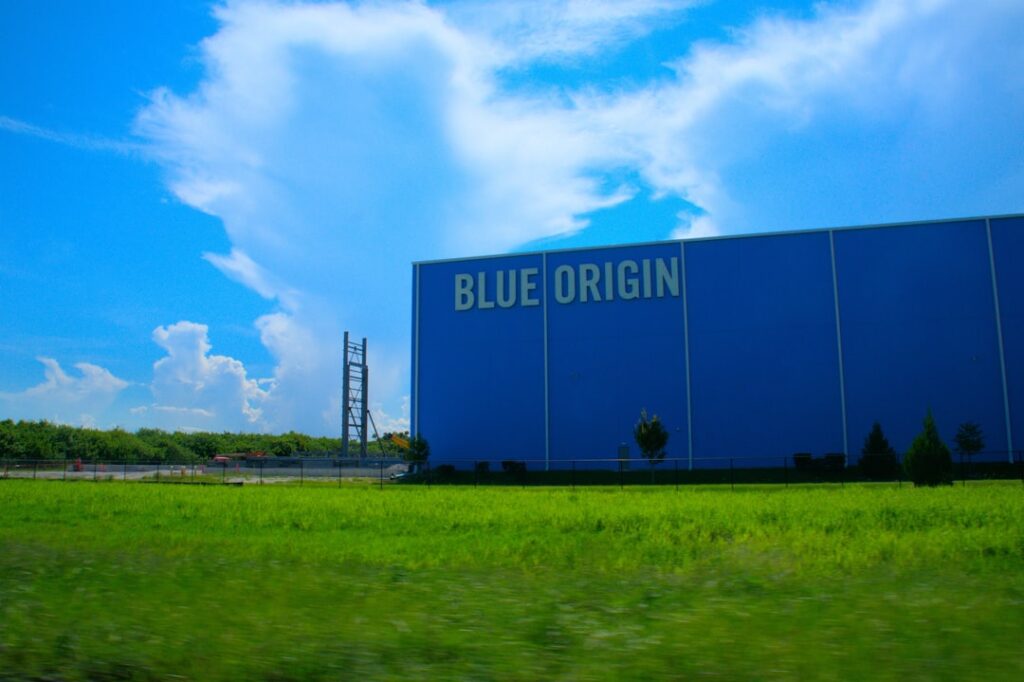
Ground teams at NASA’s Johnson Space Center and Blue Origin’s facilities in Kent, Washington, and Cape Canaveral, Florida, will run parallel drills. Communication delays between Earth and the moon — about 1.3 seconds each way — mean crews must operate autonomously during critical phases. The lander’s software will need to handle last-minute adjustments, like avoiding boulders or navigating dust plumes during touchdown.
Testing isn’t just about the people. The lander must survive extreme temperature swings — from 250°F in sunlight to -250°F in shadow. Its systems must function after months in storage, either in lunar orbit or on the surface. Engineers will cycle the lander through vacuum chambers, vibration tables, and thermal ovens to mimic the stresses of launch, transit, and landing.
The propulsion system, likely using liquid hydrogen and liquid oxygen, will be tested for reliability and throttling precision. Unlike Earth landings, there’s no atmosphere to slow descent — every deceleration maneuver depends on engines. A hard landing could end the mission. A failed ascent could strand astronauts.
Blue Origin’s Lunar Exploration Plans
Blue Origin’s lunar exploration plans are a significant step towards establishing a human presence on the moon. The company has been working on various technologies, including the crew moon lander, to make this vision a reality.
According to Jeff Bezos, Blue Origin’s founder, the company’s goal is to make humanity a multi-planetary species. The crew moon lander is a crucial component of this goal, enabling astronauts to safely land on the lunar surface and return to Earth.
Blue Origin isn’t building the lander in isolation. It’s part of a broader ecosystem the company is assembling. That includes the Blue Moon lander family, with variants for cargo and crew. The company has also developed BE-7 engines, which power the lander’s descent and ascent stages. Each engine produces about 10,000 pounds of thrust and burns cryogenic propellants — a choice that supports in-situ resource utilization, since water ice on the moon could theoretically be split into hydrogen and oxygen.
The company has teamed up with Lockheed Martin, Draper, Boeing, and others to design and integrate the lander’s systems. These partnerships reflect a shift in how space development works — no single company does it all. Blue Origin leads, but the mission relies on decades of aerospace experience across the consortium.
Long term, Blue Origin sees the moon as a marketplace. Companies could mine ice, build solar farms, or construct habitats. The crew lander is the taxi service for that economy. Bezos has spoken about millions living and working in space, with the moon as a stepping stone. It’s a vision rooted in infrastructure: reusable rockets, orbital fuel depots, and standardized docking interfaces.
The 2028 mission is just the start. Blue Origin plans to fly uncrewed cargo missions earlier, delivering supplies ahead of human arrival. These could include power units, rovers, or habitat modules. Over time, the lander could support rotating crews, enabling a sustained lunar presence.
What This Means For You
The development of the crew moon lander prototype and NASA’s 2028 mission marks a significant step towards lunar exploration. This achievement has several implications for the space industry, including:
- The crew moon lander prototype is a significant step towards establishing a human presence on the moon.
- The mission will enable NASA to send astronauts to the moon and return them safely to Earth.
- The development of the crew moon lander prototype will drive innovation in the space industry.
- The mission will pave the way for future lunar missions and establish a human presence on the moon.
For developers, the mission opens new frontiers in software and simulation. Teams building guidance algorithms, terrain-mapping tools, or VR training platforms now have a real-world use case. Companies that create AI for autonomous navigation or fault detection will find demand rising. NASA and its partners will need strong, fail-safe code — and they’ll pay for it.
For founders, the lunar supply chain is emerging. Startups focused on in-space manufacturing, radiation shielding, or compact life-support systems could land contracts. The moon’s low gravity and lack of atmosphere make it ideal for certain types of production — think fiber optics or metal alloys. If the 2028 mission succeeds, investor confidence in space ventures will grow.
For builders — engineers, technicians, hardware designers — this is a chance to work on systems that operate beyond Earth. Thermal management, dust mitigation, and power efficiency aren’t academic problems anymore. They’re mission-critical. Blue Origin and its partners will need talent who can design for extreme environments, iterate quickly, and meet NASA’s certification requirements.
What Happens Next
The next two years will be decisive. The prototype training must uncover flaws early. Unplanned redesigns could delay the mission. So could supply chain issues, funding gaps, or technical failures in related programs like Gateway or SLS.
One key question: will the lander support longer surface stays? Apollo missions lasted a few days. NASA now wants weeks. That means more oxygen, power, and waste management. The current design may need upgrades.
Another unknown: how will international partners engage? ESA, JAXA, and CSA are contributing to Artemis, but their roles in lander operations aren’t clear. Will foreign astronauts ride on Blue Origin’s vehicle? That could expand cooperation — or complicate decision-making.
Finally, what happens after 2028? Success could trigger a wave of lunar activity — private missions, tourist flights, even mining ventures. Failure could stall momentum, handing more control to competitors like SpaceX.
One thing’s certain: the moon is no longer a destination of the past. It’s the next frontier, and the clock is ticking.
Sources: Engadget, NASA’s official website
A vivid scene: a dimly lit room with a crew moon lander prototype in the center, surrounded by NASA engineers and technicians in white coats, working tirelessly to meet the mission’s deadlines. The room is filled with the hum of machinery and the sound of engines roaring in the distance. The air is thick with anticipation and excitement, as the world waits with bated breath for the 2028 mission to launch.