



City Delivery Drones, a Flying Novelty
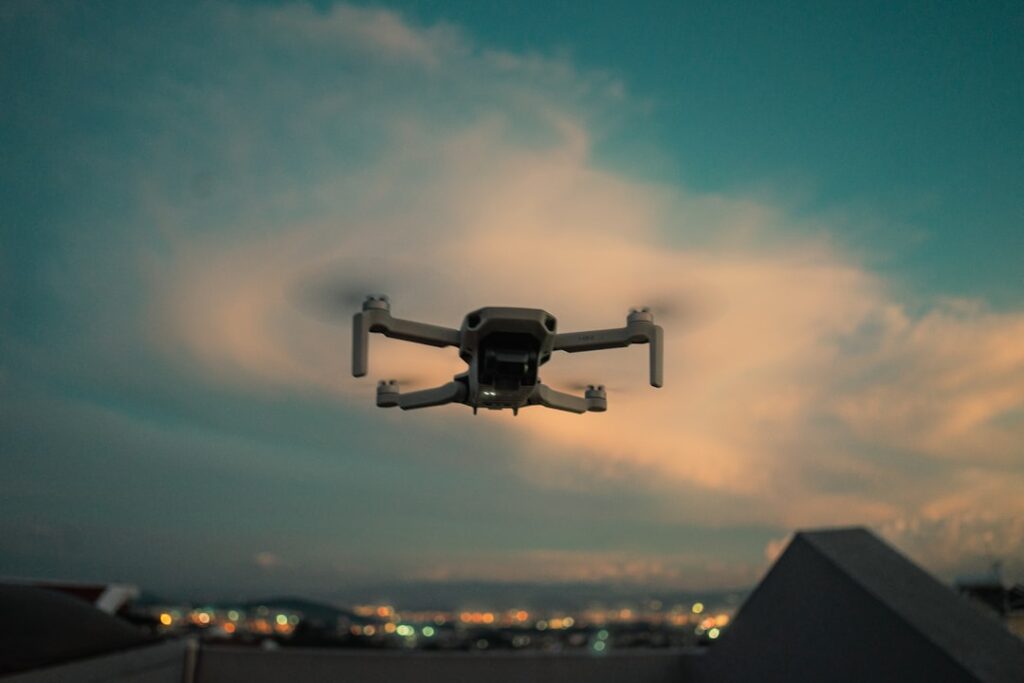
As of May 10, 2026, it’s hard to ignore the sight of drones weaving through Manhattan’s skyscrapers, their rotors whirring as they drop off packages. But despite their increasing presence, it’s unclear whether city delivery drones will become a permanent fixture or temporary novelty.
Key Takeaways
- City delivery drones have been spotted in New York City’s skies, but their long-term viability is uncertain.
- The Federal Aviation Administration (FAA) has granted several companies permission to operate drones in the city, but the rules governing their use are still evolving.
- Proponents of city delivery drones argue that they can reduce traffic congestion and emissions, while critics point out the risks of accidents and data breaches.
- The FAA has established a process for approving drone operations, but it’s unclear how this will impact the industry in the long term.
- One company, Zipline, has already begun using drones to deliver medical supplies in Rwanda, raising questions about the potential for city delivery drones to revolutionize logistics.
Drone Delivery in New York City
New Yorkers are no strangers to innovation, but the arrival of city delivery drones has sparked a mix of excitement and skepticism. With several companies vying for a share of the market, it’s unclear which players will ultimately succeed.
Amazon launched its first test flights in Manhattan in early 2025, focusing on same-day delivery of small electronics and pharmacy items. UPS followed a few months later with a pilot program delivering prescriptions from CVS locations in Midtown. Zipline, already experienced in African medical logistics, entered the U.S. market with a focus on urgent hospital deliveries—moving blood samples and vaccines between medical centers in Harlem and the Bronx.
Each company operates under strict geographic constraints. Amazon’s drones are limited to altitudes below 200 feet and must avoid all flight paths near LaGuardia and JFK airspace. UPS restricts deliveries to daytime hours and only in zones with pre-mapped landing zones. Zipline uses fixed launch and recovery stations, avoiding residential rooftops altogether.
Residents report seeing as many as 15 drones per day during peak hours, mostly between 11 a.m. and 3 p.m. The city’s Department of Transportation has installed drone-tracking sensors on 30 major bridges and tunnels, feeding real-time data to the FAA. Still, public perception remains divided. A 2025 survey by the NYC Civic Tech Initiative found that 42% of residents support drone deliveries, while 38% oppose them—citing noise, safety, and privacy as primary concerns.
The FAA’s Rules for City Delivery Drones
The FAA has established a framework for approving drone operations, but the rules are still evolving. Companies must submit detailed proposals outlining their plans for drone deployment, including routes, schedules, and safety protocols.
- The FAA has granted permission to several companies, including Amazon, UPS, and Zipline, to operate drones in New York City.
- These companies must adhere to strict guidelines, including limits on altitude and speed, as well as requirements for pilot training and equipment.
- The FAA has also established a system for reporting drone sightings and incidents, which will help identify potential risks and areas for improvement.
Since 2023, the FAA has operated under a modified version of its Part 135 Air Carrier Certification, extended to include unmanned aerial systems (UAS) for commercial delivery. To qualify, companies must demonstrate fail-safe navigation, real-time remote identification (Remote ID), and geofencing capabilities that prevent drones from entering restricted zones.
Each approved drone model must pass a 100-flight simulation test under storm conditions, high winds, and signal loss scenarios. Pilots—though they monitor flights from ground stations—are required to have at least 200 hours of manned aircraft experience or equivalent UAS command time. The FAA also mandates that every drone carry an onboard black box that logs flight data for at least 30 days.
Incidents are rare but not unheard of. In March 2026, an Amazon drone lost propulsion mid-flight near the Brooklyn Heights Promenade, crashing into a tree without injuring anyone. The FAA grounded Amazon’s fleet for 72 hours while it reviewed telemetry data. The issue was traced to a battery fault, prompting a recall of 300 units across the Northeast corridor.
Historical Context: From Military Tools to Urban Couriers
Drone technology didn’t begin in logistics. It emerged from military applications, with the U.S. Department of Defense using unmanned aerial vehicles (UAVs) for surveillance and reconnaissance as early as the 1990s. The Predator drone, first deployed in the Balkans, laid the groundwork for autonomous navigation and remote operation.
By the 2010s, consumer and commercial drones entered the market. DJI, a Chinese manufacturer, dominated the photography and hobbyist sectors with compact, camera-equipped models. The FAA responded with the 2016 Small UAS Rule, requiring registration for drones over 0.55 pounds and banning flights near airports.
The idea of using drones for delivery gained traction in 2013 when Amazon CEO Jeff Bezos announced “Prime Air” on national television. The concept—30-minute delivery via drone—was met with widespread skepticism. Engineers questioned battery life, collision avoidance, and scalability. Regulators warned of air traffic chaos.
But real-world testing began in rural areas, where airspace was less congested. Google’s Project Wing ran trials in Virginia in 2018, delivering snacks and household goods. UPS launched a medical delivery program at a North Carolina hospital campus in 2020. These early pilots proved that drones could operate safely under controlled conditions.
Zipline’s breakthrough came in 2016, when it began delivering blood and vaccines in Rwanda. Flying fixed-wing drones over rugged terrain, the company completed over 200,000 deliveries by 2024. Their drones, launched from catapults and recovered mid-air with a hook system, didn’t require runways or landing pads—ideal for remote areas but impractical in dense cities.
Still, Zipline’s success demonstrated that drones could handle time-sensitive logistics. By 2023, the company had expanded to Ghana, Japan, and the U.S. adapting its models for urban environments with vertical takeoff and landing (VTOL) systems. The leap to New York City wasn’t sudden. It was the result of a decade of incremental progress, regulatory negotiation, and technological refinement.
The Pros and Cons of City Delivery Drones
Proponents of city delivery drones argue that they can reduce traffic congestion and emissions, while also providing faster and more efficient delivery services. However, critics point out the risks of accidents and data breaches.
- Proponents argue that city delivery drones can reduce traffic congestion by avoiding busy streets and intersections.
- They also claim that drones can reduce emissions by eliminating the need for fossil-fuel-powered vehicles.
- Critics, on the other hand, point out the risks of accidents and data breaches, as well as concerns about noise pollution and property damage.
New York City sees over 1.5 million delivery vehicles on its roads each day. Most are gasoline-powered vans and scooters, contributing to gridlock and air pollution. A 2024 study by the Tri-State Environmental Research Group estimated that replacing 10% of last-mile deliveries with drones could cut carbon emissions by 18,000 metric tons annually—equivalent to taking 4,000 cars off the road.
Delivery drones are electric, rechargeable, and capable of point-to-point routes that bypass traffic entirely. Amazon claims its MK30 drone uses 80% less energy per mile than a delivery van. UPS reports that its drone fleet in Manhattan averages 12 minutes from dispatch to drop-off, compared to 45 minutes for ground vehicles during rush hour.
But the risks are real. In 2025, a UPS drone collided with a construction crane on a high-rise in Chelsea, damaging the drone and scattering debris onto a sidewalk. No one was injured, but the incident led to new FAA requirements for obstacle detection systems. All drones now must use LiDAR and computer vision to detect and avoid static and moving objects in real time.
Data security is another concern. Drones transmit GPS coordinates, customer addresses, and flight logs across networks. In January 2026, a hacker accessed a test server used by a third-party drone software provider, exposing delivery schedules for 500 Amazon flights. While no personal data was compromised, the breach raised alarms about the vulnerability of drone infrastructure.
Residents in lower Manhattan have also complained about noise. Drones emit a high-pitched whine, particularly during ascent and descent. A city-commissioned study found that average noise levels near drone drop zones reached 65 decibels—comparable to a vacuum cleaner. Some apartment buildings have banned drone landings on rooftops, citing disturbance to residents.
What This Means For You
As city delivery drones become increasingly prevalent, it’s worth considering the potential implications for your business or personal life. Here are a few things to keep in mind:
If you’re a developer, you may want to explore opportunities for integrating drone delivery into your existing logistics networks. Companies are already building APIs that allow e-commerce platforms to trigger drone dispatches automatically. Amazon’s DroneLink API, for example, enables third-party sellers on its marketplace to opt into drone delivery with a single toggle. Future versions may support real-time rerouting based on weather or congestion data.
If you’re a founder building a last-mile logistics startup, drone partnerships could offer a competitive edge. A Brooklyn-based meal kit company, FreshLoop, reduced delivery times by 60% after signing a contract with Zipline for urgent weekend drops. That speed allowed them to expand service to Staten Island, where traditional delivery was cost-prohibitive. Founders should consider not just the tech, but the regulatory overhead—working with cities on zoning, noise ordinances, and data compliance.
If you’re a consumer, you may want to weigh the benefits of faster delivery against the potential risks of accidents and data breaches. Early adopters in Manhattan report receiving packages in under 30 minutes, often dropped at secure rooftop lockers or automated ground stations. But privacy advocates warn that drones flying near windows could capture unintended footage. Some models have onboard cameras for navigation, raising concerns about incidental recording. Consumers should check each company’s data policy and opt out of image storage when possible.
Key Questions Remaining
Despite the progress, major questions remain unanswered. Will drone delivery scale beyond high-value, time-sensitive items? Most current flights carry packages under five pounds—electronics, medicines, documents. It’s unlikely drones will replace moving trucks or grocery vans anytime soon. The economics don’t add up for bulky or heavy goods.
What about equity? Drone delivery zones are concentrated in wealthier neighborhoods—Upper West Side, SoHo, Battery Park—where landing infrastructure exists and complaints are fewer. Low-income areas with older buildings and narrow streets are being left out. The city has yet to establish rules ensuring equitable access.
And who’s liable when something goes wrong? If a drone damages property or injures someone, is it the operator, manufacturer, software provider, or city that’s responsible? Current FAA rules place liability on the operator, but lawsuits are already testing those boundaries. A 2025 case in Queens, where a drone scratched a luxury car, ended in a settlement—but set no legal precedent.
Finally, can the skies handle more? New York’s airspace is already packed with helicopters, news drones, and emergency flights. Adding thousands of delivery drones could create congestion above what’s manageable. The FAA is testing an Urban Air Mobility (UAM) traffic management system, but it’s not expected to be operational until 2028.
Looking Ahead
As city delivery drones continue to evolve, it’s clear that they will pose both opportunities and challenges for businesses and individuals alike. Will they become a permanent fixture in our skies, or will they eventually fade away? Only.
Sources: Wired, Bloomberg