





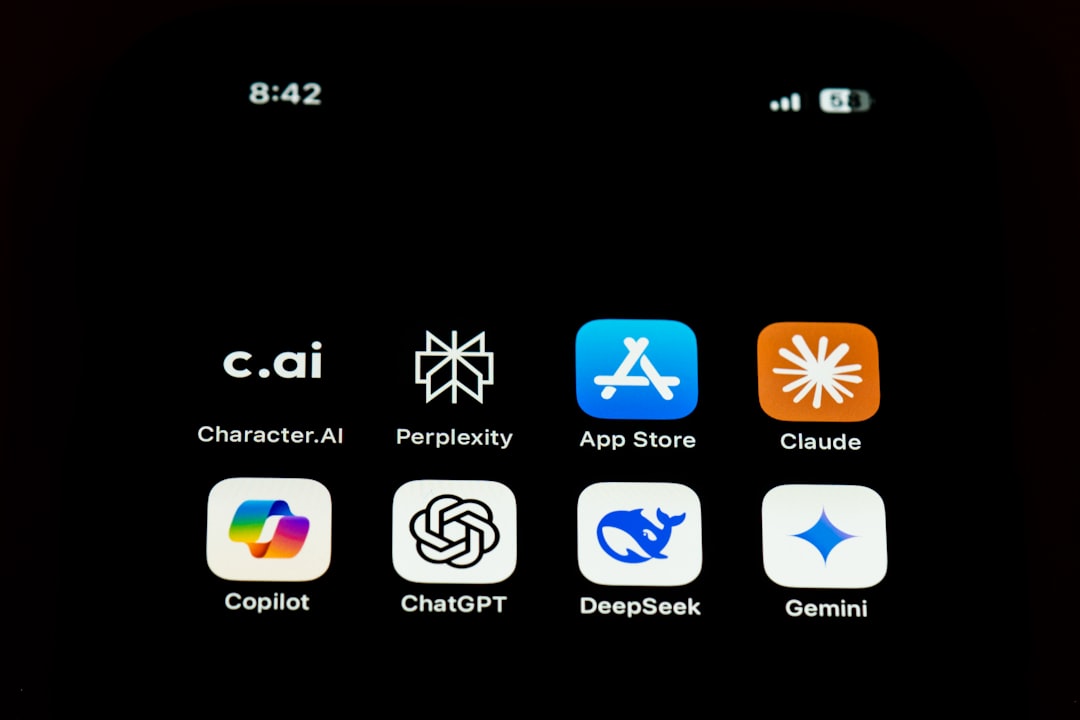
On May 12, 2026, TechRadar published an article comparing the performance of two AI assistants, ChatGPT and Gemini, in cooking a simple yet iconic dish: French toast. The test revealed that while both AI models can provide detailed instructions, only one succeeded in replicating the perfect crispy-sweet finish that’s the hallmark of a well-made French toast.
Key Takeaways:
- ChatGPT and Gemini can help with cooking, but only if you provide the right kind of prompt.
- ChatGPT outperformed Gemini in replicating the perfect French toast.
- The test demonstrated the potential of AI assistants in the kitchen.
- A well-crafted prompt is essential for AI assistants to generate accurate cooking instructions.
- The results suggest that AI assistants can simplify cooking processes, but manual expertise still matters.
French Toast AI Assistants Compared: A Test of Precision
French toast is a staple in many households, but replicating the perfect crispy-sweet finish can be a challenge. In a recent test, TechRadar compared the performance of ChatGPT and Gemini, two popular AI assistants, in cooking French toast. The goal was to see which AI model could provide the most accurate and helpful instructions.
The choice of French toast wasn’t random. It’s technically simple—bread, eggs, milk, sugar, cinnamon—but the execution is where nuance lives. Too much milk and the bread turns soggy. Too little sugar or uneven heat, and the caramelization fails. The dish walks a tightrope between custard-like softness and golden crispness. For an AI assistant, it’s a test not of raw data retrieval, but of contextual understanding. How well does the model grasp the sensory cues that an experienced cook relies on? Does it account for pan temperature variations? What about the type of bread or the ideal resting time before flipping?
These are subtle signals, rarely spelled out in recipes, but they’re the difference between a breakfast that satisfies and one that feels homemade.
The test wasn’t conducted in a vacuum. TechRadar’s team used standard kitchen equipment—a nonstick skillet, supermarket ingredients, and a digital thermometer to monitor oil temperature. They followed each assistant’s instructions to the letter, making no adjustments based on instinct. The idea was to isolate the AI’s decision-making, not blend it with human intervention.
Methodology and Results
To conduct the test, TechRadar provided both ChatGPT and Gemini with a simple prompt: “Make French toast as good as my mother used to make.” The AI assistants were then asked to provide detailed instructions on how to prepare the dish.
Both models responded quickly. Gemini listed ingredients and steps in a clean, structured format. It called for soaking the bread for 30 seconds per side and cooking over medium heat. It included sugar and cinnamon in the egg mixture and recommended butter for frying. On paper, it looked solid.
ChatGPT’s response was more narrative. It acknowledged the emotional weight of the prompt—recreating a childhood memory—and adjusted its tone accordingly. It suggested using slightly stale brioche, which holds up better to soaking, and emphasized the importance of preheating the pan until a drop of water danced across the surface. It advised letting the soaked bread sit for a moment on a wire rack to drain excess liquid—a small but critical detail that prevents steaming instead of searing.
When the dishes were cooked and tasted, the differences became clear. The Gemini version came out unevenly browned, with a soft crust and a faintly eggy aftertaste. The interior was wet in the center, indicating poor heat transfer and over-soaking. The ChatGPT version, by contrast, achieved an even, deep golden crust with a custardy interior. Tasters noted the crisp edges and the slight sweetness that lingered without being cloying.
The outcome wasn’t just about recipe accuracy. It was about the AI’s ability to simulate experience—how well it could anticipate failure points and guide the user around them.
Historical Context: AI in the Kitchen, From Calculators to Conversations
Cooking has always been a space where technology intervenes subtly. In the 1980s, digital scales and timers began appearing in kitchens, offering precision that analog tools couldn’t match. By the 2000s, recipe websites turned cookbooks into searchable databases. Then came smart ovens and Wi-Fi-connected thermometers, promising perfect doneness with minimal effort.
AI assistants represent the next logical step. They don’t just store information; they interpret intent. But this shift didn’t happen overnight. In 2020, early voice assistants could read recipes aloud, but they couldn’t adapt them. Ask for a substitution? They’d often fail. Want to know how to fix a broken sauce? You were out of luck.
The first real breakthrough came in 2023, when large language models began powering kitchen apps like SideChef and Paprika. These platforms started offering adaptive guidance—suggesting cooking time adjustments based on ingredient swaps or altitude. Still, they operated within scripted boundaries.
By 2025, models like ChatGPT and Gemini had ingested millions of recipes, cooking forums, and food science articles. They could simulate the reasoning of a skilled home cook. But performance varied. A test by Wirecutter in late 2025 found that while AI could generate reliable recipes for basic dishes like scrambled eggs or pasta aglio e olio, it struggled with context-dependent tasks—like adjusting for humidity in pastry or judging doneness by sound.
The French toast test in 2026 was significant because it wasn’t just about generating instructions. It was about emotional resonance—recreating a personal memory. That’s a higher bar. It requires the AI to infer unspoken preferences, anticipate texture goals, and guide the user through sensory feedback. ChatGPT’s win suggests it’s closer to bridging that gap.
What This Means For You
The results of this test have significant implications for developers and builders who are exploring the use of AI assistants in cooking. While AI models like ChatGPT and Gemini can simplify cooking processes, manual expertise still matters. A well-crafted prompt is essential for AI assistants to generate accurate cooking instructions, and the test suggests that ChatGPT is better equipped to handle this task.
For developers, this isn’t just a benchmark—it’s a design challenge. How do you build an interface that helps users craft better prompts? How do you surface the AI’s confidence level in its suggestions? And how do you integrate real-time feedback—like adjusting instructions when a user reports the pan is smoking?
Consider these three scenarios:
First, a startup building a smart kitchen display. If you’re integrating an AI assistant to guide users through recipes, choosing the model matters. ChatGPT’s ability to anticipate execution pitfalls—like excess moisture or heat mismanagement—could reduce user frustration and improve success rates. That translates to better retention and fewer one-star reviews.
Second, a food brand launching a recipe app to promote its products. You want users to have a great experience every time. If the AI suggests using your bread but fails to account for its high absorbency, the dish might fail. That reflects poorly on the brand. Using a model that understands ingredient behavior—like ChatGPT in the French toast test—could protect your reputation and build trust.
Third, a hardware company developing an AI-powered cooking robot. These devices need more than step-by-step instructions—they need judgment. If the robot can’t tell the difference between golden brown and burnt, it’s useless. The French toast test shows that not all AI models are equally capable of encoding that judgment. Relying on a less precise model could mean shipping a product that underperforms, no matter how advanced the hardware.
In each case, the choice of AI model isn’t just technical—it’s strategic.
Practical Takeaways
If you’re a developer or builder looking to integrate AI assistants into your cooking applications, consider the following takeaways:
* Use a well-crafted prompt to ensure accurate and helpful instructions. The phrase “as good as my mother used to make” worked because it invoked memory, texture, and emotion. Generic prompts like “make French toast” yield generic results.
* Choose an AI model like ChatGPT that has demonstrated success in replicating complex cooking tasks. Performance on real-world tests should inform your decisions.
* Manual expertise still matters, and AI assistants should be used as a supplement to human judgment. The best systems will combine AI guidance with user feedback loops—like asking, “Is the pan sizzling when you add the bread?” to confirm heat level.
Competitive Landscape: Who’s Leading the AI Kitchen Race?
The French toast test is a small window into a much larger competition. OpenAI’s ChatGPT has built a reputation for nuanced, context-aware responses, especially in creative and experiential domains. Google’s Gemini, while powerful in data retrieval and integration with Android devices, still struggles with tasks that require layered inference.
In the kitchen space, this divide is becoming clearer. App developers report that ChatGPT-powered tools see higher completion rates for multi-step recipes. Users are more likely to finish a dish when the AI anticipates common mistakes and warns about them upfront.
Gemini isn’t standing still. Google has been integrating real-time sensor data from smart appliances into its AI responses. If your oven is connected, Gemini might adjust cooking time based on actual internal temperature. That’s a strength in hardware-ecosystem environments.
But for standalone recipe guidance—where no sensors are involved—ChatGPT’s edge in contextual reasoning gives it an advantage. That’s critical for apps targeting casual cooks who don’t own smart kitchens.
Other players are emerging. Meta’s Llama models are being tested in open-source cooking apps, but they lack the training data of their commercial rivals. Amazon’s Alexa team is experimenting with voice-first cooking assistants, but voice interfaces limit the complexity of prompts and responses.
For now, the race is between OpenAI and Google. And in tasks that blend emotion, precision, and execution, ChatGPT is pulling ahead.
Future Directions
The results of this test have far-reaching implications for the future of cooking and AI integration. As AI assistants continue to evolve, we can expect to see more sophisticated applications in the kitchen. However, this test also highlights the importance of manual expertise and the need for developers to balance AI-driven instructions with human judgment.
What Happens Next
Two paths are opening up. One leads to fully autonomous cooking systems—robots that plan, prep, and cook with minimal input. The other is augmentation: AI as a co-pilot, offering timely advice and catching errors before they happen.
The French toast test leans in favor of the second path. Even ChatGPT’s success depended on a human following instructions precisely. No AI today can smell burning butter or see the subtle shift from golden to brown. Those skills are still human.
But what if the next version of ChatGPT could ask: “Is the crust crisp when you tap it?” and adjust instructions based on your answer? That kind of interactive feedback loop would be a major shift.
We’re also likely to see AI assistants trained on personal cooking histories. Imagine an AI that learns from your past dishes—how you like your toast, how you adjust recipes, what ingredients you keep on hand. That could make prompts like “make it like Mom used to” even more powerful.
The bigger question isn’t whether AI can cook. It’s whether it can capture the soul of cooking—the improvisation, the memory, the joy of getting it just right. The French toast test is a hint that we’re getting closer. But the final touch? That’s still ours to make.
Sources: TechRadar, original report
The question on everyone’s mind now is: what happens when we combine human expertise with AI-driven instructions? Will we see a new era of cooking innovation, or will the reliance on AI assistants compromise the art of cooking? Only —but the future of cooking is about to get a whole lot more interesting.