



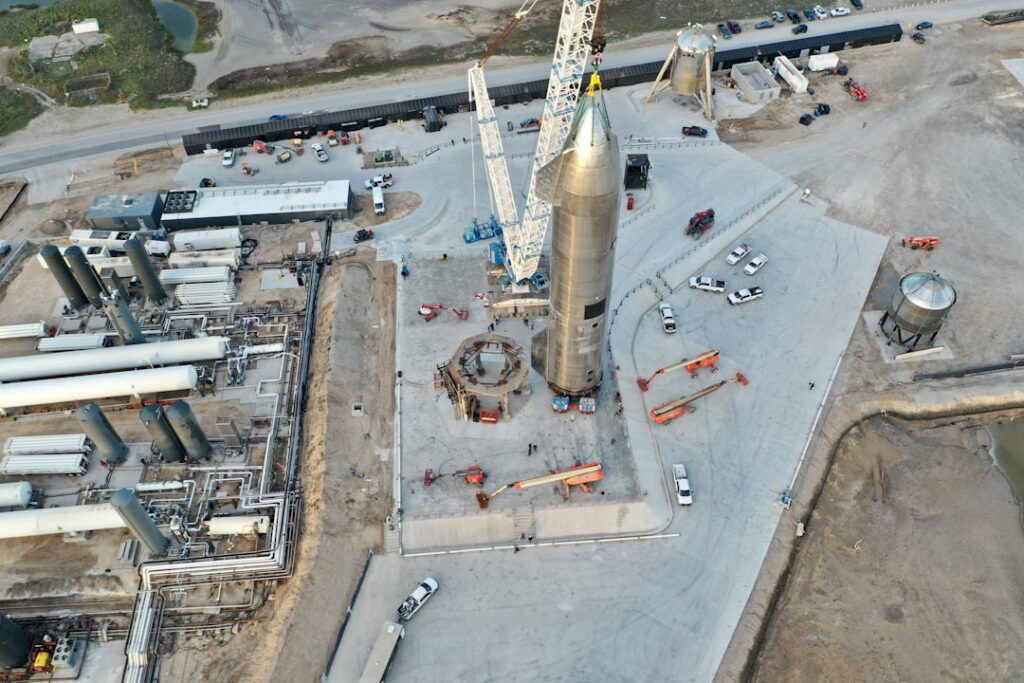
394 feet. That’s the height of SpaceX’s newest Starship — Version 3 — now standing on Pad A at Starbase, Texas, as of May 12, 2026. For the third time in three years, Elon Musk’s company has assembled a record-breaking rocket just miles from the U.S.-Mexico border, but this time, the stakes are different. It’s not just about getting to orbit and back. It’s about what happens after: orbital refueling, the linchpin of any deep space mission, now within sight of reality.
Key Takeaways
- Starship V3 is the tallest rocket ever built at 394 feet, surpassing previous iterations.
- It features upgraded Raptor engines with higher thrust and efficiency on both stages.
- A new reusable lattice structure enables hot staging, reducing stage separation risks.
- Only three modified grid fins are used on the Super Heavy booster, simplifying recovery.
- This version is designed to begin orbital refueling tests — a prerequisite for lunar landings under NASA’s Artemis program.
Orbital Refueling Is No Longer Theoretical
For years, orbital refueling has lived in PowerPoint decks and NASA feasibility studies. But as of May 12, 2026, the hardware needed to pull it off is bolted together and undergoing final checks in Boca Chica. If Starship V3 launches and completes its mission profile, it will mark the first time SpaceX attempts to demonstrate in-space propellant transfer — a capability that’s never been done at this scale.
It’s not just a tech demo. NASA is counting on it. Without successful refueling, Starship can’t serve as the Human Landing System for Artemis III and beyond. The agency’s entire lunar return timeline hinges on this version of the rocket proving it can be filled mid-orbit, then reignited for trans-lunar injection. That’s why the upgrades on V3 aren’t just incremental — they’re mission-enabling.
And it’s not a given. Refueling cryogenic methane and oxygen in microgravity introduces challenges no one’s solved yet: slosh dynamics, thermal management, valve reliability in vacuum. SpaceX hasn’t published test data on their fluid transfer system. But stacking the vehicle means they’re confident enough to move forward. You don’t roll out a $200 million rocket for a dry run.
Historical Context: From Falcon to Starship
The Starship program has been in development for nearly a decade. Its earliest predecessors were part of the Falcon 9 and Falcon Heavy upgrade programs. The first Falcon 9 prototype, for instance, stood 180 feet tall and was launched in 2008. By the time the Falcon Heavy made its maiden voyage in 2018, it had grown to 230 feet. The first Starship prototype, SN1, took shape in 2020, standing 160 feet tall. Now, with V3, the goal is to reach 394 feet, a height that marks a major milestone in the rocket’s development.
The history of the Starship program is, in many ways, the history of SpaceX itself. Founded in 2002, Elon Musk’s company was initially focused on developing reusable launch technology. The Falcon 9 rocket, launched in 2010, was its first major success. By 2018, the Falcon Heavy, the world’s most powerful operational rocket at the time, had taken shape. Now, with the Starship program, SpaceX is pushing the boundaries of what’s possible in space exploration.
Orbital Refueling Is No Longer Theoretical
For years, orbital refueling has lived in PowerPoint decks and NASA feasibility studies. But as of May 12, 2026, the hardware needed to pull it off is bolted together and undergoing final checks in Boca Chica. If Starship V3 launches and completes its mission profile, it will mark the first time SpaceX attempts to demonstrate in-space propellant transfer — a capability that’s never been done at this scale.
It’s not just a tech demo. NASA is counting on it. Without successful refueling, Starship can’t serve as the Human Landing System for Artemis III and beyond. The agency’s entire lunar return timeline hinges on this version of the rocket proving it can be filled mid-orbit, then reignited for trans-lunar injection. That’s why the upgrades on V3 aren’t just incremental — they’re mission-enabling.
And it’s not a given. Refueling cryogenic methane and oxygen in microgravity introduces challenges no one’s solved yet: slosh dynamics, thermal management, valve reliability in vacuum. SpaceX hasn’t published test data on their fluid transfer system. But stacking the vehicle means they’re confident enough to move forward. You don’t roll out a $200 million rocket for a dry run.
Hardware Changes That Actually Matter
Previous Starship tests were about survival: survive ascent, survive reentry, survive splashdown. V3 shifts focus from survivability to utility. The changes reflect that.
The most visible difference is the removal of one grid fin on the Super Heavy booster. Now down to three, the fins are modified for better aerodynamic control during return burns. Fewer fins mean less mass, less complexity, and fewer failure points — a nod to the kind of simplification that defines mature engineering.
New Lattice Enables Hot Staging
Perhaps the most important structural change is the new reusable lattice at the top of the Super Heavy. Unlike earlier versions that used a consumable pusher plate for stage separation, this one allows for hot staging — lighting the upper stage’s engines while still attached to the booster. That gives Starship extra delta-v during ascent, which matters when you’re trying to push 100+ tons toward orbit.
Hot staging isn’t new — Rocket Lab does it on Electron — but at this scale, it’s never been attempted. The lattice must withstand direct engine plume impingement, survive reentry heating, and remain intact for reuse. If it works, it could become standard on all future boosters. If it fails, it could shear the top off the booster mid-flight.
Raptor Upgrades: More Power, Less Drama
The Raptor engines on both stages have been quietly upgraded. While SpaceX hasn’t released full specs, internal documents cited by original report indicate a 12% increase in chamber pressure and a specific impulse improvement of about 4 seconds over Raptor 2. That might not sound like much, but in rocketry, that’s the difference between making orbit and ditching in the Gulf.
Raptor 3 also appears to have fewer welds, better thermal shielding, and improved turbopump stability — all aimed at boosting reusability. The goal is clear: fly the same engines 10, 20, even 50 times without major refurbishment. That’s how you cut costs. That’s how you make Mars feasible.
This Isn’t Just Another Test
Let’s be honest — we’ve seen SpaceX stack Starships before. The first one fell over in a gust of wind. The second exploded at 39,000 feet. The third didn’t make it past stage separation. So why is V3 different?
Because this one isn’t trying to prove it can fly. It’s trying to prove it can work.
- It’s the first version designed from the start for operational missions.
- It’s the first with NASA-mandated capabilities built in.
- It’s the first expected to support multiple launches per month — not just one-off tests.
- It’s the first that might actually visit orbit more than once.
And yes, it’s still risky. The odds of a clean V3 mission profile — launch, stage separation, orbital insertion, propellant transfer demo, reentry, landing — are probably less than 50%. But even partial success would be a leap. Imagine: a tanker variant launching days later to simulate fuel transfer. That’s the next step. That’s how you build an orbital depot.
It’s ironic, really. After years of mocking NASA’s slow pace, SpaceX is now the one holding up a government-led exploration program. Artemis can’t land humans on the Moon until Starship proves it can refuel in space. The boot’s on the other foot.
What This Means For You
If you’re building software for aerospace systems, V3’s architecture suggests a shift toward modular, reusable components with tighter integration between avionics and propulsion. The move to fewer grid fins and standardized staging hardware means SpaceX is prioritizing reliability over flexibility. For developers, that signals a maturing platform — one where APIs for telemetry, flight control, and health monitoring could become more stable, even if they’re not public.
For founders in the space sector, the focus on orbital refueling opens new niches: cryogenic fluid management, autonomous docking systems, on-orbit inspection drones. SpaceX is solving the big problems, but the ancillary tech — the valves, sensors, software stacks — that’s where startups can plug in. The market for in-space servicing just got a lot more real.
What happens if V3 fails? SpaceX will iterate. They always do. But what happens if it works? Then we’re not just talking about Moon landings. We’re talking about the first real infrastructure for leaving Earth behind.
Competitive Landscape: A New Era of Space Exploration
As Starship V3 prepares to launch, the competitive landscape for space exploration is undergoing a significant shift. NASA’s Artemis program, which aims to return humans to the Moon by 2028, is dependent on the success of the Starship program. Meanwhile, private companies like Blue Origin and Virgin Galactic are also working towards establishing a human presence in space.
The future of space exploration is likely to be shaped by the success of these programs. If Starship V3 fails, it could set back the entire industry. But if it succeeds, it could pave the way for a new era of space exploration, one where humans are no longer bound by the limitations of Earth’s atmosphere.
And it’s not just about the technology. The success of the Starship program will also depend on the international cooperation and coordination that will be required to establish a sustainable human presence in space. The Artemis program, for instance, involves collaboration between NASA and its international partners, including the European Space Agency and the Canadian Space Agency.
A New Era of Space Exploration: Regulatory Implications
As the space industry continues to evolve, regulatory frameworks will need to adapt to keep pace. The success of the Starship program will require a new level of coordination and cooperation between governments, space agencies, and private companies.
The regulatory landscape for space exploration is complex and changing. The Outer Space Treaty, signed in 1967, sets out the basic principles for space exploration, including the principle of non-interference and the prohibition on nuclear testing in space. But as the industry continues to grow, new regulations will be needed to address issues like space debris, satellite communication, and the commercialization of space resources.
The success of the Starship program will also require a new level of transparency and accountability. As private companies like SpaceX become more involved in space exploration, there will be a growing need for regulatory oversight and accountability. This will require a new level of cooperation between governments, space agencies, and private companies.
What Happens Next?
The success of the Starship program will depend on a number of factors, including the performance of the rocket itself, the reliability of the Raptor engines, and the ability of SpaceX to execute its mission profile.
If the mission is successful, it will mark a major milestone in the history of space exploration. It will pave the way for a new era of space exploration, one where humans are no longer bound by the limitations of Earth’s atmosphere.
But even if the mission fails, the success of the Starship program will still have a lasting impact on the future of space exploration. It will demonstrate the capabilities of private companies like SpaceX and will pave the way for future missions to the Moon and beyond.
As we watch the progress of the Starship program, we are reminded of the incredible challenges that lie ahead. But we are also inspired by the vision and determination of the people involved in this mission. The future of space exploration is bright, and the success of the Starship program is just the beginning.
Sources: Ars Technica, SpaceNews