




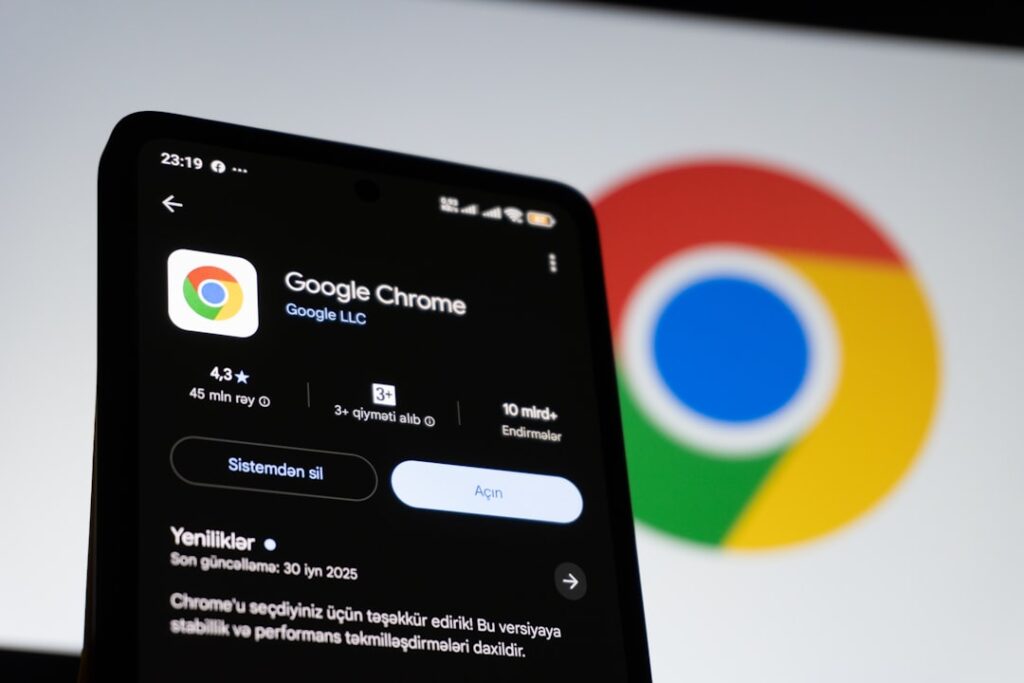
Chrome downloaded a 4GB AI model to a user’s machine on May 09, 2026. That’s not speculation, it’s a file system log. And it’s not new — Google has been doing this since 2024. But because the company hasn’t explained it clearly, thousands of users are now under the false impression that something just changed. It didn’t. The sudden visibility of the Chrome AI model isn’t due to a rollout — it’s due to a collective realization. And that’s on Google.
Key Takeaways
- Chrome has been downloading a 4GB AI model since 2024 for on-device features like Help Me Write and scam detection.
- The model is Gemini Nano, a lightweight version of Google’s large language model designed to run locally.
- No new AI functionality was pushed on May 09, 2026 — the confusion stems from users suddenly noticing the file.
- Google never clearly communicated that this download was happening, leading to widespread misunderstanding.
- This pattern — rolling out AI without transparent explanation — is consistent across Google’s product suite.
Chrome AI Model Has Been Here Since 2024
It’s not that Google’s being deceptive in a malicious sense. It’s that they’re not being clear in a basic one. The 4GB Chrome AI model — Gemini Nano — has been shipped with Chrome since Google first announced local AI capabilities in 2024. At the time, the company said it would enable features like tab grouping suggestions, form auto-fill improvements, and Help Me Write, a tool that drafts text in comment boxes. None of that required cloud processing. It all runs on-device. And it needs a model to run.
So Chrome downloaded it. Quietly. Without fanfare. Without a prompt. Without even a footnote in the update log. For two years, this has been happening across millions of machines. But because the file sits dormant until triggered, and because it doesn’t show up in standard app storage summaries, most users had no idea it was there.
Then, on May 09, 2026, someone looked. And then someone else. And then a thread on Reddit blew up. And suddenly, tech Twitter was ablaze with claims that Google had “just pushed” a massive AI model to every Chrome user. They hadn’t. It’s been there. But you can’t blame people for thinking otherwise — Google never told them it was coming, let alone that it was already present.
Background: Google’s AI Ambitions
Google’s foray into AI began long before the Chrome AI model. In 2017, the company published the Transformer paper, a significant contribution to the field of natural language processing. This breakthrough laid the foundation for future AI advancements, including the development of large language models. Since then, Google has invested heavily in AI research, with an estimated $40 billion spent on AI projects since 2022.
DeepMind, an AI research lab acquired by Google in 2014, has been at the forefront of this effort. The lab’s work on AI has led to the development of advanced language models, including Gemini Nano, the lightweight AI model used in Chrome.
Why Gemini Nano Matters for On-Device AI
Gemini Nano isn’t some toy version slapped together for marketing. It’s a fully functional LLM, optimized to run on consumer hardware without tapping remote servers. That’s important — not just for speed, but for privacy. When you use Help Me Write to draft a message in Gmail, the text never leaves your device. Same for scam detection: Chrome analyzes suspicious pages locally, so your browsing behavior isn’t being sent to Mountain View for analysis.
That’s the whole point of on-device AI. And Gemini Nano makes it possible. It’s smaller than the full Gemini model, but capable enough to handle lightweight generative tasks. Google didn’t invent this approach — Apple’s been doing similar with ML models in iOS for years — but it’s a shift for Chrome, which has historically relied on cloud-based processing for smart features.
How Chrome Uses the Model Day to Day
The Chrome AI model doesn’t wake up and start scanning your tabs. It’s not listening. It’s not profiling. It’s not pushing data anywhere. It activates only when a supported feature is used. For example:
- When you click “Help Me Write” in a text field, the model generates draft text using local context.
- When Chrome detects a potentially fraudulent site, it runs heuristics through the model to assess risk.
- When you have too many tabs open, it can suggest groups based on content clusters analyzed offline.
All of this happens without an internet connection. That’s the value. But it also means the model has to be present. And that means 4GB of storage reserved on your drive — usually in a hidden directory like ~/Library/Application Support/Google/Chrome/AI/ on macOS or %LOCALAPPDATA%\Google\Chrome\AI\ on Windows. If you didn’t go looking, you wouldn’t know it was there.
Google’s Communication Problem Isn’t New
This isn’t the first time Google’s rolled out a major feature with the subtlety of a stealth update. Remember when Android apps started accessing nearby devices without clear permissions? Or when Gmail quietly began scanning emails for ad targeting — years before users realized it? The pattern is consistent: ship first, explain later, if at all.
And it’s especially bad in AI. Google was the first to publish the Transformer paper in 2017. They’ve poured $40 billion into AI since 2022. They have DeepMind. They have the best researchers. But they can’t seem to explain what their products are doing in plain language.
Take the current rollout of Gemini Advanced. It launched with a promise of “deep integration” across Workspace, but admins still don’t have clear audit logs for AI-generated document changes. Or look at Pixel phones: they’ve had on-device AI for photo editing since 2023, but the settings menu doesn’t specify which features use local models versus cloud processing. It’s all just “AI.” That’s not transparency. It’s branding.
The Cost of Silence
When companies don’t explain their AI use, users assume the worst. That’s not paranoia — it’s rational. We’ve seen enough data leaks, shadow tracking, and AI hallucinations to know that opaque systems can cause real harm. So when someone sees a 4GB binary labeled “gemini_model_v2.bin” in their Chrome folder, they’re not wrong to get suspicious.
And Google doesn’t help. Their official support page still doesn’t have a dedicated section explaining on-device AI in Chrome. The original report from Ars Technica had to reverse-engineer the file paths and model hashes to confirm what the system was doing. That should not be necessary in 2026.
Competitive Landscape: What’s Next for On-Device AI
As on-device AI continues to gain traction, we can expect to see more players enter the market. Microsoft, for example, has been developing its own on-device AI capabilities for Windows, while Apple has been pushing the boundaries of on-device machine learning with its Core ML framework. The competition is heating up, and it’s unclear how Google will respond to the pressure.
One thing is certain, however: users will continue to demand greater transparency and control over their AI-powered tools. The Chrome AI model debacle serves as a reminder that companies must prioritize user trust and understanding when developing AI-powered products.
What This Means For You
If you’re a developer building AI into your apps, this is a cautionary tale. Users don’t need a PhD in machine learning to understand what your software is doing. They need clarity. They need consent. They need to know where the model lives, what it does, and when it’s active. Chrome’s implementation technically works — but it fails the trust test.
For founders, the lesson is sharper: transparency isn’t a compliance checkbox. It’s a product feature. If your AI runs locally, say so. If it uses a 4GB model, disclose it upfront. If it activates under specific conditions, show a clear indicator. The cost of storage is minor. The cost of lost trust isn’t.
The Regulatory Landscape: What’s Next for AI Transparency
As the number of on-device AI models grows, so does the need for regulatory oversight. In the United States, the Federal Trade Commission (FTC) has already begun to scrutinize AI-powered products for compliance with consumer protection laws. The EU’s General Data Protection Regulation (GDPR) also applies to on-device AI, requiring companies to provide clear information about data collection and processing.
Google, with its massive user base and AI ambitions, will be under intense scrutiny from regulators. The company must prioritize transparency and user trust if it hopes to avoid costly fines and reputational damage.
Key Questions Remaining
How long can a company expect users to trust its AI when it won’t even tell them it’s there? That’s not a rhetorical question. It’s the one Google needs to answer — before regulators do.
And what’s the long-term plan for on-device AI? Will Google continue to push the boundaries of on-device machine learning, or will it retreat to cloud-based processing for AI-powered features? The world is watching, and the stakes are high.
Sources: Ars Technica, The Verge