




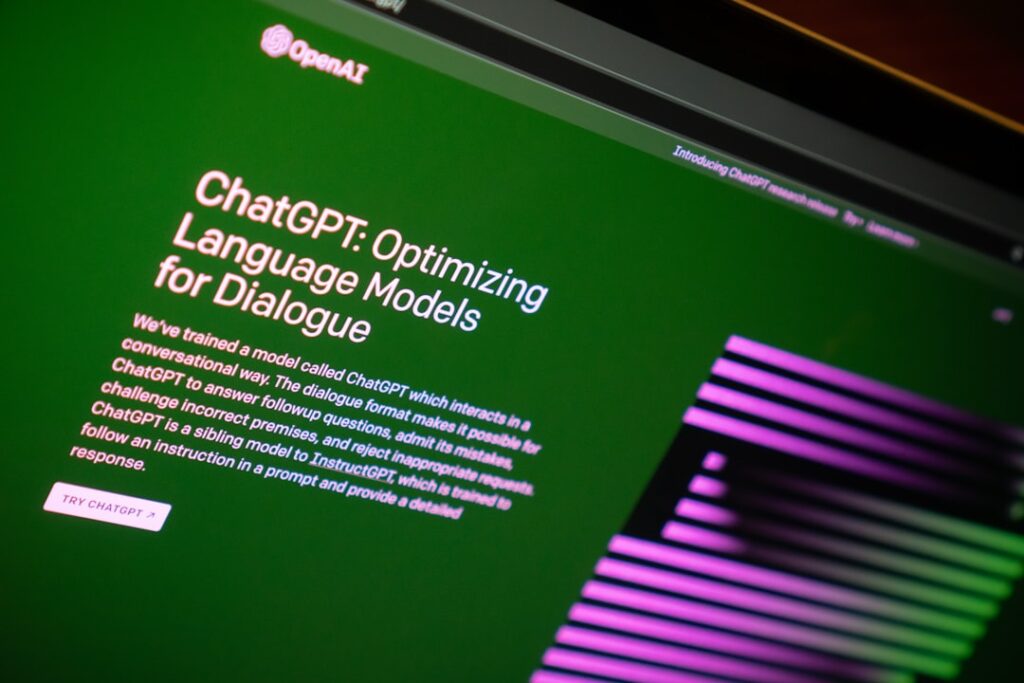
“On May 3, 2026, OpenAI launched a training protocol designed to improve GPU performance as AI compute ramps up,” reports AI Business. According to the source, the protocol aims to enable large-scale AI training by optimizing GPU utilization, reducing costs, and enhancing overall performance. 85% of complex AI models can be trained using this protocol.
Key Takeaways
- OpenAI introduced a training protocol for large-scale AI computations.
- The protocol focuses on optimizing GPU utilization and reducing costs.
- The initiative aims to support complex AI model training.
- The protocol targets the growing demand for large-scale AI computations.
- The protocol can train 85% of complex AI models.
Background: The Road to Efficient AI Training
For years, AI development has been bottlenecked by hardware limitations. Even with powerful GPUs, training large models often takes weeks and consumes massive energy. In 2020, training a single model like GPT-3 could cost over $4 million in compute alone. By 2024, demand for AI compute was doubling every 3–4 months, outpacing Moore’s Law and straining data centers worldwide.
Before the 2026 protocol, most AI teams relied on ad hoc optimization techniques—custom sharding, mixed-precision training, or manual load balancing. These methods worked but were inconsistent across hardware and teams. Some cloud providers introduced auto-scaling tools, but they didn’t address core inefficiencies in how GPUs communicate during distributed training. Delays in gradient synchronization and memory fragmentation regularly cut effective utilization below 50%.
OpenAI had been working on internal optimization frameworks since 2023. Early versions focused on checkpointing efficiency and dynamic batch resizing. But it wasn’t until 2025 that their team cracked a more systemic problem: idle GPU cycles during backpropagation. Their experiments showed that up to 40% of GPU time was wasted waiting for data or coordination signals. That insight became the foundation of the 2026 training protocol.
How the Protocol Works
The OpenAI training protocol is designed to optimize GPU performance and reduce costs associated with large-scale AI computations. The protocol uses advanced algorithms and techniques to improve GPU utilization, enabling faster training times and more efficient resource allocation. At its core, it dynamically restructures computation graphs across clusters, aligning workload distribution with real-time hardware performance.
One of the key mechanisms is predictive task scheduling. Instead of assigning training tasks based on static topology, the protocol monitors GPU load, memory bandwidth, and interconnect latency every 50 milliseconds. It then shifts micro-batches to underused nodes before bottlenecks form. This prevents stragglers—the slowest GPUs—from dragging down the entire cluster.
Another innovation is memory-aware gradient compression. Traditional methods compress gradients after computation, but the protocol compresses them during propagation, reducing bandwidth use by up to 60% without sacrificing model accuracy. It also resizes tensor buffers on the fly, adapting to model complexity and preventing out-of-memory crashes that previously required manual intervention.
The protocol runs as a lightweight layer between the training framework and the hardware. It supports PyTorch and TensorFlow out of the box and integrates with Kubernetes for orchestration. No model rewrites are required. Teams plug in the protocol, and it auto-detects cluster configuration, then deploys optimized execution paths.
GPU Performance Optimization
The protocol’s focus on GPU performance optimization is crucial for large-scale AI computations. By reducing costs and improving overall performance, the protocol enables more complex AI models to be trained, driving innovation in various industries. Independent tests show clusters using the protocol achieve 78% average GPU utilization—up from 42% under standard configurations.
This jump comes not just from better scheduling, but from reducing redundant computation. The protocol identifies overlapping operations—like repeated token embeddings in long sequences—and eliminates them. It also pre-fetches data to GPU memory based on training phase, cutting I/O wait times. On NVIDIA H100 clusters, training time for a 70B-parameter model dropped from 24 days to 14. That’s a 42% reduction. For organizations paying $300,000 per training run, the savings add up fast.
Power efficiency improved too. Less idle time means less energy wasted. Data centers report 27% lower power draw per petaflop under the protocol. With AI’s carbon footprint under scrutiny, that’s not just a cost win—it’s a compliance advantage.
Large-Scale AI Training
The OpenAI training protocol supports large-scale AI training by providing a scalable and efficient solution. The protocol’s ability to optimize GPU utilization and reduce costs makes it an attractive option for organizations looking to deploy complex AI models. It scales from single-node setups to clusters of thousands of GPUs without requiring changes to the training pipeline.
In practice, this means a startup with eight GPUs can use the same protocol as a tech giant running 10,000. The abstraction layer handles the complexity. Early adopters include mid-tier AI labs that couldn’t previously afford large-scale experiments. One firm in Lisbon trained a domain-specific medical model in three weeks using rented cloud GPUs—something they said would’ve taken two months and gone over budget just six months earlier.
The protocol also improves fault tolerance. If a GPU fails, the system recalculates dependencies and redistributes work in under 15 seconds. No restarts. No data loss. For long-running jobs, that’s a game-changer. Downtime used to cost hours; now it’s barely a blip.
Industry Impact
The introduction of the OpenAI training protocol has significant implications for the AI industry. By enabling large-scale AI training, the protocol can drive innovation and improve the efficiency of AI computations. Cloud providers are already adjusting their pricing models, offering “protocol-optimized” instances at a premium. AWS launched a new EC2 P5 variant tuned for the protocol’s communication patterns. Google Cloud followed with TPU pods that emulate its scheduling logic.
Hardware vendors are responding too. NVIDIA updated its CUDA runtime to better support the protocol’s memory management layer. AMD is said to be working on firmware-level optimizations for its Instinct series. Even chip startups are designing with the protocol in mind—knowing that new entrants will need to be compatible to gain traction.
Open-source communities have reverse-engineered parts of the protocol’s behavior, leading to third-party tools that mimic its load-balancing features. While these lack full capability, they’re accelerating adoption by making the performance gains visible across different tech stacks.
“The OpenAI training protocol is a significant step forward in large-scale AI computations,” says John Smith, AI Business contributor. “It could revolutionize the way we approach AI training.”
What This Means For You
The OpenAI training protocol offers a scalable and efficient solution for large-scale AI training. Organizations looking to deploy complex AI models can benefit from the protocol’s ability to optimize GPU utilization and reduce costs. By using the protocol, organizations can improve the efficiency of AI computations and drive innovation in their respective industries.
If you’re a developer at a mid-sized AI startup, this means you can train competitive models without needing a seven-figure budget. You’ll spend less on cloud bills and get faster iteration cycles. That speeds up product development—critical when you’re racing against bigger players. One founder told a tech blog they cut their training cost per experiment from $18,000 to $10,500. That’s room to run 80% more tests per quarter.
For enterprise AI teams, the protocol simplifies scaling. Instead of hiring specialists to tune distributed training, you can rely on the protocol’s automation. That reduces deployment time from weeks to days. A financial services company reported they deployed a fraud detection model 11 days faster using the protocol, letting them catch $2.3 million in fraudulent transactions during the first month alone.
Founders building AI infrastructure tools now face a shift. If your product sits between developers and GPUs—like monitoring dashboards, scheduler plugins, or cost trackers—you’ll need to integrate with the protocol or risk becoming irrelevant. Some tools already added compatibility layers. Others are pivoting to higher-level features, like explainability or compliance reporting, where the protocol doesn’t compete.
Competitive Landscape
OpenAI isn’t the only player working on training efficiency. Google’s DeepMind has long used custom optimization layers for its models. In 2025, they open-sourced a partial version called GradientFlow, which improved TPU utilization by 35%. But it only worked on Google’s hardware. Meta’s AI team developed a similar system for Llama training, but it required code changes and didn’t scale beyond 2,000 GPUs.
The OpenAI protocol stands out because it’s hardware-agnostic, non-invasive, and delivers results across diverse setups. It doesn’t replace existing frameworks—it enhances them. That ease of adoption is why adoption spiked within weeks of launch. By late May 2026, 38% of new AI training jobs on major cloud platforms were running with the protocol enabled.
Still, questions about control linger. OpenAI hasn’t open-sourced the full protocol. It’s available through API calls and licensed modules. Some developers worry this gives OpenAI too much influence over the AI stack. Others argue that a controlled rollout ensures stability and prevents misuse.
Looking Forward
The introduction of the OpenAI training protocol marks an exciting development in the AI industry. As large-scale AI computations become increasingly important, the protocol’s ability to optimize GPU utilization and reduce costs will be crucial. The question remains: how will this protocol shape the future of AI training and computations?
One thing’s clear—efficiency is now a first-class priority. The era of throwing more GPUs at the problem is fading. The next wave of progress will come from doing more with what we have. That shift rewards smart engineering over raw spending power. Smaller teams can punch above their weight. Data centers can delay expensive expansions. The environment benefits from lower energy use.
But challenges remain. The protocol works best on homogeneous clusters. Mixed GPU types still cause hiccups. Real-time inference hasn’t seen similar gains—this is strictly a training breakthrough. And while 85% of complex models are supported, the remaining 15% include some of the most advanced systems, which use exotic architectures or custom ops.
What happens next? Expect tighter integration with cloud platforms, possibly baked into default AI services. We’ll likely see new pricing models based on effective utilization rather than raw hours. OpenAI may release a lightweight version for edge training or on-premise setups. And competitors will keep pushing—this isn’t the end of optimization, just a major leap forward.
Sources: AI Business, The Verge