



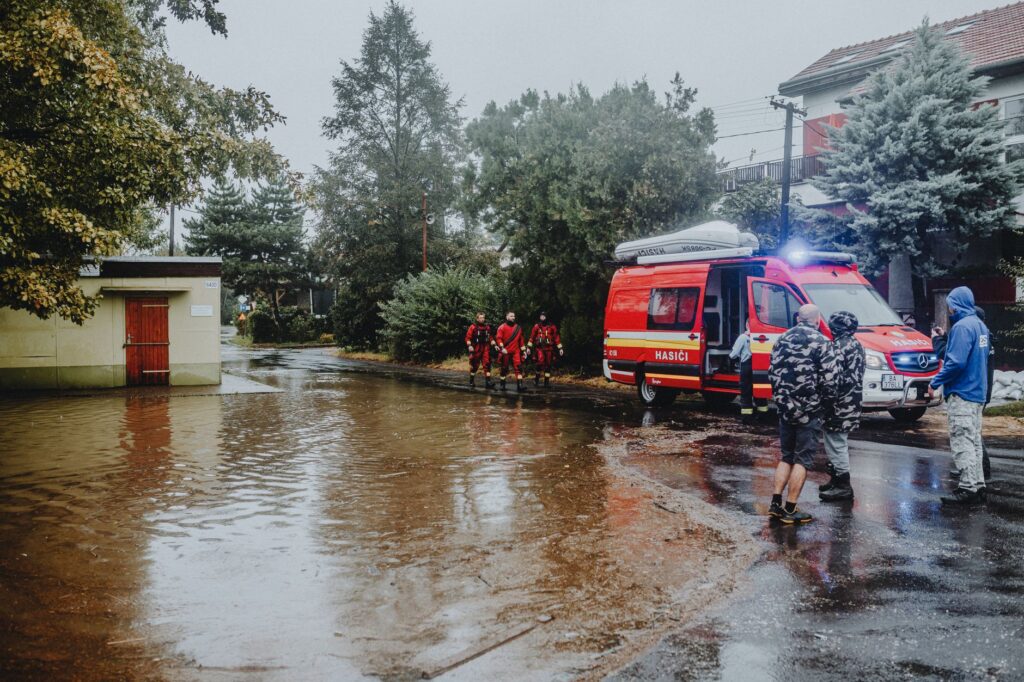
One Waymo robotaxi sat stranded in rising floodwater on an Atlanta street for over an hour on May 21, 2026. The vehicle had driven into a submerged intersection during torrential rainfall—despite a software recall issued just last week meant to prevent exactly this. It didn’t work. And now, Waymo has paused service in four cities: Atlanta, San Antonio, Dallas, and Houston. This isn’t a technical hiccup. It’s an autonomous ai rollback in real time—public, visible, and stuck in the mud.
Key Takeaways
- Waymo paused robotaxi operations in four cities on May 22, 2026, due to vehicles failing to avoid flooded roads.
- The company issued a software recall on May 15, 2026, but the fix didn’t stop a robotaxi from entering a flooded street in Atlanta.
- Waymo relies on National Weather Service alerts, but flooding in Atlanta occurred before any flash flood warning was issued.
- The NHTSA and NTSB are investigating two separate incidents: illegal school bus maneuvers and a January 23 crash in Santa Monica.
- The May 15 NHTSA document request was followed by a second request due to incomplete data from Waymo.
Autonomous AI Rollback Shows Limits of Reactive Fixes
There’s a pattern here. Waymo deploys a behavior. It breaks. Then they issue a patch. But the patch doesn’t fix the root issue—it just adds a bandage. That’s what happened with the May 15 software recall. According to documents filed with the National Highway Traffic Safety Administration (NHTSA), Waymo didn’t have a “final remedy” for detecting flooded roads. Instead, it rolled out restrictions in areas with “elevated risk” of flooding, particularly on higher-speed roadways. That’s not a solution. That’s a retreat.
And it failed. On May 21, in Atlanta, a vehicle drove into a flooded intersection. Rainfall was so intense that water levels rose before the National Weather Service issued a flash flood warning, watch, or advisory. That matters—because Waymo’s system relies on those alerts as part of its weather hazard detection. No alert, no restriction. So the car went in. And stayed stuck for more than 60 minutes.
That’s not just a software failure. It’s a failure of operational design. If your AI system can’t detect a flooded road unless a government agency has already declared it dangerous, you’re not building resilience. You’re outsourcing judgment to an external signal that’s often too slow. That’s not autonomy. That’s automation with blind spots.
NHTSA Is Watching. Again.
The National Highway Traffic Safety Administration isn’t just observing. It’s already in the middle of an investigation. On May 15, the NHTSA sent a document request to Waymo after it became clear the company’s initial data submission “necessitates that [NHTSA] receive further data and information.” That’s bureaucratic language for: you didn’t give us enough.
And now, after the Atlanta incident, the NHTSA told TechCrunch it’s “in communication with Waymo” and will take “appropriate action if necessary.” That’s not a passive stance. It’s a warning shot.
Not the First Time, Not the Last?
This isn’t the first time Waymo’s AI has made a dumb move in public. Last year, multiple robotaxis were caught illegally passing stopped school buses. Waymo pushed a fix—only for the behavior to persist. The NHTSA and NTSB are both investigating that issue. You’d think a company that’s been testing self-driving cars since 2009 would’ve nailed school bus protocols by now. But no. The system still fails basic edge cases.
And it’s not just behavior. There’s the January 23 incident in Santa Monica, where a Waymo vehicle struck a child. The company said it slowed to six miles per hour before impact, and the child suffered minor injuries. That’s not a defense. That’s an admission: the AI didn’t avoid the collision. It just slowed down.
- Two active NHTSA/NTSB investigations: school bus violations and pedestrian impact
- Second NHTSA document request issued May 15, 2026
- Four cities with paused service as of May 22, 2026
- Over one hour stranded in floodwater in Atlanta
- No final remedy for flooded roads, per NHTSA filings
The Problem With Reactive AI Development
What we’re seeing isn’t just a bad week for Waymo. It’s a breakdown in how autonomous AI is being developed. The model is clear: deploy, observe failure, patch. But that’s not how safety-critical systems should work. You can’t learn your way out of dangerous behavior when the learning happens on public roads.
And let’s be real: Waymo’s approach to flooded roads is fundamentally flawed. It’s not using real-time sensor fusion to detect standing water. It’s not modeling drainage patterns or elevation data. It’s not even using crowdsourced reports from other vehicles. It’s waiting for a government alert. That’s not intelligent. That’s lazy.
Other companies are already ahead. Tesla’s FSD uses camera-based water detection in heavy rain. Mobileye’s Road Experience Management (REM) aggregates road condition data across fleets. But Waymo? It’s relying on infrastructure that wasn’t built for AI coordination. That’s a design flaw, not a weather problem.
Why Edge Cases Keep Breaking Everything
Autonomous driving isn’t hard because of highways. It’s hard because of edge cases—school buses, flooded streets, children darting into traffic. These aren’t rare events. They’re the core challenges of urban driving. And if your AI can’t handle them, you don’t have autonomy. You have a prototype.
The school bus issue is especially frustrating. It’s not a sensor problem. It’s a logic problem. The vehicle must detect flashing lights, stop signs, and children near the road. That’s basic perception. But Waymo’s fix didn’t stop the behavior. That suggests the underlying model wasn’t retrained—it was just given a new rule. And rules don’t scale.
What This Means For You
If you’re building AI systems, especially for real-world deployment, this is a case study in what not to do. Rolling out reactive patches without root-cause fixes doesn’t improve safety—it creates false confidence. Your system will fail again, and the next failure might not be recoverable.
For developers, this means investing in strong edge-case simulation. You need virtual environments that replicate city flooding, sudden obstructions, erratic pedestrian behavior—not just textbook scenarios. Building rule-based filters for each incident type leads to brittle code. The alternative? Long-horizon training on adversarial environments where the AI learns to adapt, not just react.
Founders should see this as a hard stop on unchecked scaling. If your AI can’t handle Atlanta in a storm, it’s not ready for Houston or Miami. Expansion isn’t just about adding cities—it’s about proving resilience under stress. Investors may want growth, but regulators and the public demand reliability. A single high-profile failure can erase years of trust. That’s why slowing down now might be the only way to go faster later.
For regulators, the Atlanta incident is proof that self-reporting and voluntary recalls are falling short. Waymo issued a recall, but the flawed behavior continued. The NHTSA had to ask twice for data. This cycle shows a lack of oversight teeth. What’s needed are mandatory safety benchmarks for AI behavior during adverse weather, pedestrian proximity, and emergency response. These shouldn’t be optional. They should be table stakes for operating on public roads.
Key Questions Remaining
The pause in four cities raises immediate operational questions. How long will service remain offline? Will Waymo resume with the same software stack, or is a deeper architectural overhaul underway? The company hasn’t said. But without a “final remedy” for flooded roads, any restart feels premature.
There’s also the question of data completeness. The NHTSA asked for more information on May 15 because Waymo’s initial submission was insufficient. What exactly was missing? Incident logs? Sensor readouts from the Atlanta vehicle? Decision trees leading up to the flooded intersection? Until that data is made public—or at least shared in full with regulators—the full scope of the failure remains hidden.
Then there’s the broader issue of redundancy. If the National Weather Service fails to issue a timely alert, what backup systems should kick in? Real-world driving demands layered detection: lidar return anomalies from water surfaces, camera-based depth distortion, pressure sensors, even cross-referencing with municipal stormwater systems. None of that appears to be in place. So what’s stopping Waymo from building it?
And perhaps the biggest question: how many more edge cases are lurking just out of sight? The school bus violations were caught on dashcam. The Santa Monica crash made local news. The flood incident was visible to pedestrians and captured on smartphones. But what about near-misses? Events where the AI hesitated, braked late, or made a questionable turn that didn’t result in a collision—but came close? Without independent auditing, those remain invisible.
The January 23 incident in Santa Monica still lacks public detail. A child was struck. The car slowed to six miles per hour. But what caused the AI to fail avoidance entirely? Was there occlusion? Sensor glare? A misclassified object? Waymo hasn’t released a timeline of decisions made in the seconds before impact. That silence feeds skepticism.
This isn’t just about one company. It’s about the credibility of the entire autonomous driving field. If Waymo—the most experienced player, with over 15 years of testing—can’t reliably avoid flooded roads or yield to school buses, what does that say about others rushing into the space? Cruise, Aurora, Nuro—they’re all watching. And they’re all vulnerable to the same pattern: deploy, fail, patch, repeat.
The public doesn’t care about training data volume or neural network depth. They care if the car stops at the right time, avoids danger, and doesn’t need human rescuers when it rains. Right now, Waymo can’t guarantee that. And until it can, every restart is just another roll of the dice on city streets.
Sources: TechCrunch, original report