



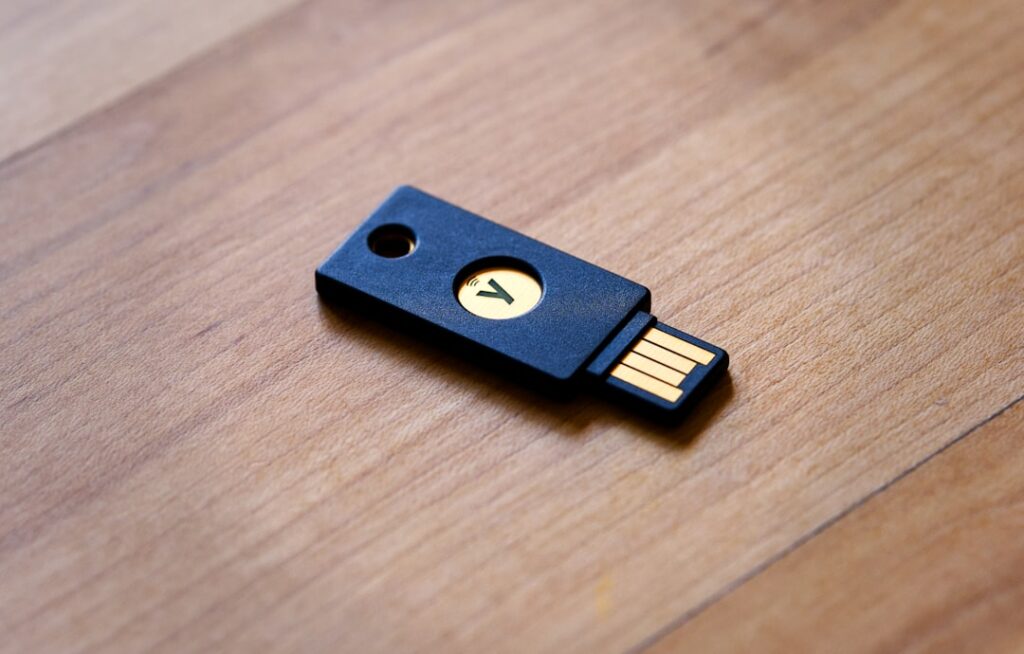
As of April 30, 2026, OpenAI is offering users the ability to secure their ChatGPT accounts with physical security keys, starting with Yubico’s YubiKey line. The move marks a significant upgrade in account protection for one of the most widely used AI platforms—especially for enterprise users, developers, and professionals who rely on ChatGPT for sensitive workflows.
Key Takeaways
- OpenAI has introduced opt-in support for physical security keys via a partnership with Yubico.
- The feature allows users to authenticate with YubiKey 5 and YubiKey Bio series devices using FIDO2/WebAuthn standards.
- Security keys now serve as a second factor or passwordless login method for ChatGPT accounts.
- The rollout begins April 30, 2026, and is available immediately to all users through the account security settings.
- This is OpenAI’s first hardware-based authentication partnership, signaling a shift toward proactive security measures.
Not Just 2FA—This Is Passwordless Infrastructure
Most users think of two-factor authentication (2FA) as a code from an app or text. But OpenAI’s new feature with Yubico isn’t just another SMS backup. It’s a full FIDO2-compliant implementation, meaning users can now log in to ChatGPT without a password at all—just a tap of a YubiKey.
That’s a big leap. Passwords are still the weakest link in account security. Phishing, credential stuffing, SIM swapping—these attacks bypass traditional 2FA if the password is compromised. But with a physical key, even if someone steals your password, they can’t log in without the hardware token.
And YubiKeys are especially resilient. They’re tamper-resistant, don’t transmit secrets over the air, and require physical presence—either a tap or a fingerprint, depending on the model. For developers building AI-powered apps or handling proprietary prompts, that’s not just convenient. It’s essential.
Why Yubico—And Why Now?
OpenAI didn’t pick Yubico at random. YubiKey dominates the enterprise hardware security market. It’s used by Google, Microsoft, and the U.S. Department of Defense. It’s the most widely certified FIDO2 device in the world.
But the timing speaks louder than the partnership. April 30, 2026, isn’t arbitrary. It comes less than six weeks after a widely reported phishing campaign targeted developers using ChatGPT Enterprise. Attackers spoofed OpenAI’s login page and harvested credentials from at least 120 verified accounts. Some of those accounts had API access tied to corporate billing—giving attackers free rein to run up usage bills and extract sensitive data.
OpenAI didn’t publicly confirm the breach. But the company did say, in a
statement released April 29
, that it was “accelerating the rollout of advanced authentication methods to protect user accounts.” That’s not PR jargon. That’s damage control.
How It Works: Simpler Than You Think
- Users go to their ChatGPT account settings under “Security.”
- Select “Add a security key” and follow the browser prompt.
- Plug in or tap a supported YubiKey (USB, NFC, or Lightning).
- The browser registers the public key; the private key stays on the device.
- On future logins, the site sends a challenge—the user taps the key to respond.
No codes. No apps. No backup emails. Just cryptographic proof that you own the key.
The Irony of AI Security Lacking Basic Protections
Here’s the awkward truth: OpenAI built a system that can generate exploit code, reverse-engineer binaries, and draft phishing emails—but until April 30, 2026, it didn’t offer hardware 2FA for its own platform.
For years, security pros have begged AI companies to treat their own platforms with the same rigor they apply to their models. You can’t sell a “secure” AI product while locking the front door with a string and a paperclip.
And let’s be clear: this isn’t just about individual users. ChatGPT Enterprise customers include Fortune 500 companies, law firms, and government contractors. Many of them use custom GPTs to process confidential data. Some are building internal AI agents that pull from private databases. If those accounts are compromised, the exposure isn’t just a chat history—it’s contracts, strategies, trade secrets.
So yes, this update is overdue. But better late than never.
This Isn’t Just for Enterprises—Developers Should Care Too
Independent developers are especially vulnerable. You’re not backed by a corporate security team. You probably use ChatGPT to debug code, generate API docs, or even write portions of your app. If your account gets hijacked, an attacker could:
- Access your API keys stored in chat history
- Steal proprietary prompts or fine-tuning data
- Use your subscription to train malicious models
- Send phishing messages impersonating you to your contacts
And because ChatGPT remembers context across sessions, the attack surface grows the longer you use it. A YubiKey doesn’t stop every threat—but it eliminates the most common entry point: stolen credentials.
Plus, if you’re building apps that integrate with OpenAI’s API, this move sets a precedent. Users will start expecting hardware-backed login options. If you’re using OAuth or simple API tokens, you’re already behind.
Competing Platforms and the Race for Trust
OpenAI isn’t the only player in the AI race, and it’s not the first to take hardware security seriously. Anthropic, which powers AI assistants via its Claude platform, quietly rolled out FIDO2 support in late 2025 for enterprise customers using AWS SSO integrations. Their implementation works with YubiKey, Feitian, and Google’s Titan Security Key, and is now standard for customers in regulated sectors like healthcare and finance.
Google’s Vertex AI, part of its broader cloud ecosystem, has had hardware key support since 2023. Google Cloud’s long-standing zero-trust framework, BeyondCorp, mandates hardware-based authentication for admin access. Amazon Web Services, which hosts AI services like Bedrock and SageMaker, requires multi-factor authentication and supports FIDO2, but it’s not yet enabled by default for AI console logins. Microsoft’s Azure AI services integrate with Azure Active Directory, which has supported passwordless hardware keys since 2021—especially for government and defense contracts.
The difference? These companies built identity security into their core infrastructure years ago. OpenAI, by comparison, started as a consumer-facing chatbot. Its security model evolved slowly, prioritizing accessibility over enterprise-grade controls. Now, as customers demand compliance with standards like SOC 2, ISO 27001, and GDPR, OpenAI is playing catch-up. The Yubico partnership isn’t innovation—it’s alignment with industry norms. And given that competitors already offer broader hardware support, OpenAI’s limited rollout to YubiKey only may raise questions about ecosystem lock-in.
The Bigger Picture: Why It Matters Now
AI isn’t just a tool anymore. It’s embedded in workflows that handle legal contracts, financial forecasts, health diagnostics, and software deployment. When an AI account is compromised, the fallout isn’t just about data theft—it’s about poisoned inputs, manipulated outputs, and unauthorized automation. A single breached developer account could let attackers inject malicious code into a production app, or extract prompts that reveal business logic.
The timing also aligns with growing regulatory pressure. In January 2026, the EU finalized the AI Act’s cybersecurity requirements, mandating “appropriate authentication measures” for high-risk AI systems. The U.S. National Institute of Standards and Technology (NIST) updated its AI Risk Management Framework in 2025, explicitly recommending phishing-resistant MFA for AI platform access. Federal agencies using AI tools must comply by late 2026.
OpenAI’s move isn’t just technical. It’s strategic. As governments and enterprises draw red lines around AI governance, basic account security becomes a compliance prerequisite. Companies can’t adopt ChatGPT at scale if it doesn’t meet audit requirements. And with AI agents increasingly acting on behalf of users—sending emails, booking meetings, accessing databases—the risk of impersonation grows exponentially. A YubiKey won’t stop every attack, but it raises the bar enough to make credential theft impractical at scale. That’s not just good security. It’s a license to operate in regulated environments.
What This Means For You
If you’re a developer or builder using ChatGPT regularly, turn on YubiKey support today. Go to your security settings, plug in your key, and register it. It takes five minutes and could prevent a catastrophic breach. If you don’t own a YubiKey, buy a YubiKey 5 series—either the USB-C or NFC version. They cost $60 and are worth every penny.
For teams, this should be mandatory. Roll it out alongside your password manager. Treat it like a hard hat on a construction site: non-negotiable. And if you’re building AI applications, start planning for FIDO2 support in your own login flows. OpenAI just raised the bar. You’ll need to match it.
OpenAI’s move with Yubico is a win—but it’s also a reminder. The most advanced AI in the world is only as secure as the account it runs on. And for too long, that account was protected by a password and a six-digit code. That it took until April 30, 2026, to fix that is concerning. The real question isn’t whether other AI platforms will follow. It’s why they haven’t already.
Sources: TechCrunch, The Verge