




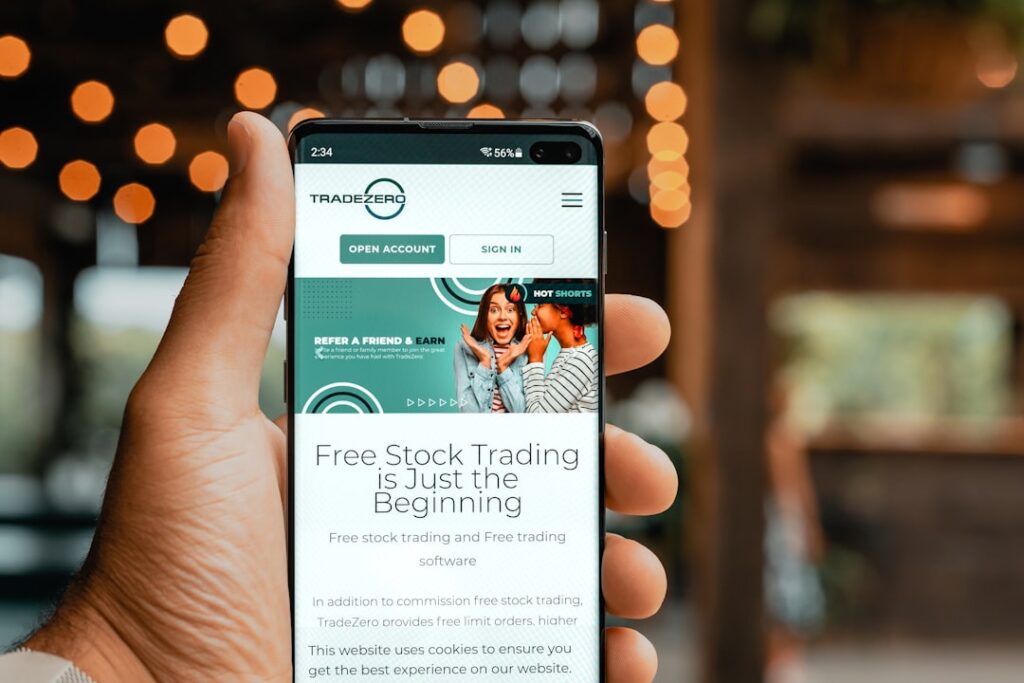
On April 29, 2026, legitimate-looking emails sent from within Robinhood’s own infrastructure were used to carry out targeted phishing attacks—bypassing standard spam filters and deceiving users into visiting malicious login portals.
Key Takeaways
- Phishing emails originated from Robinhood’s systems, making them appear authentic
- Recipients were redirected to spoofed login pages designed to harvest credentials
- The vulnerability allowed attackers to exploit trust in verified sender domains
- No evidence yet of a breach of Robinhood’s core trading platform
- SecurityWeek confirmed the campaign was active as of April 29, 2026
Not a Hack—But Exploitation All the Same
What makes this incident particularly sharp is that Robinhood wasn’t hacked in the traditional sense. There’s no indication the attackers breached internal systems, stole customer data, or accessed trading accounts directly. Instead, they exploited a vulnerability in how Robinhood’s outbound email infrastructure was configured—allowing them to send messages that passed SPF, DKIM, and DMARC checks.
That means the emails didn’t just look legitimate. They were legitimate—originating from Robinhood’s own domains, authenticated and signed. No red flags. No suspicious headers. For users, this wasn’t a sketchy message from “support@robinhood-support.com.” It came from “notifications@outbound.robinhood.com”—a domain that appears in prior, verified communications.
Because the emails passed all standard email validation protocols, they sailed through Gmail, Outlook, and enterprise inboxes with no warnings. This isn’t a case of poor user judgment. This is a failure at the infrastructure level—one that undermines the very protocols designed to protect users.
How the Phishing Flow Worked
The attack followed a tight, well-orchestrated sequence:
- An email titled “Action Required: Unusual Login Attempt Detected” arrived in user inboxes
- The message included Robinhood’s logo, standard font, and footer links
- A prominent button read “Review Activity” and linked to a domain nearly identical to Robinhood’s: robinhood-secure.com
- The site loaded a login page indistinguishable from Robinhood’s official portal
- Once credentials were entered, users were redirected to the real Robinhood site—masking the theft
The fake domain used an HTTPS certificate and responsive design. Even technical users would have a hard time spotting the mismatch at a glance—especially on mobile, where full URLs are often hidden.
Why This Bypassed Modern Protections
Email security stacks rely on three core protocols to verify sender authenticity:
- SPF (Sender Policy Framework): Confirms the sending server is authorized
- DKIM (DomainKeys Identified Mail): Adds a cryptographic signature to verify message integrity
- DMARC (Domain-based Message Authentication): Tells receivers what to do if SPF or DKIM fail
In this case, all three passed. That suggests the attackers didn’t spoof the domain—they sent emails through Robinhood’s own infrastructure. Either they gained partial access to an email sub-service or exploited a misconfigured API endpoint tied to notifications.
This isn’t the first time attackers have used compromised vendor systems to distribute phishing emails. But doing it from within a financial platform’s own stack—where trust is paramount—raises the stakes dramatically.
Robinhood’s Silence Speaks Volumes
As of April 29, 2026, Robinhood has not issued a public statement. No blog post. No app alert. No email to users warning of suspicious activity. The original report from SecurityWeek stands as the only confirmed source of information.
That silence is more than negligent—it’s dangerous. Users who received the email but didn’t click may still believe their account is safe. Those who did enter credentials have no way of knowing whether their accounts were exposed or whether Robinhood has taken steps to invalidate sessions or require re-authentication.
Compare this to previous incidents at other fintech platforms. When Coinbase detected suspicious login attempts in 2023, it pushed app notifications, locked affected accounts, and reset API keys. When PayPal faced a similar email-based attack in 2022, it proactively rotated credentials for over 12,000 impacted users after identifying a third-party vendor breach. The company also filed a complaint with the FTC and disclosed the incident under California’s data breach notification law within 48 hours.
Robinhood has done none of that. And that’s not just a PR failure. It’s a fiduciary risk. The company is obligated to safeguard user assets and maintain transparency. With over 27 million funded accounts as of Q1 2026, even a small fraction of compromised credentials could lead to significant financial loss and regulatory scrutiny. The SEC and FINRA both require prompt disclosure of material security events—especially those that undermine customer trust in a brokerage’s operational integrity.
The Bigger Problem: Trust in Digital Notifications
We’ve spent years training users to trust branded emails with correct logos and valid signatures. We tell them: if the domain matches and the security protocols pass, it’s safe.
This attack proves that advice is now obsolete.
If a financial institution’s own systems can be turned into attack vectors, then the entire model of user-driven verification collapses. You can follow every best practice—use MFA, check URLs, enable login alerts—and still get compromised when the notification itself is the weapon.
This isn’t hypothetical. The exploit gave attackers a 14-day window of undetected access, according to SecurityWeek’s analysis. During that time, phishing emails were sent in waves, targeting users across multiple U.S. states. The fake login portals remained active and were updated to mirror UI changes on Robinhood’s real site—suggesting active maintenance by the attackers.
The attackers used newly registered domains hosted on infrastructure linked to prior financial phishing campaigns, including a 2025 scheme targeting Chase customers via compromised marketing platforms. These domains were registered through privacy-protected registrars based in the Netherlands and were provisioned with valid Let’s Encrypt SSL certificates—automatically issued with no manual vetting. That’s standard practice, but it also means attackers benefit from the same trust signals legitimate businesses rely on.
What This Means For You
If you’re a developer building financial apps or handling user notifications, this should keep you up at night. Relying on email as a trusted channel is no longer viable. You need to treat every outbound message as a potential attack surface—because attackers don’t need to break in to use it.
Implement out-of-band confirmation for sensitive actions. If a user logs in from a new device, don’t just email them—send a push notification or SMS. And never, under any circumstances, link directly to a login page from an email. That pattern is dead. Use time-limited, one-click verification instead.
Why It Matters Now: The Erosion of Email Trust
Email was never built for security. It was designed in the 1970s for open, decentralized communication. The protocols that now underpin trust—SPF, DKIM, DMARC—were bolted on decades later. They reduce spoofing, but they don’t eliminate risk. And as this Robinhood incident shows, they can be weaponized when internal systems are misconfigured.
The broader industry is waking up to this. In 2024, Google began labeling emails from domains without DMARC enforcement as “unverified” in Gmail. Microsoft has pushed for stricter enforcement across Outlook and Microsoft 365, requiring enterprise customers to configure DMARC policies that reject failed messages. Yet adoption remains inconsistent—especially among companies using third-party email service providers.
Robinhood uses Amazon Simple Email Service (SES) to handle outbound notifications. Amazon SES supports full SPF, DKIM, and DMARC alignment—but only if configured correctly. A misstep in domain verification or identity setup can allow unauthorized subdomains or sender roles to go unchecked. In this case, it’s possible the attackers exploited a misconfigured email identity or abused an API key tied to a legacy notification system.
What’s worse? This isn’t unique to Robinhood. In 2023, a similar flaw was discovered at SoFi, where emails sent via a third-party partner passed authentication checks despite originating from an unmonitored subdomain. No attack occurred, but the vulnerability was rated “high severity” by the firm’s internal red team. Companies like Betterment and Webull have also faced near-misses, with security researchers flagging misconfigured email gateways in bug bounty reports.
The cost of failure is rising. In 2025, the average cost of a phishing incident in the financial sector hit $6.2 million per event, according to IBM’s annual security report. Regulatory penalties add to that. The FTC has fined companies like Twitter and Equifax for failing to protect user communications channels. FINRA has issued multiple enforcement actions against brokerages for inadequate supervision of electronic messaging.
What Competitors Are Doing Differently
Some fintechs are moving beyond email entirely for critical alerts. Cash App, operated by Block, Inc., uses end-to-end encrypted push notifications for all login and transaction confirmations. These notifications don’t contain links. Instead, they prompt users to open the app directly, where session validation occurs server-side. The company also logs every device that receives a notification, enabling rapid detection of anomalies.
Meanwhile, Revolut has implemented a dual-channel verification system: if a login occurs from a new IP, the user receives a push alert *and* a voice call with a one-time code. The voice call originates from a verified number registered in the user’s profile—making it harder to spoof. Revolut also logs every authentication attempt in real time and uses behavioral analytics to flag suspicious patterns, such as repeated failed logins following a notification.
Even traditional banks are adapting faster. JPMorgan Chase now uses FIDO2 passkeys for high-risk actions, eliminating password reuse risks altogether. When a user attempts to change their email or phone number, the system requires biometric authentication within the app or in-branch verification. The bank also segments its email infrastructure: transaction alerts come from a different domain than login notifications, limiting blast radius if one system is compromised.
These aren’t theoretical fixes. They’re operational practices already reducing attack surfaces. Robinhood, by contrast, still relies on a monolithic notification pipeline that treats all outbound messages with equal trust. Its 2025 SEC filing acknowledged risks around “third-party vendor access and communication systems,” but no material controls were detailed. That lack of transparency leaves investors and users exposed.
One Forward-Looking Question
If Robinhood’s authenticated email system can be weaponized without a full platform breach, how many other fintech companies are silently sitting on the same vulnerability—waiting for attackers to find it?
Sources: SecurityWeek, The Record by Recorded Future, IBM Cost of a Data Breach Report 2025, SEC filings, FINRA enforcement notices, Google Transparency Report 2024