



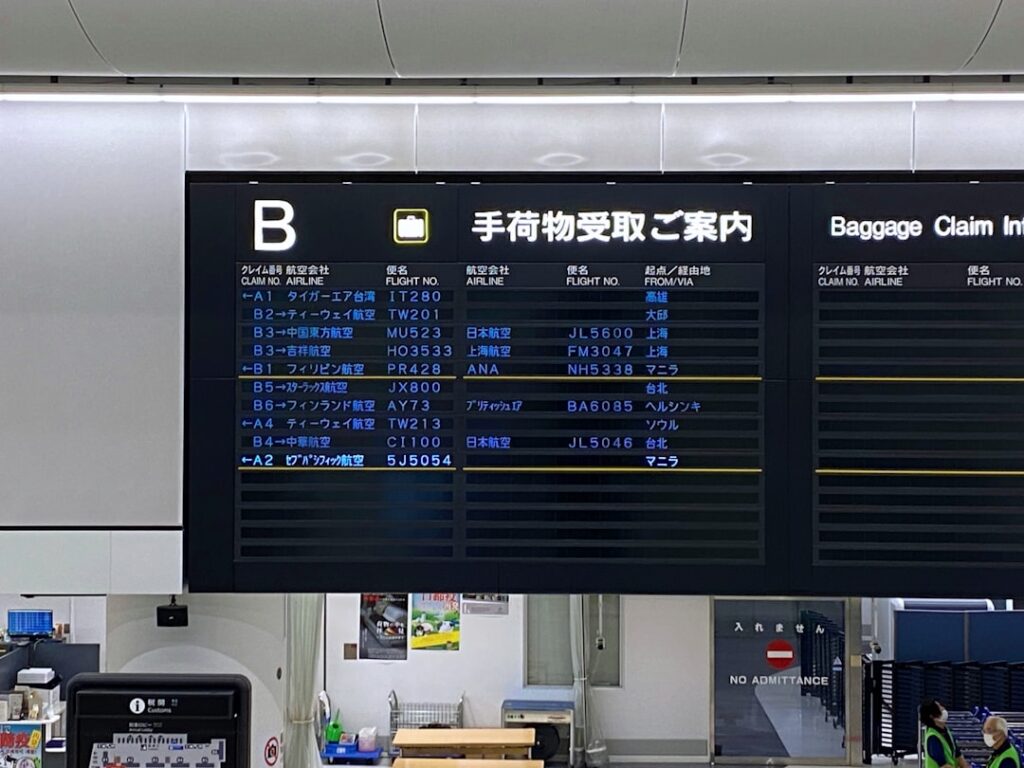
At Haneda Airport in Tokyo, humanoid robots will begin handling luggage in May 2026—moving, lifting, and sorting bags in real-world conditions where delayed flights, misrouted suitcases, and tired travelers are the norm, not the exception. This trial, led by Japan Airlines, marks one of the first serious attempts to deploy bipedal machines in the unpredictable chaos of an international airport.
Key Takeaways
- Japan Airlines launches a May 2026 pilot program deploying humanoid robots as baggage handlers at Haneda Airport.
- The trial is a direct response to a labor shortage worsened by rising passenger volumes in Japan.
- Robots may eventually take on aircraft cleaning and ground support tasks, according to the airline’s press release.
- The program will run through 2028, offering a long-term test of humanoid robots in dynamic human environments.
- Unlike robotic arms in warehouses, these robots must navigate uneven surfaces, variable loads, and unstructured workflows.
Why Luggage Is Harder Than Assembly Lines
Factories are predictable. Parts arrive in sequence. Workstations are calibrated. The lighting is consistent. In those settings, robotic arms dominate because they don’t need adaptability—they need precision, repetition, and speed.
Airports? That’s another world. Luggage comes in shapes and weights that defy standardization. A carry-on might weigh 5 pounds. The one next to it, 60. Bags get wet, torn, or jammed in conveyors. Workers twist, bend, squat, and push carts through crowded corridors. And all of it happens under time pressure, with flights waiting and passengers watching.
That’s where humanoid robots face their steepest test yet. They’re built with two legs, two arms, and a torso—not because it’s optimal, but because human infrastructure was built for humans. Stairs, doorways, carts, and loading docks weren’t designed for robotic arms on rails. They were built for people. So if robots are going to plug into existing systems without rebuilding every ramp and corridor, they need to look like the workers they’re replacing.
But looking the part isn’t enough. They have to move like them, too.
This Isn’t a One-Off Demo—It’s a Two-Year Trial
What separates this trial from the usual robotic spectacle is its duration. A two-year run through 2028 means Japan Airlines isn’t after a viral video. They’re after data—on failure rates, maintenance costs, throughput, and safety. They’ll measure how often robots drop bags, how long they last between breakdowns, and whether they can keep pace during peak hours.
And they’ll do it under real operational pressure. Haneda is one of the busiest airports in Asia. In 2025, it handled over 97 million passengers—a number expected to keep climbing. With Japan’s workforce shrinking and airport traffic rising, the labor gap isn’t a blip. It’s structural.
Japan Airlines isn’t pretending robots are the only answer. But they’re clearly betting they’re part of it. The company’s press release doesn’t mention specific robot manufacturers or models, but it does outline a phased expansion: starting with luggage sorting, then testing roles in aircraft cleaning and ground support.
What Ground Support Actually Means
“Ground support” isn’t just moving bags. It’s the entire behind-the-scenes machinery that gets a plane ready to fly again. That includes:
- Connecting power and air units to the aircraft while it’s parked
- Refueling operations
- Handling catering trucks and waste removal
- Operating baggage carts and container loaders
- Marshalling planes on the tarmac
Some of these tasks are already automated to varying degrees. But many still rely on human workers walking, climbing, and making split-second decisions in all weather conditions. For a humanoid robot, even something as basic as attaching a fuel hose requires force sensing, dexterity, and spatial awareness—things that are still hard for machines.
The Limits of Current Hardware
Let’s be clear: today’s humanoid robots aren’t faster, stronger, or cheaper than humans. Not even close. They’re slower to deploy, more fragile, and far more expensive to maintain. Tesla’s Optimus, for instance, is still in early testing and hasn’t shipped to any commercial customer. Figure AI’s robots are running factory trials but haven’t proven themselves in outdoor, high-traffic environments.
So what’s actually being used at Haneda? The original report doesn’t say. That silence is telling. If this were a flagship model from a well-known developer, Japan Airlines would name it. The fact they haven’t suggests either a nondisclosure agreement—or that the robots aren’t from a headline-grabbing startup at all.
More likely, these are specialized machines from a Japanese robotics firm with deep experience in industrial automation—maybe Kawada Robotics, or a custom model built in partnership with an airport systems integrator. Whoever built them, they’re facing physics problems no simulation can fully solve: uneven pavement, sudden gusts of wind near jet engines, rain-slicked tarmacs, and the constant risk of collision with ground vehicles.
Why Two Legs Might Be a Trap
There’s something almost nostalgic about the push for humanoid form factors. Two arms, two legs, a head—that’s what we know. But it might also be a cognitive bias. Nature arrived at bipedalism through millions of years of evolution. Engineers don’t have that luxury. And in industrial settings, four legs, wheels, or modular attachments might be far more efficient.
Yet airports lock us into the human form. Staircases. Door thresholds. Narrow cabin aisles. Low-ceilinged service tunnels. Retrofitting all of that for non-humanoid robots would cost billions. So for now, we’re stuck building machines that walk—because the buildings won’t change.
What This Means For You
If you’re building robotic systems, this trial should shift how you think about edge cases. Airports are stress tests for autonomy. Lighting changes from indoor to outdoor in seconds. Surfaces go from polished tile to gravel in a single step. And the cost of failure isn’t just downtime—it’s a 50-pound suitcase hitting the tarmac, or a robot stumbling into a fuel truck.
For developers, the lesson is clear: robustness beats speed. It’s not about how fast your robot can move bags—it’s about whether it can do it in the rain, at night, during a shift change, when the PA system is blaring in three languages. That means investing in sensor fusion, low-level motor control, and real-time decision stacks that don’t rely on cloud connectivity. Latency kills. And at an airport, a 200-millisecond delay could mean a collision.
One Question That Won’t Go Away
If these robots succeed at Haneda, who maintains them when they break? Not just repairs—but updates, retraining, and security patches. Who’s on call at 3 a.m. when a robot freezes mid-task, blocking a baggage carousel? The airline? The manufacturer? A third-party contractor? We’re building machines that mimic human workers, but we haven’t built the support infrastructure to sustain them.
The Bigger Picture: Labor, Automation, and Japan’s Demographic Crunch
Japan isn’t just testing robots—it’s racing against demographics. The country’s working-age population has been declining since the mid-1990s. By 2030, nearly 30% of Japan’s population will be over 65. That’s not a projection. It’s a certainty baked into birth rates and migration patterns. In sectors like aviation, logistics, and elder care, the labor shortage isn’t looming. It’s here.
Japan Airlines isn’t the only company responding. ANA Holdings, its domestic rival, has invested in autonomous tugs and robotic exoskeletons to reduce strain on ground crews. At Narita Airport, semi-automated baggage carts have been in use since 2022, guided by LiDAR and pre-programmed routes. But those systems still require human oversight and can’t navigate complex indoor-outdoor transitions.
The Haneda trial is different because it skips the intermediate step. Instead of automating carts or conveyor systems, it’s replacing the worker entirely. That’s a leap—not just technologically, but culturally. Japan has long embraced automation in manufacturing. Fanuc and Yaskawa Electric dominate the industrial robot market. But deploying humanoid machines in public-facing roles? That’s new territory. It carries risks: mechanical failure, public discomfort, even liability if a robot injures a passenger or damages property.
Yet the pressure to act is real. Haneda’s passenger volume jumped 18% between 2023 and 2025, driven by a tourism rebound and expanded international routes. The airport’s operator, Japan Airport Terminal Co., has already raised wages and offered signing bonuses to attract baggage handlers. But worker turnover remains high, and training takes weeks. Robots don’t get tired. They don’t file for overtime. And if they work reliably, they don’t quit.
How Other Industries Are Approaching the Same Challenge
The airline industry isn’t alone in wrestling with humanoid automation. Logistics, construction, and healthcare face similar labor pressures—and many are running their own real-world trials. In the U.S., Amazon has quietly tested Boston Dynamics’ Stretch robot in three fulfillment centers since 2023. The machine, though not fully humanoid, uses a single arm mounted on a mobile base to unload trailers. It works 16 hours a day, lifting up to 50 pounds per box, and has reduced trailer unload times by 30% in pilot locations in Arizona and Pennsylvania.
In construction, Built Robotics is retrofitting excavators and bulldozers with autonomy kits, allowing them to operate on job sites without human operators. The company’s systems use RTK GPS and onboard sensors to navigate terrain, avoiding obstacles and adjusting to soil conditions. These aren’t walking robots, but they face many of the same environmental challenges: mud, dust, vibration, and shifting light. And like Haneda’s robots, they must coexist with human workers and heavy machinery.
In healthcare, Toyota’s Human Support Robot (HSR) has been trialed in Japanese hospitals since 2022, helping nurses retrieve supplies and monitor patients. It’s not bipedal—it rolls on a single wheel—but it operates in tight, cluttered spaces. It can open cabinets, pick up dropped items, and respond to voice commands. Its success hinges on reliability, not speed. One malfunction during a patient transfer could be catastrophic.
What unites these efforts is a shift from controlled labs to messy reality. The common thread? Real-world success depends less on flashy AI and more on durability, low maintenance, and interoperability with legacy systems. The robots that win won’t be the smartest. They’ll be the ones that keep working when it rains, when the Wi-Fi drops, and when someone leaves a toolbox in the robot’s path.
Why It Matters Now
This moment is different. For decades, humanoid robots were research projects or PR stunts. Honda’s ASIMO could climb stairs and wave at crowds, but it never did useful work. Today, the economics are shifting. Labor costs are rising. Supply chains demand more resilience. And AI, battery tech, and sensor hardware have matured enough to make autonomous mobile manipulation feasible outside labs.
The Haneda trial sits at the intersection of necessity and timing. Japan needs workers. Robots are finally capable of doing physical work in unstructured spaces. And airports offer a semi-controlled environment—closed perimeters, predictable workflows, and high visibility. If humanoid robots can handle luggage at Haneda, the playbook could be copied at Incheon, Schiphol, or O’Hare.
But success isn’t guaranteed. The robots must prove they’re not just functional but cost-effective. If maintenance averages more than two hours per week per unit, or if failure rates exceed 5% during peak operations, the economics collapse. And public perception matters. A single robot falling over on live TV could set back adoption by years.
Still, the direction is clear. We’re not replacing all airport workers tomorrow. But by 2030, it’s possible that every major hub has at least one humanoid robot on duty—quietly moving bags, cleaning cabins, or guiding passengers. The machines won’t be perfect. But they’ll be present. And that changes everything.
Sources: Ars Technica, The Japan Times