




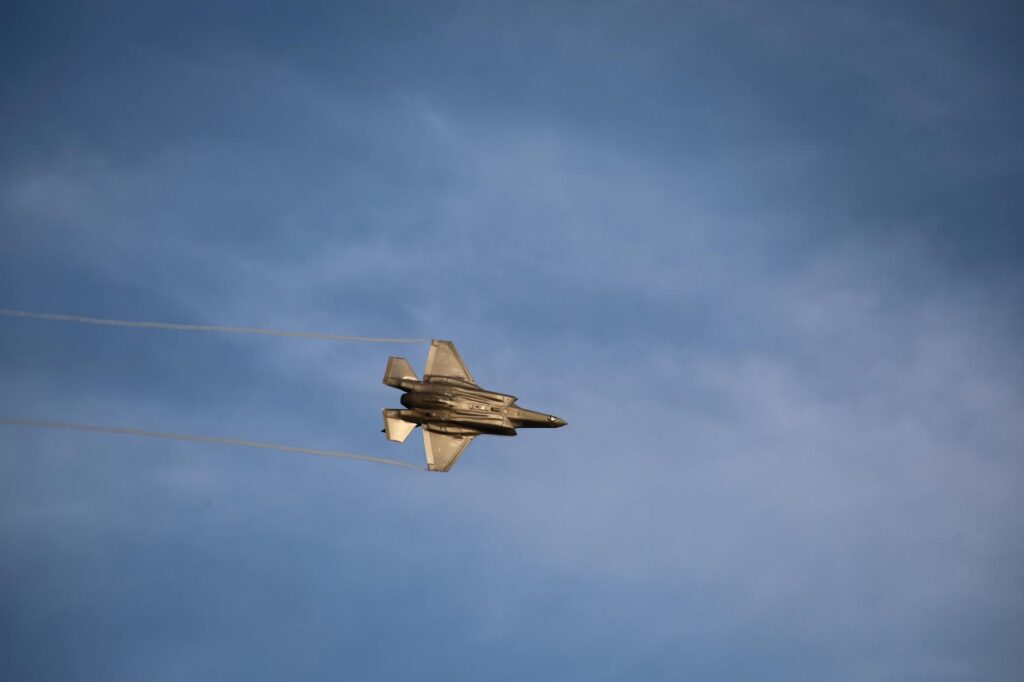
NASA plans to push the X-59 to 630 mph at 43,000 feet next week, marking the first time the quiet supersonic research plane will actually break the sound barrier. That’s the exact speed and altitude the agency listed in a blog post released on May 31, 2026, and it’s the data point that makes this test feel like a true milestone rather than just another flight rehearsal.
Key Takeaways
- The X-59 will attempt three supersonic speeds: 630 mph (Mach 1.0), 925 mph (Mach 1.4), and 1,218 mph (Mach 1.6).
- Each speed will be reached at progressively higher altitudes: 43,000 ft, 55,000 ft, and 60,000 ft.
- NASA will fly a traditional chase plane alongside the X-59, so any quiet thump will be drowned out by louder sonic booms from the chase aircraft.
- The program aims to gather data that could eventually reshape commercial supersonic regulations.
- NASA isn’t ready to reveal the X-59’s quiet‑boom technology until later test phases.
Quiet Supersonic Flight: NASA’s X-59 Nears First Supersonic Test
We’ve been hearing about the X-59 for a decade, but the fact that it’s finally ready to exceed the speed of sound is what makes this week feel different. The aircraft, which first left the ground in October, has already logged several subsonic sorties, yet now NASA says it’s “ready to go supersonic.” That phrasing, straight from the agency’s own blog, signals a shift from development to validation, and it’s a shift that developers in aerospace and acoustics should be watching closely.
Why the X-59 Matters
Because the X-59 could prove that a commercial aircraft can fly faster than sound without the nuisance of a classic sonic boom, which has been a regulatory nightmare for decades. If NASA succeeds, airlines might finally get permission to offer true supersonic service over land, something we haven’t seen since the Concorde retired in 2003. That’s why the whole “quiet supersonic” concept feels so tantalizing: it promises to marry speed with public acceptability.
From Sonic Booms to Quiet Thumps
In a past briefing, NASA engineers explained that the X-59’s design reshapes the pressure wave so that it spreads out over a longer distance, turning a sharp boom into a low‑frequency thump. The agency hasn’t revealed the exact decibel level yet, but it’s clear they’re betting on a reduction that would keep the sound below community‑noise thresholds. If that claim holds, you’ll hear a faint rumble instead of a cracking boom when the aircraft passes overhead.
Historical Context
The pursuit of faster‑than‑sound travel dates back to the 1960s, when the first commercial supersonic jets took to the sky. Those early machines proved that speed was possible, but they also generated booms that startled neighborhoods. The Concorde era showed the world that a sleek, high‑speed service could be viable, but the retirement in 2003 underscored how noise concerns could sink a program. Over the last ten years, NASA has kept the idea alive through a series of research projects, each one trying to tame the acoustic side effects. The X-59 is the latest step in that lineage, built on lessons learned from earlier experimental aircraft that never reached full supersonic flight.
Flight Profile and Test Sequence
NASA laid out a three‑step speed plan. First, the X‑59 will climb to 43,000 feet and accelerate to 630 mph, just cracking Mach 1.0. After that, a second “mission conditions” test will push the plane to 925 mph (Mach 1.4) at 55,000 feet. Finally, the aircraft will attempt its max speed of 1,218 mph (Mach 1.6) at 60,000 feet. Those numbers come straight from NASA’s schedule posted on their website.
Speed Milestones
- 630 mph (Mach 1.0) – 43,000 ft altitude, early June.
- 925 mph (Mach 1.4) – 55,000 ft altitude, follow‑up mission.
- 1,218 mph (Mach 1.6) – 60,000 ft altitude, final test phase.
Each step will be monitored by a suite of onboard sensors, and the data will be streamed back to NASA’s Langley Research Center for analysis. What’s more, the chase plane will be flying alongside the X‑59, recording acoustic signatures that will later be compared against the quiet‑boom predictions.
Technical Hurdles and NASA’s Cautious Approach
NASA isn’t planning a fireworks display for the first supersonic run. In a blog post, they wrote, “The X‑59 will be accompanied by a traditional supersonic chase plane, so any quiet thump it produces in the current phase of testing will be obscured by louder, traditional sonic booms from the chase.”
“The X‑59 will be accompanied by a traditional supersonic chase plane, so any quiet thump it produces in the current phase of testing will be obscured by louder, traditional sonic booms from the chase.” – NASA blog
That admission tells us they’re still gathering baseline data before they can isolate the X‑59’s signature. It also means the public won’t hear the promised quiet thump until later phases, which is a bit disappointing for those of us who’ve been waiting to hear the difference.
Chase Plane and Data Collection
Because the chase aircraft will be generating its own booms, engineers will have to sift through overlapping acoustic data to extract the X‑59’s contribution. It’s a messy problem, but NASA’s team has been using high‑resolution microphones and computational fluid dynamics models to separate the two signals. If they can pull that off, the resulting data set could become a reference for future supersonic designs.
Regulatory and Commercial Implications
Regulators have been reluctant to green‑light over‑land supersonic flights because of community complaints about sonic booms. The Federal Aviation Administration (FAA) currently caps commercial supersonic operations to oceanic routes only. If NASA’s quiet‑boom data proves the sound can be kept below the FAA’s noise thresholds, we might see a rule change that would let airlines pitch 2‑hour transcontinental trips as a realistic offering.
That would be a massive shift for the aerospace supply chain. Engine manufacturers could start re‑tooling for higher‑thrust, low‑drag turbofans, and software teams would need to develop new flight‑control algorithms that optimize both speed and acoustic footprint. The ripple effect could reach everything from composite material vendors to airport noise‑abatement planners.
What This Means For You
If you’re a developer building simulation tools, the X‑59’s flight data will soon be a goldmine. You’ll get high‑fidelity pressure‑wave profiles that can be fed into CFD packages, allowing you to test noise‑reduction strategies without building a full‑scale prototype. That could shorten development cycles for any company eyeing a supersonic future.
For startup founders, the test could validate a market that’s been on hold for years. Investors have been wary of funding supersonic projects because of the boom‑related regulatory risk. A successful quiet‑supersonic demonstration could open up venture capital, and you might find yourself fielding pitches for ultra‑fast regional airliners that were previously dismissed as “too noisy.”
Engineers working on flight‑control software will see a new set of constraints. The need to balance thrust, drag, and acoustic signature forces a rethink of conventional control laws. Early adopters who can embed the X‑59’s data into their own design loops may gain a competitive edge when the market finally opens up.
Competitive Landscape
While NASA leads the public‑sector effort, several private initiatives have been chasing the same goal. Those projects are all testing variations on the same theme: reshape the pressure wave, reduce perceived boom, and convince regulators that over‑land supersonic travel can coexist with communities. The X‑59’s upcoming test will serve as a benchmark for those programs, providing a common data point that can be used to compare approaches. If the quiet‑boom concept proves strong, we could see a convergence of design philosophies across the industry.
Key Questions Remaining
- Will the quiet‑thump stay consistently below community‑noise thresholds across different flight paths?
- How will the data from the chase plane be de‑convolved to isolate the X‑59’s acoustic signature?
- What timeline does NASA envision for moving from experimental data to certification‑ready technology?
- Which commercial partners are prepared to integrate the findings into next‑generation aircraft designs?
What’s next for the X‑59? That remains to be seen, but the next flight will likely focus on isolating the quiet‑thump signature and publishing the results. If NASA can prove the thump stays under community‑noise limits, the aerospace industry will finally have a concrete path forward. Until then, engineers, regulators, and investors alike will be watching the skies for that first, subtle rumble.
Sources: Engadget, NASA