


“No one’s going to put in new additional capital at scale to do anything until everything settles down.” That’s Gary Wojtaszek, CEO of Pure Data Centre Group, speaking to CNBC on April 30, 2026 — not with the usual Silicon Valley bravado, but with the grim pragmatism of someone who just watched a missile punch through a $200 million facility.
Key Takeaways
- Pure Data Centre Group has paused all Middle East investments after a drone or missile strike damaged one of its facilities.
- The attack is linked to the ongoing Iran war, triggered by a US-Israeli strike on February 28, 2026.
- Developers are absorbing uninsurable war damage costs, disrupting a trillion-dollar AI and cloud expansion plan across Gulf nations.
- Iran’s response has included targeting shipping, US military bases, and energy infrastructure — now including digital infrastructure.
- Pure DC controls or is developing over 1 gigawatt of data center capacity across Europe, the Middle East, and Asia.
Silicon Valley’s Gulf Dream Is on Fire
For years, tech investors sold the Gulf as the next frontier: cheap land, low taxes, abundant power, and proximity to emerging AI markets. The plan was simple — build massive data centers in the desert, cool them with liquid or advanced air systems, and tap into regional demand for AI training and cloud services. But the fantasy never accounted for one thing: war.
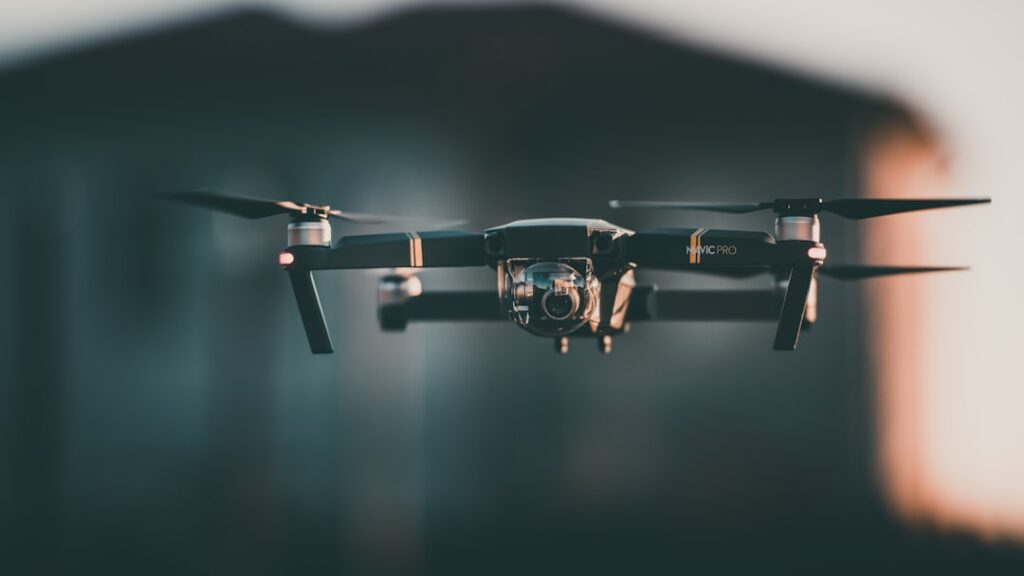
On April 30, 2026, that fantasy collapsed. Not with a software bug or a supply chain delay — but with a drone.
The damaged facility, owned by Pure Data Centre Group, was not a minor outpost. It was part of a broader infrastructure push tied to Gulf nations’ ambitions to become AI and cloud hubs. The UK-based firm, operating or developing over 1 gigawatt of capacity, had positioned itself as a key enabler of that vision. Now, construction halts. Funding freezes. Contracts stall.
And it’s not just Pure DC. The signal has been sent. If a data center can be hit, then every project in the region carries a new risk layer — one that insurance models can’t price, investors won’t fund, and engineers can’t shield.
Uninsurable Damage, Unfundable Future
Data centers don’t just house servers. They’re billion-dollar bets on stability. Power contracts, fiber routes, cooling systems — all assume a baseline of physical safety. War blows that assumption apart.
And unlike natural disasters, armed conflict isn’t easily modeled. Earthquakes follow fault lines. Hurricanes track warm waters. But drones? Missiles? Militias? They follow politics — and politics move fast.
That’s why the damage at the Pure DC site isn’t just physical. It’s financial. The company is now absorbing costs for damage that, according to the original report, falls under uninsurable war risk. No policy covers that at scale. Not anymore.
Which means investors are now asking: why fund a project that could be wiped out in minutes — and not even recoup the loss?
The Domino Effect on AI Expansion
The Middle East wasn’t just a backup plan. It was central to a trillion-dollar strategy to decentralize AI infrastructure. With US and European markets hitting land and power limits, developers turned to the Gulf for room to grow.
Now that pipeline is clogged. AI firms that counted on Gulf-based capacity to train next-gen models face delays. Cloud providers planning regional redundancy now have holes in their architecture. And startups banking on cheaper compute in Dubai or Riyadh? They’ll need new plans.
- AI training requires stable, high-capacity data centers — now in shorter supply.
- Cloud redundancy strategies are compromised if entire regions become war-risk zones.
- Investor confidence in emerging markets now hinges on geopolitical stability, not just latency or power costs.
- Legal frameworks for cross-border data sovereignty won’t matter if the building is rubble.
No One’s Running Into a Burning Building
Wojtaszek’s quote isn’t just a soundbite. It’s a market signal. And it’s resonating far beyond Pure DC.
“No one’s going to run into a burning building, so to speak,” Pure DC CEO Gary Wojtaszek told CNBC.
That’s not fearmongering. It’s finance 101. Capital flows to where it’s safe. And right now, the Gulf isn’t safe.
What’s striking is that this isn’t speculative. The damage is real. The war is real. The February 28 US-Israeli strike on Iran is documented. Iran’s retaliation — targeting shipping, military bases, energy sites — is confirmed. Now, digital infrastructure is on the list.
And once infrastructure becomes a target, the game changes. You can’t patch a missile hole with a software update.
From Energy to Internet: A New Front in Warfare
Iran didn’t just attack military or oil sites. It went after the Strait of Hormuz — a move meant to strangle trade. But by hitting energy and now digital infrastructure, it’s signaling a broader strategy: disrupt the economic veins of its enemies.
Data centers need power. They need cooling. They need connectivity. All of which depend on stable energy grids and physical supply lines. Hit those, and the servers don’t matter.
This isn’t cyberwarfare. This is kinetic. Real missiles. Real drones. Real destruction. And it’s no longer targeting just governments — it’s targeting the private tech economy.
What This Means For You
If you’re building AI models, this changes your deployment roadmap. Cloud capacity in the Gulf was supposed to offer lower latency for Middle East and South Asia markets. Now, that redundancy is gone — or at least delayed. You’ll need to route more traffic through Europe or India, increasing latency and cost.
If you’re a developer or infrastructure engineer, this is a wake-up call. Physical security is no longer just about access cards and biometrics. It’s about missile shielding, backup power resilience, and geopolitical risk modeling. Your data center’s location isn’t just a line on a map — it’s a vulnerability vector.
The idea that “the cloud is everywhere” just got a reality check. The cloud is only where it’s safe. And right now, safety is in short supply.
So what happens when war follows the fiber? When the next target isn’t a ship or a base — but a subsea cable landing station? The tech industry built a global internet on the assumption of peace. That assumption is cracking.
The Bigger Picture: Geopolitics and the Cost of Compute
The war in the Middle East isn’t just a regional crisis. It’s redefining where data can live — and at what cost. Until 2026, the industry operated under an unspoken rule: digital infrastructure was off-limits in kinetic warfare. That changed when Iran struck the Pure DC facility. Now, every expansion plan must factor in military escalation as a core risk.
Consider the numbers. Microsoft, Oracle, and AWS have collectively invested over $30 billion in Middle Eastern cloud regions since 2020. Saudi Arabia’s NEOM project alone planned for 15 data centers by 2027, backed by $5 billion in foreign direct investment. Those plans are now on hold. Insurers like Lloyd’s of London have quietly withdrawn war-risk coverage for new Gulf projects after April’s attack. Reinsurance giant Munich Re confirmed in early May that it would no longer underwrite data center developments in conflict-prone zones without military-grade protection — a cost few developers can afford.
The ripple effects are already visible. In May 2026, Nvidia delayed its planned AI research hub in Abu Dhabi, citing “unresolved infrastructure risks.” Meanwhile, French cloud provider OVHcloud scrapped a $400 million expansion into Qatar. These aren’t isolated retreats. They’re a coordinated recalibration. The cost of compute isn’t just about chip prices or energy contracts anymore. It’s about whether a nation’s borders are stable enough to host a server rack.
Engineering in the Shadow of Conflict
Until now, data center design focused on efficiency: PUE scores, waterless cooling, modular construction. But engineers now face a new design challenge — survivability. Physical hardening isn’t optional. It’s infrastructure 101.
Some firms are already responding. Equinix, which operates 10 data centers in the UAE, began testing blast-resistant server enclosures in May 2026. The company is working with Israeli defense contractor Elbit Systems to integrate early-warning radar and automated shutdown protocols for facilities near high-risk zones. These systems can detect incoming drones at 30 kilometers and trigger emergency power isolation within seconds — buying time to divert traffic.
But hardening isn’t cheap. Retrofitting a single 50 MW facility with missile shielding, redundant cooling, and secure fuel storage can add $75 million to $120 million in capital costs, according to engineering firm Jacobs. That’s not scalable across hundreds of megawatts. And even then, protection isn’t guaranteed. A direct hit on a primary substation — as happened in the Pure DC case — can take down an entire campus, regardless of server-level defenses.
Other companies are shifting strategy entirely. Google has quietly redirected its AI workload expansion to existing facilities in Finland and Singapore, both rated as low-geopolitical-risk by the World Bank. Amazon is accelerating its undersea cable projects — like the $500 million I-ME-WE expansion — to route traffic away from Gulf landing points. The message is clear: when the ground isn’t safe, go deeper underwater.
Why It Matters Now
This isn’t a temporary setback. It’s a structural shift. For two decades, the tech industry assumed that digital infrastructure was neutral territory — protected by economic interdependence, if not by law. That belief is gone.
Iran’s targeting of a commercial data center sets a precedent. Other states are watching. If digital infrastructure is fair game, then every region with simmering tensions becomes a potential flashpoint. Think Taiwan Strait, South China Sea, or even the Baltics. Russia has already conducted drone drills near Estonian data facilities in 2025. China’s military exercises near Taiwan now include simulated strikes on telecom hubs.
The tech industry’s response will shape the next decade of global connectivity. Will we see a fragmented internet — where data flows depend on military alliances? Will cloud providers start requiring sovereign risk assessments before signing contracts? The answers are forming now, in boardrooms and defense labs. One thing’s certain: the era of neutral, peaceful infrastructure is over. The next wave of data centers won’t just be efficient. They’ll need to be defensible.
Sources: Ars Technica, CNBC