




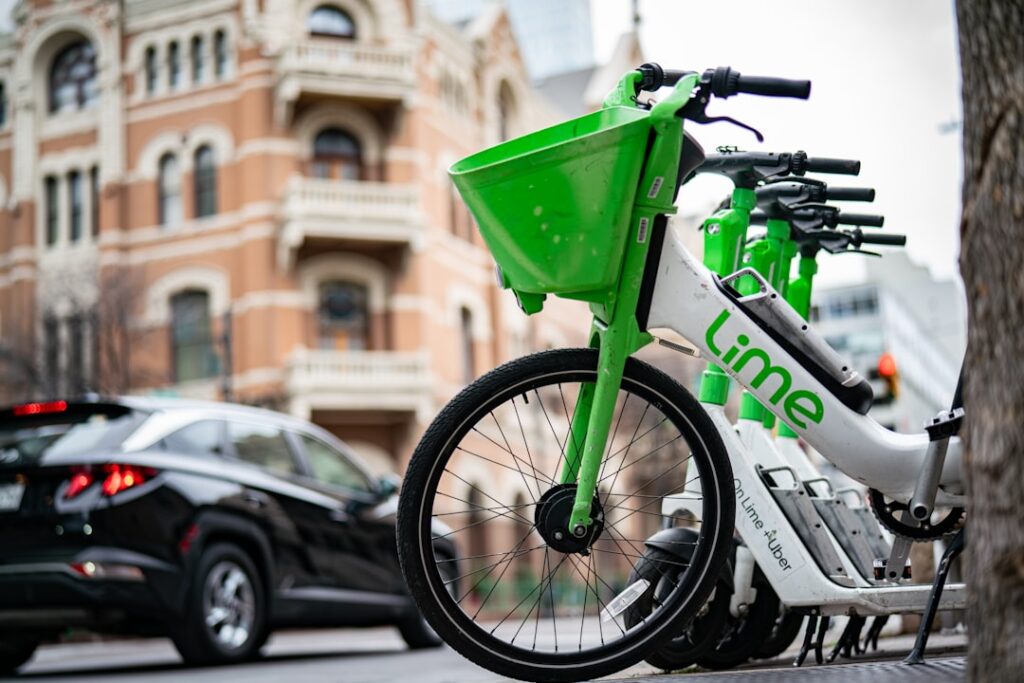
As of May 10, 2026, Lime’s S-1 filing sits in the SEC’s public database, a 217-page admission that it’s lost $1.3 billion since inception—and that it’s still not profitable. That’s the counterintuitive core of the Lime IPO: a company betting Wall Street will buy growth over fundamentals, just as the micromobility gold rush cools.
Key Takeaways
- Lime filed for an IPO on May 10, 2026, aiming to raise $100 million, though it hasn’t disclosed valuation.
- The company reported $412 million in revenue for 2025, up 12% year-over-year, but widened its net loss to $287 million.
- It operates in 250 cities globally, with 500,000 active vehicles—down from a peak of 620,000 in 2023.
- Lime’s S-1 warns investors that profitability “may not be achievable” even post-IPO.
- It’s now relying on AI-driven fleet management to cut costs, but that tech hasn’t moved the needle on margins.
Lime IPO: The Math Doesn’t Add Up—Yet
Let’s be blunt: Lime isn’t ready. Its IPO isn’t a victory lap. It’s a Hail Mary. The S-1 shows revenue growth slowing while losses deepen. It’s burning $780,000 per day. You don’t need a CFO to see that can’t continue. But Lime isn’t banking on spreadsheets. It’s betting on narrative—on investors remembering 2018, when Bird and Lime turned sidewalks into war zones and venture capital flowed like tap water.
That era’s long gone. Uber pulled out of e-bikes in 2024. Lyft sold its scooter division in 2025. Lime? It’s doubling down. The $100 million it hopes to raise isn’t for R&D. It’s for survival. Debt refinancing eats up $120 million of that target. There’s no path to breakeven in the filing. Not even a rough sketch. And yet, here we are.
What makes this more than a footnote is timing. The Nasdaq Composite is up 18% year-to-date. AI stocks are on fire. Lime’s hoping some of that heat spills over. It’s rebranded itself as an “urban AI mobility platform,” which sounds impressive until you read the details. The AI? It’s basic fleet rebalancing algorithms. Predictive parking. Route optimization. Nothing that couldn’t run on a Raspberry Pi. But in 2026, if you slap “AI” on a PowerPoint, suddenly you’re not a scooter company—you’re a data play.
Historical Context: The Rise and Fall of the Micromobility Bubble
The micromobility market has experienced a tumultuous growth trajectory since its inception. In 2017, Bird and Lime raised over $1 billion in funding, sparking a frenzy of investment in the sector. The market peaked in 2020, with over 1 million e-scooters and e-bikes deployed worldwide. However, the industry’s rapid expansion was unsustainable, and by 2022, many players had begun to struggle financially. Uber pulled out of e-bikes in 2024, and Lyft sold its scooter division in 2025, marking a significant decline in the sector’s fortunes.
Lime’s decision to file for an IPO in 2026 is proof of its resilience in the face of adversity. However, the company’s financial struggles and lack of profitability raise questions about its long-term viability.
The micromobility market’s collapse has left many investors and founders wondering what went wrong. Was it over-capitalization? Unmet demand? Regulatory uncertainty? Or was it simply the natural result of a rapidly growing industry reaching a saturation point?
The Ghost Fleet Problem
Lime’s real issue isn’t competition. It’s utilization. The company admits in its S-1 that only 38% of its vehicles are used daily. That’s not just inefficient. It’s a liability. Cities are fed up. Paris fined Lime $2.1 million in March for improper parking. Barcelona banned new scooter permits in January. New York paused all e-scooter expansions pending safety reviews. And every unused scooter sitting on a sidewalk is a PR risk, a city inspector’s target, and a maintenance cost.
We’ve seen this before. Theranos had sleek labs. WeWork had beanbag chairs. But infrastructure-heavy models collapse when usage doesn’t justify the burn. Lime’s fleet shrank by 120,000 units in two years. That’s not strategy. That’s triage.
Where the Money Actually Goes
Break down Lime’s 2025 operating expenses, and you’ll see the truth: $189 million went to “fleet operations.” That’s repairs, logistics, charging, and relocation. Another $94 million for “sales and marketing.” Product development? Just $41 million. R&D? $28 million. That’s not a tech company. That’s a logistics outfit with an app.
And here’s the kicker: 67% of its revenue comes from rider fees. The rest? Partnerships with cities and transit agencies. But those contracts are thin-margin and politically fragile. When mayors get heat over sidewalk clutter, Lime’s the first to get cut.
- Fleet operations: $189M (46% of expenses)
- Sales & marketing: $94M (23%)
- Product development: $41M (10%)
- R&D: $28M (7%)
- General & admin: $58M (14%)
That’s not where you’d spend if you were building AI. That’s where you spend when you’re chasing regulatory approval and fighting impoundments.
AI Isn’t Saving Lime—It’s Just Renaming the Problem
Lime claims its AI system, called “Neuron Fleet OS,” reduces idle time by 22% and cuts rebalancing costs by 15%. That sounds good—until you check the baseline. If only 38% of scooters are used daily, a 22% improvement still leaves over half the fleet doing nothing. And 15% savings on $189 million is $28.3 million. That’s less than half its annual loss.
What’s more, the system isn’t proprietary magic. It’s built on open-source routing models and Google Maps APIs. The company hasn’t hired a single machine learning lead in 18 months. Its last AI-focused hire was in 2023. The Neuron team has 14 engineers—fewer than the legal department.
Investor Skepticism Is Building
“They’re selling a mobility transition story, but the numbers scream stagnation,” said Clara Ruiz, partner at MobilityPulse Ventures, in an interview with TechCrunch. “If they were growing revenue at 30%, I’d say maybe. But 12%? In a market that’s flat? That’s not scaling. That’s treading water.”
“They’re selling a mobility transition story, but the numbers scream stagnation.” — Clara Ruiz, MobilityPulse Ventures
She’s not alone. Short interest in pre-IPO Lime debt has doubled since January. Hedge funds like Mosaic Capital have started pricing in a post-IPO drop of 30% or more. One analyst firm, UrbanTransit Analytics, models a 60% chance that Lime will need another capital raise within 18 months of going public. That’s not a vote of confidence. That’s a warning label.
What the S-1 Reveals About Lime’s Business
The S-1 filing provides a detailed breakdown of Lime’s business, including its revenue streams, expenses, and financial performance. The document reveals that Lime operates in 250 cities, with 500,000 active vehicles, and generates $412 million in revenue annually. However, the company’s net loss has widened to $287 million, and its operating expenses have increased by 20% year-over-year.
The S-1 also highlights Lime’s heavy reliance on rider fees, which account for 67% of its revenue. This raises questions about the sustainability of the company’s business model, particularly in the face of increasing competition and regulatory uncertainty.
Competitive Landscape: Who Are Lime’s Rivals?
Lime operates in a highly competitive market, with numerous players vying for market share. Some of its key competitors include Bird, Uber, Lyft, and Rev.
Bird, in particular, has been a thorn in Lime’s side, with the two companies engaging in a series of high-profile lawsuits over intellectual property and market share.
The competitive landscape in the micromobility sector is complex and constantly evolving, with new players entering the market and existing players adapting to changing consumer preferences and regulatory requirements.
Regulatory Implications: Will Cities Crack Down on Micromobility?
The regulatory environment surrounding micromobility is increasingly complex and restrictive. Cities are imposing stricter regulations on the sector, including caps on deployment numbers, increased safety requirements, and fees for permits and licenses.
Lime’s reliance on partnerships with cities and transit agencies makes it vulnerable to regulatory changes. If cities were to impose stricter regulations or withdraw support, Lime’s business model could be severely impacted.
The regulatory landscape is likely to continue evolving, with cities and governments seeking to balance the benefits of micromobility with concerns over safety, congestion, and noise pollution.
Adoption Timeline: When Will Micromobility Reach Mainstream?
The adoption of micromobility is expected to continue growing, with many experts predicting mainstream acceptance within the next 5-10 years.
However, the timeline for mainstream adoption will depend on various factors, including the development of more efficient and sustainable technologies, improvements in safety and infrastructure, and changes in consumer behavior and preferences.
Key Questions Remaining
Lime’s IPO raises more questions than answers. Will the company be able to achieve profitability? Can it regain investor confidence? Or will it become another casualty of the micromobility bubble?
The answers to these questions will depend on various factors, including Lime’s ability to improve its utilization rates, reduce costs, and adapt to changing regulatory requirements.
However, : Lime’s IPO is a warning sign for the micromobility sector, highlighting the need for more sustainable and efficient business models, as well as greater regulatory clarity and consumer awareness.
What This Means For You
If you’re building a hardware-heavy startup, Lime’s IPO should scare you. It shows that even with brand recognition, global reach, and VC backing, you can’t outspend inefficiency. The lesson isn’t about scooters. It’s about unit economics. No amount of AI rebranding saves you when your core product sits idle most of the time. Founders: obsess over utilization rates. Track every dollar spent on physical logistics. Because if you don’t, your investors will—and they won’t be gentle.
For developers, this is a reality check. The AI layer you’re building? It’s not the product. It’s an optimization tool. And if the thing it’s optimizing isn’t fundamentally sound, you’re just polishing a sinking ship. Build for efficiency, yes—but start by asking if the model works at all. Because Wall Street might forgive a loss. It won’t forgive irrelevance.
Can a company that’s lost $1.3 billion in its lifetime ever convince the public it’s a safe bet? Or is the Lime IPO just the last gasp of a bubble that never really burst—just deflated slowly, quietly, and completely out of sight?
Sources: TechCrunch, Bloomberg