




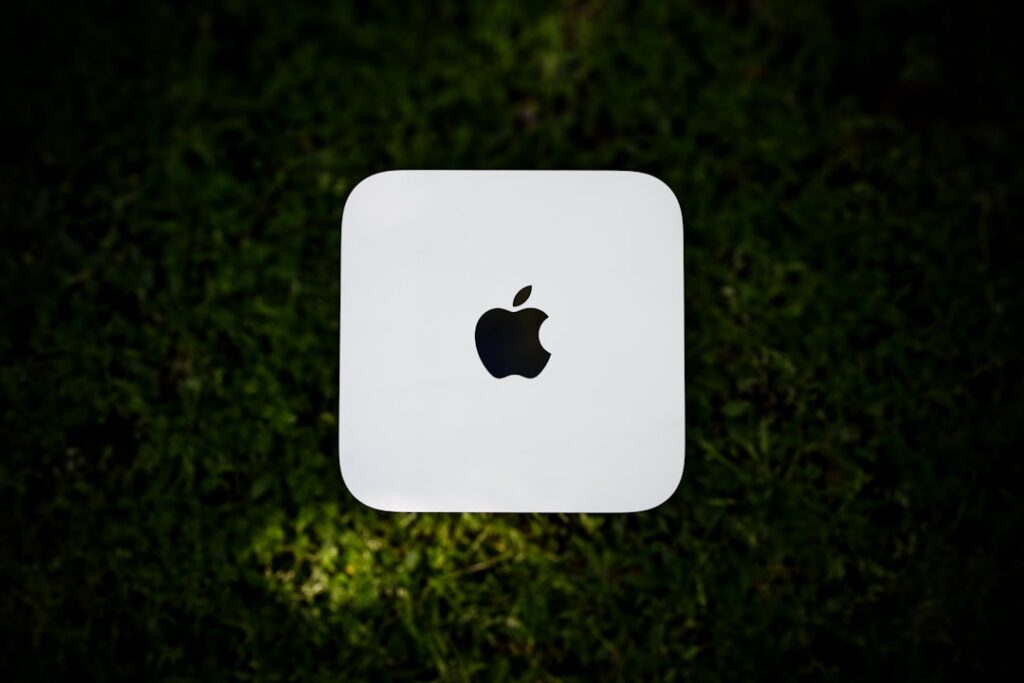
Apple’s Mac Mini now starts at $799. That’s a $200 jump from the previous entry-level price, after the company quietly removed the $599 base model with 256GB of storage from its online store on May 1, 2026 — a move first spotted by MacRumors.
Key Takeaways
- The Mac Mini’s starting price is now $799, up from $599, with no 256GB option available at checkout.
- Tim Cook confirmed on Apple’s April 30, 2026 earnings call that chip shortages will impact Mac product availability into June and beyond.
- Cook specifically named the Mac Mini and Mac Studio as models facing “several months” of supply-demand imbalance.
- Demand for both compact desktops has been “higher-than-expected”, according to Apple’s CEO.
- The removal of the $599 model came one day after Cook’s supply warning — a strikingly tight timeline.
Apple’s $200 Quiet Hike
There was no press release. No fanfare. Not even a footnote in Apple’s product specs. On May 1, 2026, the $599 Mac Mini vanished from the online store. Visitors looking to configure the device now faced a floor of $799 — a 33% price increase for entry-level access to Apple’s compact desktop.
The jump isn’t tied to a new model launch. No redesign. No chip upgrade. This isn’t a product refresh. It’s a supply-side retreat masked as a price adjustment.
That matters. Because if Apple were simply sunsetting an old model, you’d expect a new one to replace it. Instead, customers are being forced up the configuration ladder — the next cheapest option jumps to $899 with more storage — with no true entry-level alternative in sight.
And Apple isn’t explaining why, at least not publicly. But the clues are in Tim Cook’s own words from the previous day.
“Several Months” of Shortages Ahead
On April 30, 2026, during Apple’s quarterly earnings call, Tim Cook addressed upcoming supply constraints. He didn’t mince words.
“If you look forward to June, the majority of our supply constraints will be on several Mac models. We think looking forward that the Mac Mini and the Mac Studio may take several months to reach supply-demand balance.”
He also noted both devices saw “higher-than-expected demand” — a rare admission from a company that typically downplays shortages or chalks them up to temporary hiccups.
Now, connect the dots: the earnings call was April 30. The $599 model disappeared May 1. That’s not a coincidence. That’s a supply chain triage.
Apple isn’t just warning about shortages — it’s already acting on them. By pulling the cheapest configuration, Apple is likely redirecting limited silicon toward higher-margin units. Fewer chips, fewer units. So why not just limit sales volume? Because that would create long wait times, customer frustration, and retail chaos. Instead, Apple is using price as a demand filter.
It’s a classic economic lever: if you can’t make more, make each sale count more. And make sure the people buying are the ones willing to pay.
How Supply Chains Shape Product Strategy
The Chip That’s Holding Back the Mini
The Mac Mini, especially the M4-powered base model, relies on Apple’s custom silicon — the same family of chips used across MacBooks, iPads, and higher-end desktops. But not all chips are created equal, and not all configurations use the same die.
The $599 model shipped with a slightly downclocked M4 chip, 8GB of RAM, and 256GB of storage — a configuration designed to hit that aggressive price point. But producing that specific variant requires its own yield optimization, testing, and packaging pipeline.
When global chip supplies tighten — particularly at TSMC, Apple’s exclusive foundry partner — companies don’t just lose capacity equally across all products. They prioritize. And Apple’s priority isn’t the $599 Mini. It’s the MacBook Pro, the iMac, and the higher-end Mac Studio — devices with fatter margins and loyal professional buyers.
So the 256GB Mini gets axed. Not because it’s unprofitable, but because it’s less profitable — and because producing it consumes precious wafer space that could go toward a $1,299 MacBook Air or a $1,999 Mac Studio.
It’s Not Just Availability — It’s Allocation
This isn’t a story about empty warehouses. It’s about deliberate allocation.
Apple controls its supply chain like no other consumer tech company. It signs multi-year agreements with TSMC, pre-pays for wafer capacity, and designs chips years in advance. But even Apple can’t insulate itself from broader semiconductor bottlenecks — especially when AI-driven demand for advanced-node chips is straining foundry capacity across the industry.
And while Apple’s chips aren’t used in data centers like NVIDIA’s GPUs, they’re made on the same leading-edge process nodes — 3nm and now early 2nm — that are in short supply. So when TSMC can’t ramp output fast enough, every customer gets squeezed.
Apple’s response? Pull the lowest-margin product using those constrained resources. It’s cold. It’s efficient. It’s also smart business.
- Mac Mini base storage now starts at 512GB — double the previous entry-level capacity.
- The $799 model includes the same M4 chip but with double the storage of the discontinued $599 unit.
- RAM remains at 8GB in the base model — unchanged.
- Apple has not announced any timeline for restoring the 256GB option.
- Third-party retailers still list the $599 model, but most show immediate out-of-stock notices.
Why the Mini Matters More Than You Think
The Mac Mini is easy to dismiss — a small box, no screen, no fan noise. But it’s a quietly strategic product.
It’s the gateway drug to the Mac ecosystem for developers, homelabbers, and small businesses. It’s the silent server in countless startups’ racks. It’s the education lab machine, the digital signage brain, the embedded kiosk controller.
At $599, it was a bargain: full macOS, Apple silicon, Thunderbolt, and enterprise manageability in a 7.7-inch cube. That price point made it viable for bulk purchases. Schools could deploy 30. Dev shops could standardize on it. Consultants could ship them pre-configured to clients.
At $799, that math gets harder. For individual users, it’s a sting. For organizations, it’s a line-item increase that adds up fast. And with no 256GB option, there’s no way to reduce cost — only increase it.
That could push some buyers toward Mac minis with older chips (still sold as refurbished), toward MacBooks, or worse — out of the ecosystem entirely.
The Silent Squeeze on Entry-Level Tech
What Apple is doing isn’t illegal. It’s not even uncommon. But it’s a reminder: when supply crunches hit, the cheapest option always goes first.
We’ve seen this before. In 2021, Sony removed the base PS5 with disc drive from many regions. In 2022, Dell killed the $999 XPS 13 configuration. Every cycle, the entry door gets narrower.
And this time, it’s happening while inflation has already stretched consumer budgets thin. A $200 jump on a device many rely on for work isn’t just a price change — it’s a barrier.
Apple will say the new $799 model offers better value: more storage, same chip. But that’s not how it feels. It feels like a loss. The 256GB model wasn’t broken. It was popular. And its disappearance — right after a CEO warning about supply — suggests it wasn’t killed by low demand, but by high constraints.
That’s the irony. The Mac Mini saw “higher-than-expected demand,” according to Cook. And Apple’s response was to make it more expensive and harder to buy. That’s not meeting demand. That’s rationing it.
What This Means For You
If you’re a developer or small business relying on the Mac Mini as a low-cost macOS build server or CI/CD node, the price jump matters. $799 per unit means you’ll pay $2,397 for three — $600 more than before. That’s real money, especially when budgets are tight. And with no sign of the 256GB model returning, you can’t cut costs by accepting less storage. The floor has moved.
For founders and tech leads, this is a warning sign. Apple may be the most stable hardware vendor in the ecosystem, but even it can’t insulate you from supply shocks. If your infrastructure depends on specific Apple hardware, you need contingency plans — older models, alternative form factors, or virtualized macOS environments. Waiting for Apple to restock could mean months of delay.
One thing is certain: the Mac Mini’s role as an affordable on-ramp to Apple’s desktop ecosystem just got a lot narrower. And no amount of spin about “better storage value” changes that.
How long will developers and small teams tolerate being treated as afterthoughts in Apple’s margin calculus?
Sources: The Verge, original report