



When Milcah Wanjiru tells us that about 40% of what diesel‑powered mill owners charge customers ends up covering fuel, you instantly see why off-grid solar is turning heads in Nairobi. Her modest stall on a bustling Nairobi street now runs a grain mill that draws power from a rooftop panel instead of a diesel engine, and the numbers she shares make the switch feel less like a hobby and more like a business imperative.
Key Takeaways
- Solar‑powered grain mills can slash operating costs by up to 80% after the upfront investment.
- Initial capital for a mill sits around $1,300, recouped in six to twelve months.
- Agsol sold 530 units in 2025 and is fielding orders from Mozambique to Angola.
- Kenya aims for universal electricity access by 2030, leaning heavily on off‑grid solutions.
- Small‑batch grinding, once a niche service, is now attracting new customers to solar mills.
Off-Grid Solar in Nairobi: A Business Case
Kenya’s national grid already leans on renewables, yet roughly a quarter of its communities still lack centralized electricity. The country’s 2030 goal of universal access hinges on off‑grid technologies, and entrepreneurs are the ones testing whether the economics add up. At Wanjiru’s stall, the solar mill’s 2025 debut coincided with a steep drop in panel prices – from $3 per watt a few years back to “cents” today, according to the source.
Historical Context
The push toward renewable power in Kenya didn’t start with a single invention. Over the past decade, the government has woven solar into its energy mix, setting ambitious targets that ripple through the private sector. The first solar grain mill from Agsol rolled out in 2018, a milestone that was backed by a UK government program focused on clean‑energy pilots in the region. That early deployment proved the concept could survive the rough‑and‑tumble of informal markets, where power interruptions are common and diesel fuel prices swing wildly.
Since that pilot, policy signals have grown louder. Kenya’s 2030 electricity target has been reinforced by successive national plans that earmark a sizable share of new connections for off‑grid installations. The policy environment, combined with falling hardware costs, created a sweet spot for entrepreneurs like Wanjiru to experiment without bearing the full risk of a brand‑new technology.
Why Diesel Isn’t Cutting It Anymore
Diesel‑powered mills dominate Nairobi’s low‑income neighborhoods, but they come with a hidden tax: fuel. Carr, Agsol’s CEO, says that fuel can eat up 40% of a shop’s revenue. That’s a hefty slice when you consider the thin margins many informal vendors operate under. Wanjiru’s own experience confirms the pain point. “Whenever customers came to mill their grain, they asked for other goods,” she says, “and this is how I got to stock these other items.”
“It can be slow,” Wanjiru tells Carr, explaining that grains sometimes jam the front chamber.
That jam isn’t just an inconvenience; it translates into lost time and, ultimately, lost sales. Carr explains that the mill automatically reduces speed when it detects damp grain, a safety feature that can exacerbate the jamming issue. Still, the trade‑off feels worthwhile when you compare the fuel expense of a diesel engine to the near‑zero operating cost of a solar‑powered unit.
Cost Curve: From Up‑Front Spend to Profit Boost
The price tag for Agsol’s solar mill sits at about $1,300. For a street‑level vendor, that’s a chunk of cash, but the payoff window is surprisingly short. Carr estimates a break‑even period of six to twelve months, after which the mill can be up to 80% more profitable than its diesel counterpart. That profitability isn’t just about cutting fuel – it also comes from the mill’s ability to process smaller grain batches, opening a niche market that diesel models ignore.
Wanjiru’s customers now include households that only need a handful of kilograms of maize for a single meal. Those micro‑orders would have been uneconomic for a diesel mill, but the solar unit can grind them without wasting fuel or time. That flexibility has nudged a few new faces through her door, and she’s already seeing a modest uptick in repeat business.
Technical Architecture
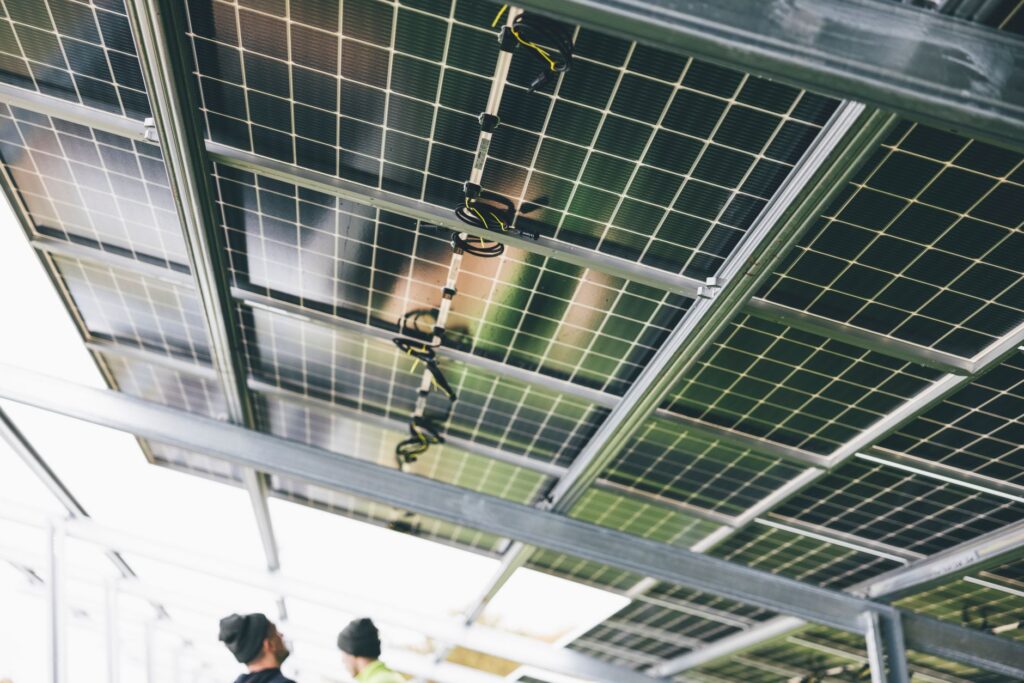
At the heart of the system is a rooftop photovoltaic panel that captures sunlight and feeds electricity directly to a brushless motor. The motor drives the grinding burrs, while an integrated controller monitors torque and speed. When moisture sensors detect damp grain, the controller throttles the motor to prevent damage, which is why the unit may feel slower during a jam. A small battery buffer smooths out short‑term fluctuations, ensuring the mill can keep grinding even if clouds pass over.
Design choices keep the hardware lightweight and easy to install. Panels are mounted on a simple frame that can be bolted onto existing stall roofs, and the motor‑controller package plugs into a weather‑sealed enclosure. This modularity means a vendor can replace a faulty component without dismantling the entire system, a practical advantage in a bustling market where downtime translates to lost income.
Scaling the Solar Mill Model Across East Africa
Agsol didn’t launch its first product in a vacuum. The company rolled out its inaugural solar mill in Kenya back in 2018, backed by a UK government program that supports clean‑energy projects in the region. Since then, it’s raised over $4 million in investment, a blend of private and public funds that underscores the growing appetite for off‑grid solutions.
Last year, Agsol shipped 530 units, a figure that hints at a market still in its infancy but expanding quickly. Orders have already trickled in from Mozambique and Angola, suggesting that the business model could scale beyond Kenya’s borders. If those neighboring markets face similar electricity gaps, the same cost dynamics could apply, making solar mills an attractive proposition for a broader swath of African entrepreneurs.
Competitive Landscape
Diesel remains the dominant power source for grain grinding in many low‑income districts. Its advantage lies in familiarity and the ability to run regardless of sunshine. However, the hidden fuel cost, as highlighted by Carr, erodes profit margins and forces operators to constantly chase a volatile commodity market. Solar entrants, by contrast, front‑load the expense in the hardware purchase but enjoy near‑zero marginal cost thereafter.
The emerging competition isn’t limited to power sources. Other off‑grid technologies—such as battery‑backed LED lighting for small workshops—are also vying for the same pool of capital‑constrained entrepreneurs. In that environment, the grain mill’s unique value proposition—processing micro‑batches with minimal operating expense—helps it carve a distinct niche.
Challenges on the Ground: Speed and Reliability
Even as the solar mill gains admirers, it isn’t without flaws. The primary complaint Wanjiru raises is speed. Grain can get stuck in the feed chamber, causing the whole process to jam. Carr’s response – throttling the motor when damp grain is detected – is a thoughtful safety measure, but it also slows throughput. For a vendor juggling multiple customers, that lag can feel like a bottleneck.
That said, the trade‑off may be acceptable when you weigh it against the cost of diesel fuel and the environmental toll of burning fossil fuels. The solar mill’s reliability isn’t just measured in minutes saved; it’s also reflected in the absence of fuel supply disruptions, which can be a real issue in Nairobi’s informal markets.
What This Means For You
If you’re a developer building hardware for low‑income markets, the Nairobi case study offers a clear data point: users value flexibility and low operating costs over raw speed. Designing a motor controller that can intelligently adjust torque without sacrificing throughput could give you a competitive edge. Think about integrating moisture sensors that pre‑empt jams rather than reacting to them, thereby keeping the mill humming even with damp grain.
For founders eyeing clean‑energy ventures, the numbers are encouraging. A $1,300 upfront investment can be recouped in under a year, and the market appetite appears strong enough to justify scaling. Aligning with government‑backed financing programs, like the UK initiative that helped Agsol, could de‑risk the early capital outlay and accelerate market entry.
Developers should consider building modular, plug‑and‑play solar kits that can be retrofitted onto existing diesel mills. That approach would let operators upgrade without discarding their current equipment, smoothing the transition and expanding your addressable market.
Founders need to keep an eye on policy shifts. Kenya’s 2030 electricity target is driving demand for off‑grid solutions, and governments across East Africa are likely to follow suit. Positioning your product as a piece of that national strategy could open doors to subsidies, grants, or low‑interest loans that make the upfront cost less daunting for small‑scale entrepreneurs.
Imagine a vendor in a peri‑urban settlement who currently spends half of his daily cash flow on diesel. By swapping to a solar mill, he frees up that cash to buy fresh produce, thereby attracting higher‑spending customers. Or picture a tech startup that packages a moisture‑sensor module for the mill; the module could become a standard add‑on, creating a recurring revenue stream beyond the initial hardware sale.
As Nairobi’s streets continue to buzz with the hum of solar‑powered mills, the real question is whether the model can maintain its momentum once the novelty fades. Will the economics hold up as more players enter the market, or will new challenges emerge that force a rethink of the off‑grid solar narrative?
Key Questions Remaining
- How will larger‑scale operators adapt the micro‑batch advantage when serving high‑volume clients?
- What financing mechanisms can be introduced to lower the initial $1,300 barrier for the most cash‑strapped vendors?
- Will advances in battery technology shorten the speed gap that currently concerns users?
- How might regional regulatory frameworks evolve to support cross‑border sales of solar milling equipment?
Sources: MIT Tech Review, original report