




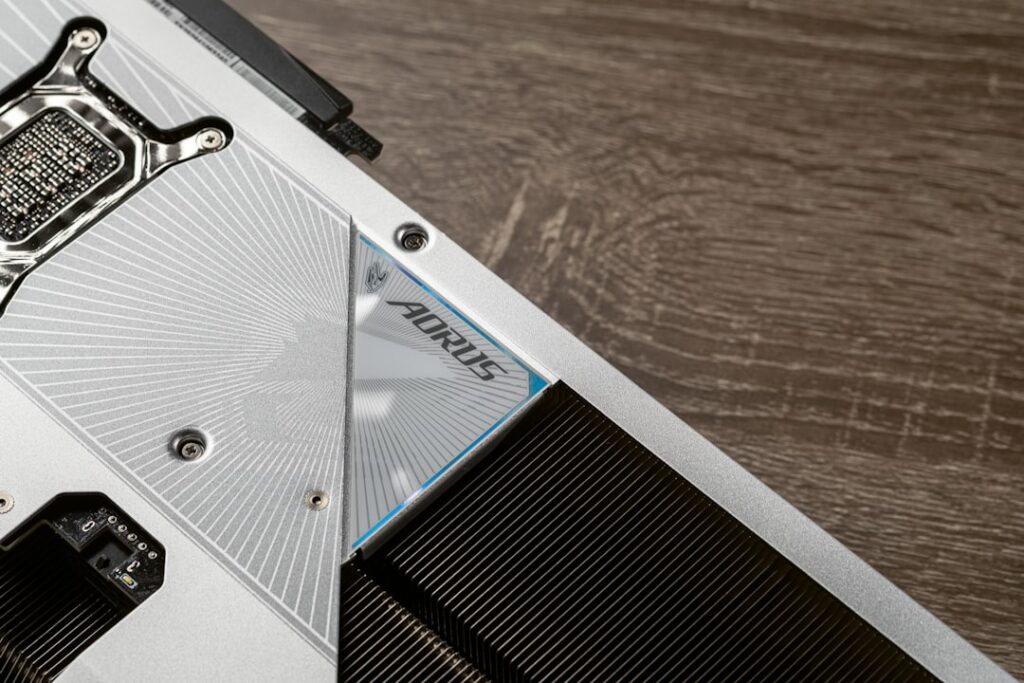
12GB of VRAM is now standard on NVIDIA’s new RTX 5070 laptop GPUs, effective April 29, 2026. That’s up from the 8GB configuration previously available, according to original report from Engadget. The change applies across all new laptop models shipping with the chip and marks a quiet but significant shift in mobile GPU memory allocation.
Key Takeaways
- The RTX 5070 for laptops now ships with 12GB GDDR6 memory as standard, not 8GB.
- This is not a new GPU architecture or clock speed bump — it’s a memory-only revision.
- NVIDIA did not issue a press release; the update was confirmed in a blog post.
- Higher VRAM helps with 4K gaming, AI inference, and large texture workloads.
- OEMs like ASUS, Lenovo, and MSI are already listing 12GB models in refreshed 2026 laptop lineups.
Memory Creep Isn’t Free — But It’s Necessary
Let’s be clear: this isn’t a performance leap. There’s no mention of faster cores, improved ray tracing units, or a new driver stack. What you’re getting is more VRAM — and in 2026, that’s starting to matter more than raw shader power.
Why? Because modern games at ultra settings chew through 8GB like it’s dial-up era cache. Alan Wake 2, Cyberpunk 2077 with path tracing, Starfield on maxed presets — all flirt with or exceed 10GB of VRAM usage even on desktops. Push to 1440p or 4K on a laptop, and 8GB becomes a bottleneck almost immediately.
But gaming’s only half the story. Local AI inference is picking up speed. Run Llama 3-70B via llama.cpp? You’ll want every byte you can get. Even Stable Diffusion XL at 4K benefits from larger frame buffer headroom. The era of treating GPUs as just gaming parts is over. NVIDIA knows this. That’s why they’re padding the memory now — not for bragging rights, but because 12GB is the new baseline for anything claiming to be ’prosumer’ in 2026.
This Was Inevitable — But Not For Performance
Back in 2023, a 6GB GPU could still handle AAA games at 1080p. By 2025, 8GB was the floor. Now, in April 2026, we’re seeing the floor rise again. And NVIDIA didn’t wait for backlash. They didn’t need another round of ‘VRAM-gate’ headlines like the 3070 Ti desktop card fiasco. This time, they’re staying ahead — quietly.
The move isn’t flashy, but it’s smart. More VRAM doesn’t require a die shrink or new manufacturing node. It’s a configuration tweak. Same GPU die, same power envelope, just more memory chips strapped on. That’s cheaper and faster than launching a new SKU. And it dodges supply chain hiccups tied to advanced silicon.
Still, there’s a tradeoff. GDDR6 at 18 Gbps on a 192-bit bus means bandwidth is still capped at 432 GB/s. That hasn’t changed. So while you can fit bigger assets in memory, you can’t stream them faster. Texture loading hitches? They might still happen. Bandwidth-bound scenarios? Still a risk. This is expansion, not evolution.
Competitors Are Playing Catch-Up — But Differently
AMD’s RX 7800M, launched in late 2025, ships with 12GB of GDDR6 by default across all laptop partners, including Dell’s Alienware m18 and Acer’s Predator Helios 16. But AMD took a different approach: they prioritized bandwidth over power efficiency, pairing the 12GB frame buffer with a 256-bit memory bus and 20 Gbps memory, hitting 512 GB/s. That’s 18% more than the RTX 5070’s 432 GB/s. For raw throughput in texture-heavy games like Horizon Forbidden West or Call of Duty: Black Ops 6, AMD’s configuration has an edge.
Intel, meanwhile, is still struggling to gain traction. Their Arc A770M remains capped at 16GB in only a few high-end laptops from Samsung and Lenovo — but driver maturity and DX12 optimization gaps limit real-world usability. Benchmarks from TechPowerUp in March 2026 showed the A770M averaging 15–20% slower than the 5070 in ray tracing workloads despite the VRAM advantage. Their focus has shifted to AI acceleration with XeSS 3.0, but adoption in games remains under 40%, per Steam’s April hardware survey.
NVIDIA’s strategy isn’t about winning specs on paper. It’s about ecosystem lock-in. CUDA, TensorRT, and DLSS 4.0 are baked into nearly every major creative and AI app. Even with lower bandwidth, the 5070 delivers better real-world performance in Adobe Premiere, Blender, and local LLM inference because the software stack is optimized. AMD and Intel can match or exceed VRAM, but they can’t replicate the software depth — at least not yet.
The Bigger Picture: Why 12GB Is the New Baseline
In 2020, 6GB was standard on mid-tier laptop GPUs. By 2024, 8GB became the minimum for any machine priced over $1,200. Now, in 2026, 12GB is the new threshold — and this shift reflects broader changes in how we use laptops. It’s not just about higher-resolution textures or ray tracing. It’s about compute density.
Consider Adobe’s new Firefly video model, released in Q1 2026. Generating 4K video clips from text prompts requires at least 10GB of VRAM even with model quantization. Similarly, Epic Games’ Unreal Engine 5.4 now defaults to Nanite and Lumen at 8K asset streaming, pushing typical scene memory usage to 9–11GB. These aren’t niche workloads. They’re shipping in consumer-facing apps and creator tools used by millions.
Even Windows itself is eating more VRAM. The new Copilot+ AI features in Windows 11 24H2 reserve up to 2GB of GPU memory for on-device AI tasks like live captioning, background blur, and voice summarization. That leaves less headroom for apps — making the jump from 8GB to 12GB not just helpful, but necessary for smooth multitasking.
This isn’t just NVIDIA reacting to games. It’s responding to an operating system, an app ecosystem, and a generative AI wave that’s redefining what a laptop GPU does. The 5070’s upgrade is a signal: if you’re building hardware in 2026, assume every app will want GPU memory — and plan accordingly.
What OEMs Are Saying — And Not Saying
ASUS updated its ROG Zephyrus G16 lineup on April 28 with the 12GB 5070, listing it as a ‘silent upgrade’ in the specs table with no fanfare. Lenovo followed hours later, rolling it into the Legion Slim 7. MSI quietly refreshed the Raider GE68. No press events. No hype reels. Just revised spec sheets.
And here’s the thing: not a single OEM called this out in marketing copy. No ‘Now with 50% more VRAM!’ banners. No comparison charts. Just a footnote in the tech specs. That tells you everything: they know customers care, but they don’t want to draw attention to how bare-bones the previous version was.
- ASUS ROG Zephyrus G16 (2026) — 12GB RTX 5070, $1,599
- Lenovo Legion Slim 7 — 12GB RTX 5070, $1,499
- MSI Raider GE68 — 12GB RTX 5070, $1,799
- HP Omen 16 — still lists 8GB variant as ‘while supplies last’
The Real Target Isn’t Gamers — It’s Developers
Yes, gamers benefit. But the real win here is for mobile developers running local AI models, shader debugging, or 3D rendering on the go. A 12GB buffer means you can run TensorRT-LLM inference with quantized models up to 34B parameters without hitting OOM errors. That wasn’t reliable on 8GB — especially with a desktop environment eating 1.5GB in the background.
Unity and Unreal developers working with high-poly scenes or baked lighting will notice fewer ‘out of video memory’ crashes during playback. And if you’re doing local Stable Diffusion training with LoRAs, 12GB gives you headroom to push resolution without constant swapping.
NVIDIA isn’t shouting about this, but the signal is clear: they’re treating the 5070 not as a gaming part, but as a mobile compute engine. That’s a shift. It means the line between ‘gaming laptop’ and ‘portable workstation’ is blurring — and NVIDIA is pushing the envelope from the mid-tier up, not the top down.
Why No Announcement? Because There’s No Drama
Remember when NVIDIA launched the 3070 with 8GB and everyone assumed it was fine? Then benchmarks showed VRAM shortages at 1440p? That backlash forced them to tweak later SKUs. This time, they’re avoiding that script entirely.
By rolling this out through OEMs with zero press coverage, NVIDIA sidesteps expectations. No one’s comparing launch-day specs to revised ones. No YouTubers calling it a ‘revision scam.’ It’s just… available. smooth. Boring. And that’s the point. Boring is safe. Boring doesn’t trend on social media.
What This Means For You
If you’re buying a laptop with an RTX 5070 today, April 29, 2026, check the VRAM. Some retailers may still have old 8GB stock. But all new SKUs should be 12GB. That extra memory will future-proof your machine for at least another 18 months of game releases — and that’s not nothing.
For developers, this is a quiet win. Running local LLMs, AI art tools, or game engines on a laptop just got more viable. You won’t need to drop $3,000 on a mobile RTX 5090 to avoid constant memory pressure. The 5070 is becoming the sweet spot — not for raw speed, but for balance.
But don’t mistake this for generosity. NVIDIA didn’t do this out of the goodness of their silicon-foundry heart. They did it because the software stack caught up to their hardware limits. And when reality bites, even giants have to adapt — quietly.
Now that 12GB is table stakes for mid-tier laptops, how long before 16GB becomes standard — and who’s going to blink first?
Sources: Engadget, The Verge, TechPowerUp, Steam Hardware Survey April 2026, NVIDIA Developer Blog