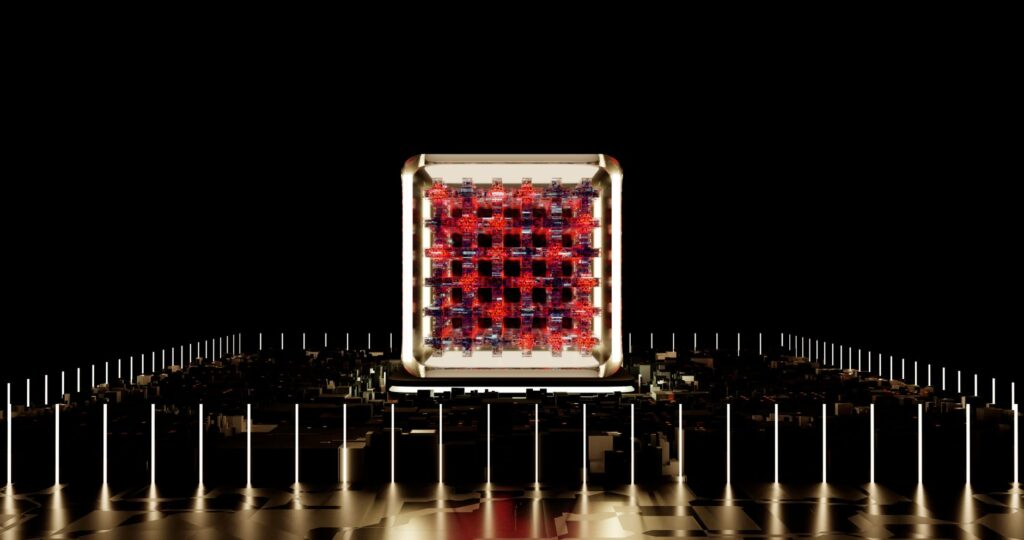
Libra will contain between 10,000 and 15,000 qubits, a scale that’s record for neutral‑atom platforms, and QuEra says it could be delivering a fault tolerant quantum computer by 2028. The claim feels audacious, especially when you consider that today’s quantum machines still stumble over basic error correction.
Key Takeaways
- QuEra’s Libra aims for 256 logical qubits with an error rate of 1 per million.
- The system targets a “megaquop” – roughly one million quantum operations.
- Neutral‑atom qubits are cooled to near absolute zero and manipulated with lasers.
- Industry peers like IBM expect fault‑tolerant devices no earlier than 2029.
- Experts see both promise and risk; the timeline could shift by years.
Historical Context
The neutral‑atom approach has been gaining traction for several years. Early demonstrations focused on proving that individual atoms could be trapped and addressed reliably. Those experiments paved the way for larger arrays, culminating in a 6,100‑qubit neutral‑atom lattice—the biggest built to date, even though it hasn’t yet been used for computation. Parallel to that, the community has been chasing error‑corrected logical qubits. The current record stands at 48 logical qubits, a benchmark that shows error‑correction codes can be layered on top of noisy hardware.
Superconducting platforms, led by companies like IBM, have followed a different trajectory. IBM’s public roadmap places its first fault‑tolerant machines in 2029, a year later than QuEra’s target. That timeline reflects the slow, deliberate scaling of cryogenic hardware and the need to integrate error‑correction protocols that have only been demonstrated on small patches.
Both camps share a common milestone: achieving a “megaquop.” The term, popularized in a 2025 report, signals a machine capable of executing one million quantum gate operations with a coherent error budget. Hitting that marker would open a class of problems that are out of reach for classical supercomputers and for today’s noisy‑intermediate‑scale quantum (NISQ) devices.
Libra’s fault tolerant quantum promise
“Having the first fault‑tolerant quantum computer will be like breaking the sound barrier,” says Yuval Boger, lead researcher at QuEra. That metaphor captures the excitement and the uncertainty. Libra’s design hinges on grouping thousands of physical qubits into 256 logical qubits, each of which is supposed to make a mistake only once in a million operations – even if individual atoms are less reliable.
From atoms to logical qubits
QuEra’s approach relies on electrically neutral atoms that are chilled to temperatures where they barely move. Lasers trap and steer each atom, turning it into a qubit. The challenge isn’t just keeping the atoms cold; it’s also replacing any that “warm up” and become faulty. Boger notes that the company is already running five experimental rigs to fine‑tune that replacement process and to manage the massive laser power needed for tens of thousands of qubits.
Because neutral atoms can be arranged in dense, three‑dimensional lattices, the conversion from physical to logical qubits is arguably smoother than with superconducting circuits. Joe Fitzsimons of Horizon Quantum Computing points out that “the neutral atom approach lends itself to an easier conversion between qubits and logical qubits, which could prove to be a key advantage.”
Technical Architecture and Scaling Challenges
Cooling neutral atoms to near absolute zero is a prerequisite for coherent quantum behavior. The process uses laser cooling techniques that bring the atoms to a motional state where thermal noise is negligible. Once cold, optical tweezers—highly focused laser beams—hold each atom in a precise location. Moving those tweezers quickly enough to perform gate operations, while preserving the fragile quantum state, pushes the limits of current photonics engineering.
Scaling from a few thousand atoms to the 10,000‑plus range demands a proportional increase in laser power and optical components. QuEra’s five experimental rigs serve as testbeds for that scaling. They explore how to re‑initialize atoms that drift out of the trapping region, how to keep the lattice homogeneous, and how to synchronize gate pulses across a massive array. The architecture also embeds a classical control stack that translates high‑level quantum programs into laser pulse sequences, a layer that must operate in real time to avoid decoherence.
Error correction adds another layer of complexity. Logical qubits are formed by entangling groups of physical qubits in a way that distributes errors across the ensemble. The resulting code space can tolerate a certain number of faulty atoms before the logical information is lost. Achieving the advertised 1‑in‑1,000,000 error probability means the control software must detect and correct errors faster than they accumulate, a timing challenge that becomes tighter as the number of operations grows toward a megaquop.
The road to a megaquop
John Preskill, a quantum‑computing authority at Caltech, told original report in 2025 that a machine capable of a “megaquop” – roughly one million quantum gate operations – could usher in a new era for the field. QuEra’s Libra is designed to hit that milestone, which would let researchers tackle simulations that are currently out of reach for both classical supercomputers and today’s noisy quantum devices.
Even if the hardware meets its specs, there’s still the software side. Boger hopes the cloud‑based Libra will become a “discovery machine” that spurs new algorithms. “I wouldn’t be surprised if most algorithms that end up being useful haven’t been discovered yet,” he says.
Current benchmarks
- Largest neutral‑atom array built to date: 6,100 qubits (not yet used for computation).
- Largest error‑corrected logical qubit set demonstrated: 48 qubits.
- IBM’s forecast for fault‑tolerant machines: first offerings in 2029.
- QuEra’s target logical qubits: 256, each with 1‑in‑1,000,000 error probability.
Industry timeline and competition
While QuEra is pushing for a 2028 launch, the broader industry remains cautious. IBM’s roadmap places its first fault‑tolerant systems a year later, and other players like Atom Computing are still wrestling with the same engineering hurdles. Jonathan King at Atom Computing warns that moving from “lab demonstration” to a fully functional computing system “will require integrating many scientific and engineering advances.”
Amazon Web Services is already on board as a cloud partner, meaning that once Libra is live, developers could access it without buying a custom cryostat. That partnership could accelerate adoption, but it also means QuEra has to make its control software strong enough to sit inside AWS’s existing infrastructure.
Skeptics and challenges
Thomas Wong of Creighton University says, “It’s plausible that they’ll get there by 2028, but it’s equally plausible that they’ll overshoot it by a couple of years or more.” The caveat is more than timeline‑talk; it reflects genuine technical risk. Scaling from a few thousand atoms to over ten thousand while maintaining coherence is a non‑trivial engineering problem.
Fitzsimons acknowledges the ambition but adds that QuEra’s track record on error‑correction breakthroughs gives the company “a strong track record.” Still, the fact that no fully functional fault‑tolerant quantum computer exists yet means the community is watching closely for any hard data that confirms the error‑rate claims.
What This Means For You
If Libra lands on schedule, developers will have a cloud‑based platform that can run quantum algorithms with dramatically lower error rates than today’s noisy‑intermediate‑scale quantum (NISQ) machines. That could translate into more reliable chemistry simulations, better materials modeling, and the ability to experiment with algorithmic ideas that were previously too risky to test.
For startups and research groups, the AWS integration means you won’t need to manage cryogenics or laser arrays yourself. Instead, you’ll be able to spin up a quantum job much like you would a container in a Kubernetes cluster, paying only for the compute you actually use. That could lower the barrier to entry for quantum‑enhanced drug discovery or quantum‑aware AI research.
Consider a biotech team that needs to evaluate thousands of molecular conformations. Today they run classical approximations that miss subtle quantum effects. With Libra’s lower error floor, the same team could run exact quantum chemistry routines on a cloud instance, narrowing the candidate list before synthesis and cutting experimental costs.
Another scenario involves a materials science group aiming to discover high‑temperature superconductors. Classical simulations struggle with electron correlation at scale. A fault‑tolerant quantum system could explore candidate lattices in a regime where error accumulation would previously have corrupted the results, giving the team a clearer view of promising compounds.
Finally, a fintech startup could prototype quantum optimization algorithms for portfolio allocation. Today’s NISQ devices force them to truncate problem sizes or accept noisy outcomes. Libra’s logical qubits and megaquop capability would let the startup test larger, more realistic models, providing a competitive edge if the algorithms prove advantageous.
Key Questions Remaining
Will the 256 logical qubits be sufficient to demonstrate a clear quantum advantage on real problems, or will the field need to push toward thousands of logical qubits before the advantage becomes undeniable? The answer will influence where venture capital flows and how academic curricula evolve.
How will the cloud integration handle the latency and security requirements of quantum‑critical workloads? AWS’s involvement suggests a smooth user experience, but the underlying control stack must still meet the stringent timing constraints of error correction.
What will the software ecosystem look like once Libra is live? The hardware promises a discovery machine, but without strong compilers, debuggers, and libraries, developers may struggle to extract the full benefit of lower error rates.
Sources: New Scientist Tech, Caltech News Service