




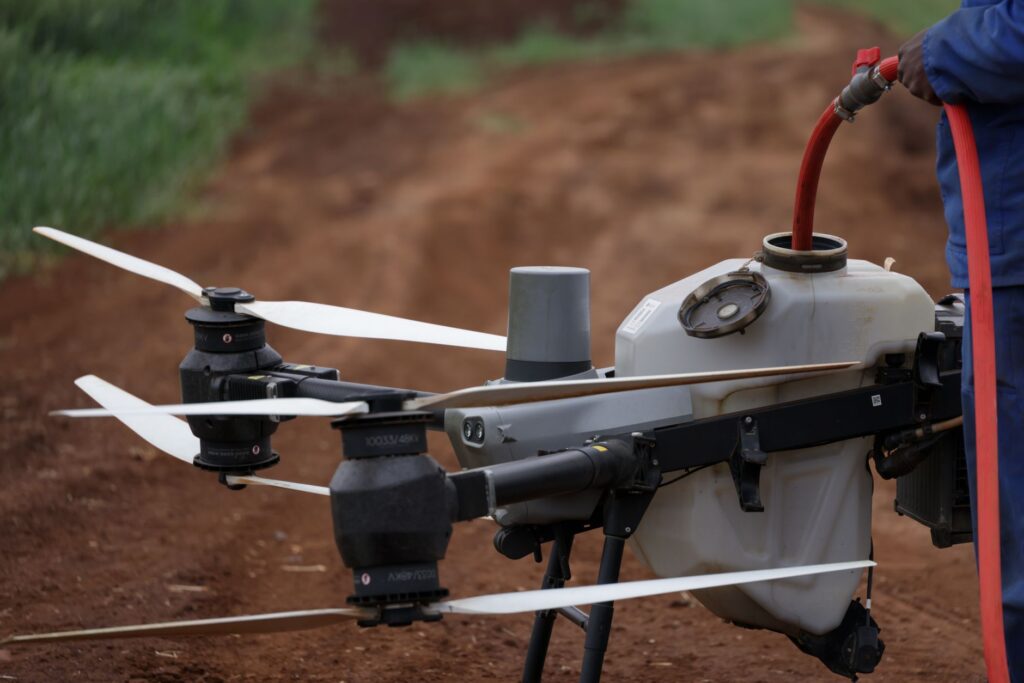
At the Future Investment Initiative in Riyadh, former Google chief Eric Schmidt dropped a line that still rings in the halls of defense circles: a $5,000 drone can take out a $5 million tank. That’s the most counterintuitive fact about modern combat that I’ve heard this year, and it sets the tone for everything that follows.
Key Takeaways
- The cost‑to‑damage ratio of cheap drones now eclipses that of legacy armored platforms.
- Schmidt’s tenure on the Defense Innovation Board (starting 2016) and the National Security Commission on AI (2019‑2021) give weight to his warning.
- Ukraine’s use of AI‑guided drones and Russia’s jet‑powered drones reaching 500 km/h illustrate the rapid adoption of aerial strike tools.
- Western militaries that cling to tank‑heavy doctrines risk strategic obsolescence.
- Developers building low‑cost autonomous systems can expect heightened demand from defense customers.
Drone Warfare Redefines Cost‑to‑Damage Ratios
It’s not just a catchy soundbite; the math is stark. A weapon that costs a fraction of a typical main battle tank can inflict comparable, if not greater, battlefield effects. Schmidt argued that the United States and its allies should shift resources from “legacy tech” toward drones and related systems, and his numbers back that claim.
Why the Numbers Matter
When you compare a $5,000 UAV to a $5 million armored vehicle, the disparity is obvious. That’s a 1,000‑to‑1 cost advantage, and it translates directly into how many platforms you can field, how quickly you can replace losses, and how flexible your force becomes. We’re seeing that logic in action on the Ukrainian front, where cheap, off‑the‑shelf drones have been repurposed for precision strikes against supply convoys.
Schmidt’s Defense Track Record
He doesn’t just speak from a tech‑industry perch. After leaving Google, Schmidt chaired the Defense Innovation Board starting in 2016, a group that bridges Silicon Valley talent with the Pentagon’s acquisition pipelines. Between 2019‑2021, he co‑chaired the National Security Commission on Artificial Intelligence, delivering recommendations straight to the White House on how AI should shape future defense capabilities.
That background explains why his warning feels less like hype and more like a strategic directive. He’s seen the Pentagon’s procurement cycles, the bureaucratic inertia, and the emerging tech that could cut through both.
From Tanks to Drones: A Tactical Shift
Traditional warfare has long leaned on heavy armor, but the rise of inexpensive aerial platforms is rewriting the rulebook. The Ukrainian conflict has become a live laboratory for this transition. Ukrainian forces have fielded AI‑enhanced drones to harass Russian logistics, while Russian troops have rolled out jet‑powered drones that can sprint at 500 km/h to evade air defenses.
And it’s not just Ukraine. In the ongoing US‑Israeli‑Iran theaters, similar low‑cost UAVs have been spotted conducting reconnaissance and kinetic strikes, proving that the model scales across different operational contexts.
Implications for Legacy Platforms
When you factor in the maintenance, crew training, and logistical tail of a main battle tank, the price gap widens even further. A tank might cost $5 million to buy, but its life‑cycle expense can easily double that over a decade. A drone, by contrast, often requires minimal crew, can be manufactured in large batches, and can be updated with software patches rather than hardware overhauls.
Geopolitical Signals From Ukraine
Ukraine’s adoption of commercial‑grade drones, retrofitted with off‑the‑shelf AI models, signals a democratization of strike capability. It’s a development that shouldn’t be dismissed as a temporary wartime improvisation; it’s a proof‑of‑concept that the next generation of conflict will be defined by who can field cheap, intelligent aerial assets fast enough.
Russia’s response—deploying high‑speed, jet‑propelled drones—shows that even a major power recognizes the need to adapt. They’re not just throwing more bombs at the sky; they’re experimenting with platforms that can outrun traditional air‑defense systems, a trend that will likely accelerate as AI guidance improves.
What the Numbers Reveal
- Drone unit cost: $5,000
- Tank unit cost: $5 million
- Russian jet‑drone top speed: 500 km/h
- Schmidt’s Defense Innovation Board start year: 2016
- National Security Commission on AI term: 2019‑2021
Historical Context
The shift from heavy armor to aerial strike platforms didn’t happen overnight. Early unmanned aerial vehicles were experimental tools, used mostly for reconnaissance in the late 20th century. As sensor miniaturization progressed, the same airframes began to carry small payloads. By the time the 2010s rolled around, commercial quadcopters were cheap enough for hobbyists to buy in bulk.
That affordability created a feedback loop. Operators started attaching cameras, then added basic guidance software. The incremental cost stayed low, while the tactical impact grew. When conflicts in the Middle East demanded rapid, low‑visibility strikes, those same commercial platforms were pressed into service, blurring the line between civilian gadget and combat weapon.
Schmidt’s tenure on the Defense Innovation Board coincided with that inflection point. The board’s mandate was to inject Silicon Valley speed into a traditionally methodical acquisition process. Recommendations from that era pushed for open architectures, rapid prototyping, and a willingness to experiment with off‑the‑shelf components. Those policy nudges helped accelerate the transition that we now see on the battlefield.
Competitive Landscape
Western forces have long relied on a handful of defense contractors for armored vehicles. The same ecosystem is now seeing a surge of smaller players that specialize in software, sensor integration, and rapid manufacturing. Companies that once supplied only ground‑based optics are now offering plug‑and‑play modules for UAVs. The result is a more fragmented market, where the price advantage of a $5,000 drone becomes a strategic lever.
On the other side of the divide, nations that traditionally invested heavily in tanks are scrambling to catch up. The Russian jet‑drone program demonstrates how a state can repurpose existing aerospace expertise to produce a platform that sidesteps conventional air‑defense measures. That move forces other militaries to consider whether a fleet of high‑speed, low‑cost drones could achieve the same deterrence effect as a handful of heavy armor units.
In the United States, the Pentagon’s push for modular, open‑source software stacks is reshaping procurement. Contracts now ask for “software‑defined” capabilities, meaning the hardware can be swapped out while the algorithmic core stays intact. That shift creates a market where a single piece of code can be deployed across dozens of airframes, magnifying the impact of a successful AI model.
Implications For Developers
There’s a clear commercial signal here: defense budgets are hunting for software‑defined, low‑cost autonomous systems. If you’re building AI pipelines, sensor fusion stacks, or edge‑compute modules, you can expect increased procurement interest from ministries of defense that want to replace expensive hardware with cheap, updatable software.
And it’s not just about selling hardware. The Pentagon’s push for open‑source, modular architectures means that developers who can deliver secure, verifiable code will find a growing market. Companies that can certify their UAVs against cyber‑threats will have a competitive edge, especially as the line between civilian and military drone usage blurs.
What This Means For You
If you’re a software engineer working on perception algorithms, the shift toward drone warfare means your work could end up on the battlefield within months rather than years. You’ll need to think about real‑time constraints, low‑power processing, and hardened security models from day one. The upside is that a single successful contract could fund a whole suite of products, given the low unit cost of the platforms themselves.
For founders, the takeaway is that the defense market is no longer the exclusive domain of legacy aerospace firms. Agile startups that can iterate quickly on AI‑driven autonomy have a genuine shot at winning contracts—especially if they can demonstrate compliance with export controls and ethical guidelines.
What this means for you is that the line between civilian drone applications and military procurement is thinning. You can’t afford to ignore the policy discussions happening around autonomous weapon systems, because they’ll shape the regulations your product must meet.
And finally, the strategic lesson is simple: the cheaper the platform, the more you can afford to experiment, iterate, and even lose. That changes the risk calculus for both developers and militaries alike.
Key Questions Remaining
- How will international law evolve to address swarms of autonomous drones that cost a fraction of a tank?
- What safeguards will be put in place to prevent cheap UAVs from falling into the hands of non‑state actors?
- Will traditional armored units adapt by integrating drone support, or will they become niche assets?
- How will supply chains for low‑cost components handle the surge in demand from defense customers?
- What role will AI ethics boards play when autonomous strike platforms become commonplace?
What Happens Next
Expect a surge in procurement requests that focus on modular software rather than bespoke airframes. Defense research labs will likely increase funding for edge‑AI chips that can run inference on a $5,000 platform without sacrificing accuracy. At the same time, policy makers will be pressured to draft rules that balance operational advantage with humanitarian concerns.
In parallel, commercial drone manufacturers will keep pushing price points lower, driven by the same economies of scale that made the $5,000 figure possible. That trend will feed back into the defense sector, creating a virtuous cycle where cheaper hardware fuels more sophisticated software, which in turn justifies further cost reductions.
The next decade could see a battlefield where swarms of inexpensive UAVs dictate tempo, while a handful of tanks serve as symbolic anchors rather than decisive weapons. If the cost comparison Schmidt highlighted holds true, the shift is not just plausible—it may already be underway.
Sources: TechRadar, Defense Innovation Board