



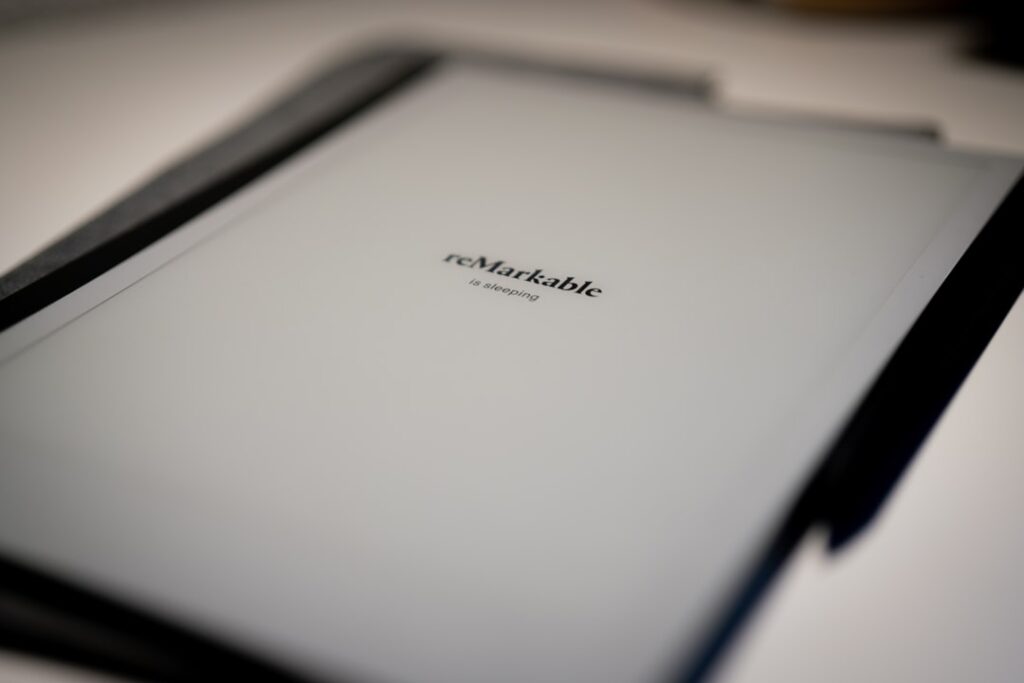
399 bucks. That’s what Remarkable wants for its new Paper Pure — a device that doesn’t have a color screen, doesn’t have front lighting, and uses the same black-and-white E Ink display tech as the Remarkable 2 from over six years ago. And yet, the company says it’s twice as fast at navigating, zooming, and turning pages. That’s the headline. That’s the pitch. On May 06, 2026, Remarkable didn’t push forward. It doubled down on going backward — just faster.
Key Takeaways
- The Remarkable Paper Pure launches without color or screen lighting, relying on an upgraded black-and-white E Ink display.
- It’s priced at $399 and available for preorder starting May 06, 2026.
- Remarkable claims the device is twice as fast as the Remarkable 2 in navigation, zooming, and page turns.
- This marks a strategic retreat from the color screens introduced in the Paper Pro and Paper Pro Move.
- The device is only available through Remarkable’s online store — no third-party retailers.
Historical Context
The development of the Remarkable Paper Pure wasn’t a sudden decision. It’s the culmination of a series of strategic moves by the company that began long before the Paper Pro and Paper Pro Move were announced. When the first Remarkable tablet was launched in 2015, it was designed to be a simple, low-cost note-taking device with a focus on E Ink display technology. Over the years, as the market evolved and competitors emerged, Remarkable continued to innovate and expand its product line. The company’s decision to introduce color screens and front lighting in the Paper Pro and Paper Pro Move was seen as a natural step forward in terms of user experience and feature set. However, the new Paper Pure suggests that the company may have been looking for a different approach all along.
Back to Black and White — On Purpose
When the Paper Pro launched with a color E Ink screen, it felt like the logical next step. After all, real paper might be monochrome, but real humans sometimes want to highlight in red or sketch in blue. Color had finally caught up — not perfectly, but close enough to matter. The Paper Pro Move doubled down, adding accessories and more polish.
So why retreat?
Because Remarkable seems to have decided that fidelity to paper isn’t about mimicking ink. It’s about mimicking focus. The Paper Pure strips away even the faint glow of front lighting — no warm LEDs to let you scribble in bed at midnight. You need ambient light. You need stillness. You need intent.
And that’s the irony: in removing features, Remarkable isn’t cutting corners. It’s redefining the product category. This isn’t a productivity tool for commuters or presenters. It’s a meditation device disguised as a notepad. The lack of lighting isn’t a limitation — it’s a boundary.
Speed as the New Luxury
If the screen looks old, the performance claims don’t. Twice as fast at navigation, zooming, and page turns? That’s not minor. The Remarkable 2, for all its cult following, had a lag that became part of its rhythm — like the resistance of a fountain pen on paper. You wrote knowing the line would catch up a fraction of a second later.
But lag isn’t charm when you’re flipping through a 200-page PDF. And zooming? That was a chore. Now, Remarkable says the Paper Pure eliminates that friction — not with new display tech, but with better processing, memory, and software optimization.
That’s significant. It means you can have the same grayscale E Ink panel — same resolution, same lack of backlight — but a completely different experience. The hardware isn’t the hero. The system is.
What’s Under the Hood?
Remarkable isn’t sharing full specs — no chip model, no RAM figure, no storage speed benchmarks. But the implication is clear: they’ve rearchitected the entire input pipeline. Gesture recognition, palm rejection, file indexing — all accelerated. The display refresh likely benefits from improved waveform algorithms and faster controllers.
- Same black-and-white E Ink display as Remarkable 2 — but with tighter integration
- No front lighting — user must rely on ambient light
- No color — a deliberate omission, not a cost-saving measure
- Performance gains focused on navigation, zoom, and page turns
- Available exclusively via Remarkable’s online store
A Product Line at War With Itself
Here’s the awkward truth: Remarkable now sells three tablets that contradict one another.
The Paper Pro and Paper Pro Move have color. They have lighting. They’re for people who want flexibility, who annotate PDFs with color highlights, who take notes in dim conference rooms. They’re $599 and up.
The Paper Pure has neither. It’s $399. It’s for purists. For luddites with credit cards. For people who believe that adding features erodes function.
And then there’s the Remarkable 2 — still on sale? Still supported? The company won’t say. But the Paper Pure effectively replaces it, not with evolution, but with reimagining. It’s not a new generation. It’s a parallel universe.
That’s not a product line. That’s a philosophical schism.
The Price of Purity
$399 is not cheap. Not for a black-and-white screen. Not in 2026. You could buy a capable Android tablet, slap a stylus on it, and run free note apps. Or get a used iPad with Apple Pencil support for less.
But that’s missing the point. Remarkable isn’t competing on specs. It’s competing on absence. No notifications. No apps. No vibrations. No temptation. Just writing. That’s the value proposition — digital convenience with analog discipline.
The cost isn’t the device. It’s the commitment. Once you buy a Paper Pure, you’re opting out. No web browsing. No email. No games. The device doesn’t even have a camera. It’s not a tool. It’s a vow.
And Remarkable knows its audience. Developers, writers, designers — people drowning in context switches — they’ll pay $399 for the right to focus. Because attention is the rarest commodity. And this device doesn’t just protect it. It demands it.
Why This Isn’t Nostalgia
This isn’t retro for retro’s sake. There’s no woodgrain or faux-leather trim. No attempt to mimic the feel of a Moleskine. The Paper Pure is minimalist not because it’s pretty, but because every element removed is a potential distraction eliminated.
Other companies add features to justify price hikes. Remarkable is doing the opposite: justifying the price by removing things. That’s bold. It’s also risky. Because once you tell customers that less is more, you can’t go back.
Competitive Landscape
The market for E Ink tablets is crowded, with several established players vying for market share. However, Remarkable’s decision to launch the Paper Pure suggests that the company is willing to take a different approach in order to stand out. By focusing on simplicity and stripping away features, Remarkable is appealing to a specific segment of users who value focus and discipline over flexibility and convenience.
This approach may not resonate with everyone, but it’s undeniable that the Paper Pure has generated a lot of buzz in the industry. whether this will translate into sales, but it’s clear that Remarkable is taking a calculated risk by launching a product that challenges conventional wisdom.
What This Means For You
If you’re a developer building note-taking apps, take note: people will pay for constraints. Not just clean UIs, but enforced simplicity. The market isn’t just for feature-rich tools. It’s for tools that say no. Your next app might not need AI summarization or real-time sync. It might just need a delete button that can’t be undone.
For founders, the lesson is sharper. You don’t have to chase the bleeding edge. Sometimes the edge is where everyone else has already moved on. Remarkable didn’t beat competitors by doing more. It did it by doing less — but better. That’s a playbook for any hardware startup drowning in feature creep.
Because here’s the thing no press release will admit: the most powerful feature of the Paper Pure isn’t speed. It’s silence.
What happens when the next step in digital tools isn’t advancement — but surrender?
Sources: The Verge, original report
Key Questions Remaining
With the Paper Pure now available for preorder, several questions remain unanswered. Will the device live up to its performance claims? Will the lack of color and front lighting be a deal-breaker for some users? And what does this mean for the future of E Ink tablets in general? : the Paper Pure has generated a lot of interest in the industry, and its impact will be worth watching in the months to come.