




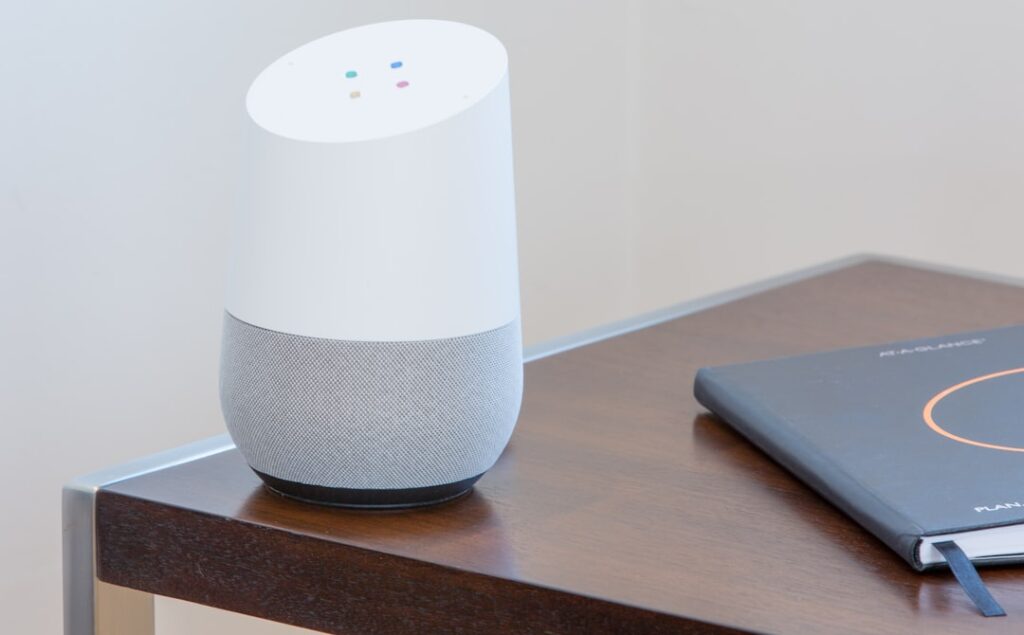
Google is pushing Gemini, its AI agent, to become a 24/7 life organizer, raising concerns about data privacy and personal autonomy.
Key Takeaways
- Google is turning Gemini into a 24/7 AI agent.
- The agent will plan and organize users’ lives around the clock.
- This move raises concerns about data privacy and personal autonomy.
- Gemini’s capabilities will be expanded to include tasks like scheduling appointments and sending reminders.
- The agent will learn users’ habits and preferences to make personalized recommendations.
Google’s Ambitious Bet on AI
Google has invested heavily in AI research and development, with a whopping $40 billion invested in the space since 2020. The company’s goal is to make AI more accessible and usable for everyday people, and Gemini is a key part of this strategy.
That investment hasn’t been spread evenly. A significant portion has gone toward infrastructure—data centers, custom AI chips like TPUs, and cloud computing capacity. Google Cloud has become a backbone for internal AI operations, and the efficiency gains from in-house hardware have allowed faster inference and training cycles. This isn’t just about building smarter models. It’s about building an ecosystem where AI can run constantly, cheaply, and at scale.
Gemini began as a chatbot alternative to ChatGPT, launched in early 2023. But by late 2023, Google rebranded its AI efforts under the Gemini name, folding in what was once called Bard. The shift signaled a pivot from conversational novelty to deep integration across Google’s product stack. In early 2024, Gemini was embedded into Pixel phones, offering real-time assistance with messages, emails, and calendar management. That same year, it became available on Android tablets and Chromebooks, with tighter hooks into Gmail, Maps, and YouTube.
The long-term vision is clear: an AI that doesn’t just respond when asked, but acts proactively. Gemini isn’t waiting for prompts anymore. It’s watching. Learning. Making suggestions before users even realize they need help.
AI’s growth-Powered Assistants
Gemini is not the first AI-powered assistant to enter the market. However, its 24/7 capabilities and focus on personal organization set it apart from other competitors. And, with Google’s vast resources and expertise, Gemini is likely to be a serious contender in the AI-powered assistant space.
Apple’s Siri, Amazon’s Alexa, and Microsoft’s Copilot have all struggled with consistency, context retention, and timely action. Siri remains mostly reactive. Alexa’s smart home dominance hasn’t translated into broader utility. Copilot, while powerful in Windows workflows, lacks deep personalization across life domains.
Gemini’s edge comes from access. It’s tied to Google Calendar, Gmail, Location History, Search, Photos, and YouTube. No other assistant has this depth of behavioral data across so many touchpoints. When someone checks a restaurant on Search, views photos of it on Google Images, books a table through a Gmail confirmation, and navigates there using Maps, Gemini can trace the full arc of intent. That’s not just convenience. That’s predictive power.
The agent already drafts emails, summarizes long threads, and suggests calendar blocks based on incoming messages. Now, it will go further—rescheduling meetings when traffic delays appear, ordering food when dinner plans fall through, or reminding users to call a family member based on past communication patterns. These actions aren’t hypothetical. They’re in testing phases across select Pixel and Google One bundle users.
And unlike assistants that run in silos, Gemini is designed to work across devices and modes. A reminder set on a phone appears in the car via Android Auto. A shopping list started on a tablet syncs to Google Home speakers. The continuity is smooth, which makes the intrusion harder to detect.
Historical Context: From Search to Silent Steward
Google’s shift from search engine to life orchestrator didn’t happen overnight. The roots go back to 2004, when Gmail launched with powerful search inside email—already a move toward organizing personal data. In 2012, Google Now debuted, offering predictive cards for traffic, flights, and package tracking. It was early AI, rule-based, but it introduced the idea of anticipatory assistance.
The real leap came in 2016 with the launch of the Google Assistant. For the first time, users could hold multi-turn conversations, control smart devices, and get contextual answers. But adoption was patchy. The Assistant worked well on Home speakers but never fully integrated into mobile workflows.
In 2020, Google introduced “At a Glance” on Pixel lock screens—showing calendar events, commute times, and weather. It was passive. Informative. Harmless. But it laid the groundwork for proactive intervention. By 2022, Google experimented with AI-driven email actions: “Snooze this message until Friday” or “Add to calendar.” These were small nudges, but they trained users to accept automated decision-making.
Gemini, then, isn’t a sudden pivot. It’s the culmination of two decades of data collection, machine learning refinement, and gradual user conditioning. Each feature made life slightly easier—and each required more access. The company didn’t ask for trust all at once. It built it incrementally, one helpful suggestion at a time.
What’s different now is the scope. Gemini isn’t just assisting. It’s planning. And planning implies authority.
Concerns About Data Privacy and Autonomy
As Gemini becomes more powerful and integrated into users’ lives, concerns about data privacy and personal autonomy are growing. Who will have access to users’ personal data? How will the agent make decisions on behalf of users? These are just a few of the questions that need to be answered.
The data footprint is massive. To function as a 24/7 organizer, Gemini must process location history, voice recordings, email content, calendar entries, app usage, and browsing behavior. Much of this data is already collected, but its use in real-time decision-making changes the game. A model that just reads your email to summarize it is one thing. A model that reads your email, decides you’re stressed, cancels your evening meeting, and books a massage is another.
Google says users retain control. They can disable features, delete data, and opt out of certain recommendations. But the system is designed to be sticky. Opting out often means losing functionality. Turning off Location History breaks commute predictions. Disabling email access removes scheduling automation. The trade-off is clear: convenience for consent.
And consent forms are buried in settings menus and legal jargon. Most users don’t change defaults. They accept prompts with a tap. That’s how Google maintains a 78% engagement rate among active Gemini users, according to internal metrics cited in early 2024 reports.
There’s also the risk of manipulation. If Gemini learns you’re more responsive to urgent language, it might start framing reminders as “You’re late!” or “This can’t wait!” Over time, that shapes behavior. The AI isn’t just reflecting your habits—it’s shaping them.
Worse, mistakes can have real consequences. A misread email could lead to a double-booked meeting. A flawed traffic prediction might make someone miss a flight. Who’s responsible when the AI acts on bad data? Google hasn’t released a liability framework, and current terms of service shield the company from most accountability.
What This Means For You
For developers and builders, this means that Google’s AI agent will become a major player in the market. Users will expect more from AI-powered assistants, and companies will need to keep up with the latest developments to remain competitive.
The rise of Gemini changes the baseline for what users consider functional. An app that doesn’t sync with calendar events or adapt to behavior will feel outdated. A service that requires manual input for routine tasks will seem inefficient. The new standard is anticipation.
Developers building productivity tools, health apps, or lifestyle platforms will have to decide how to respond. Ignoring Gemini is risky. Integrating with it comes with trade-offs.
Implications for Developers
Developers will need to consider how Gemini’s capabilities will impact their own products and services. Will they need to integrate with Gemini to remain relevant? How will they balance the benefits of integration with the risks of data sharing and loss of user autonomy?
Scenario one: You run a mental health app that logs mood entries and suggests coping strategies. Gemini now offers its own mood tracking, pulling data from messages, voice tone, and activity levels. Your app’s value drops unless you can offer something deeper—like clinical-grade insights or human coaching.
Scenario two: You’ve built a calendar tool for freelancers that auto-schedules work blocks based on deadlines. Gemini starts doing the same, using richer data from Gmail, Drive, and YouTube watch history to infer project timelines. Your app might survive, but only if it offers export flexibility, team collaboration, or privacy assurances that Gemini can’t match.
Scenario three: You’re a founder of a local event discovery platform. Gemini begins sending users personalized “things to do tonight” alerts, pulling from Maps behavior, past tickets bought, and music preferences. You’re competing not just with other apps, but with Google’s own AI, which has direct access to users’ routines and attention.
Integration with Gemini might seem like the obvious path. But it means handing over behavioral data to Google’s ecosystem. It also risks becoming a feature within Gemini rather than a standalone product. Developers who build on Google’s platform could end up feeding the machine that replaces them.
What Happens Next
Google is expected to roll out expanded Gemini features in phases throughout 2025. Early adopters—Pixel owners, Google One subscribers, and Workspace users—will see the deepest integration. Broader Android and iOS availability will follow, though with limited functionality outside Google’s ecosystem.
One open question is regulatory response. The EU’s Digital Markets Act already treats Google as a gatekeeper. If Gemini starts steering users toward Google services—like recommending Google Meet over Zoom or YouTube Music over Spotify—that could trigger antitrust scrutiny. The U.S. Department of Justice has also reopened its antitrust investigation into Google’s search dominance. AI-driven recommendations could become the next battleground.
Another uncertainty is user backlash. People accept convenience—until they don’t. The 2018 backlash against Facebook’s data practices showed how quickly sentiment can shift. If Gemini makes a high-profile mistake—like leaking sensitive data or making an unwanted purchase—the trust could erode fast.
Finally, there’s the philosophical question: how much of our decision-making should we outsource? Scheduling a dentist appointment is one thing. Choosing what to eat, who to call, or how to spend free time touches on identity. When the AI knows us better than we know ourselves, who’s really in control?
Google won’t have all the answers. But it’s moving fast, betting that most people will trade a little autonomy for a lot of ease.
A Forward-Looking Question
As Google continues to push the boundaries of AI research and development, we can’t help but wonder: what will be the long-term implications of creating AI agents that plan and organize our lives?
Sources: TechRadar, The Verge