




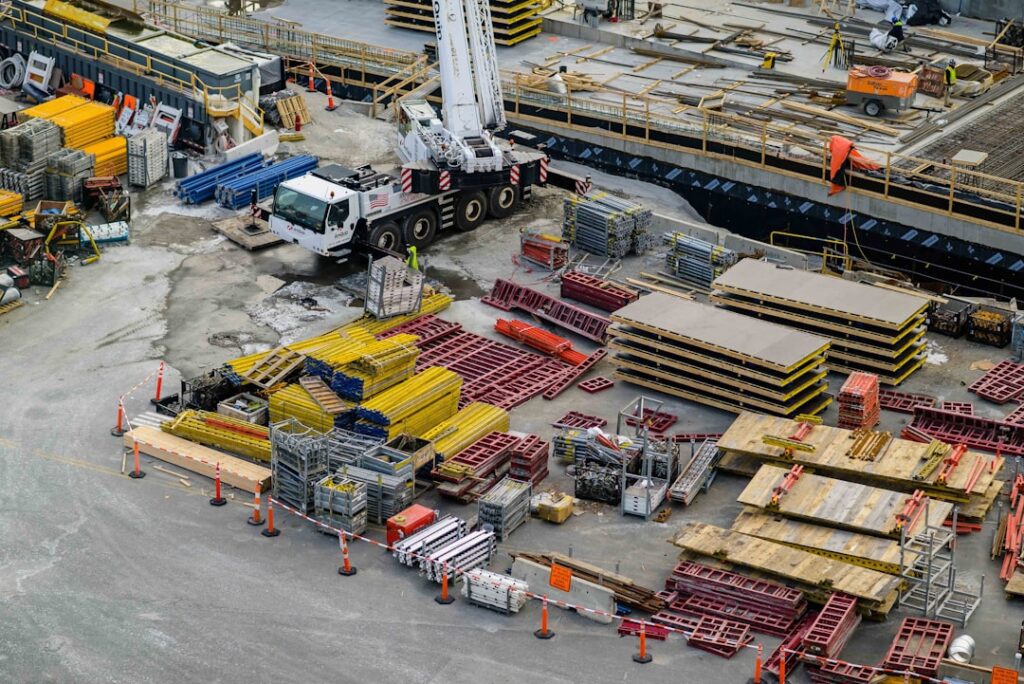
On January 15, 2026, a leak in the refractory system at Boston Metal do Brasil’s nearly completed plant in Minas Gerais sent electrolyte pooling across the reactor floor. Operators shut down the system immediately, drained the molten contents, and confirmed no injuries or environmental damage. But the incident delayed the commercial startup of a facility that had already consumed 18 months of construction and millions in investor capital. The delay cost the company a milestone payment, strained its finances, and forced a restructuring that saw 71 employees laid off in April. Now, on May 21, 2026, Boston Metal is betting its survival on a new direction: critical metals.
Key Takeaways
- Boston Metal raised $75 million to pivot toward producing critical metals like niobium, tantalum, and vanadium — a strategic shift from its original steel decarbonization focus.
- The funding follows a January 2026 accident at its Brazilian subsidiary’s plant, which disrupted operations and triggered cash-flow problems.
- The company’s molten oxide electrolysis (MOE) technology can extract multiple metals from low-grade ores, but scaling it has proven harder than anticipated.
- Construction on the Brazil plant began in 2024; it was supposed to be operational by early 2026 but remains under repair.
- CEO Tadeu Carneiro says investors stepped in strongly after the setback, signaling continued belief in the technology despite execution risks.
Boston Metal’s $75M Bet on Critical Metals
There’s no sugarcoating it: Boston Metal isn’t where it thought it’d be. The Woburn, Massachusetts-based startup built its reputation on a bold promise — to decarbonize steel production using molten oxide electrolysis (MOE), an electrolytic process that replaces coking coal with electricity. That vision earned it acclaim, partnerships, and over $200 million in prior funding. But by May 2026, the company’s survival hinges not on green steel, but on critical metals.
The $75 million new round, reported here for the first time, will go toward restarting operations at Boston Metal do Brasil and advancing its capability to extract high-value metals including niobium, tantalum, tin, vanadium, nickel, and chromium. These aren’t niche materials — they’re essential. Niobium strengthens alloys used in jet engines and MRI scanners. Tantalum powers capacitors in smartphones and is vital in aerospace. Vanadium boosts battery efficiency and steel resilience. And the U.S. imports nearly all of it.
“That’s where the value is,” CEO Tadeu Carneiro told MIT Technology Review. “We can use the same MOE platform to produce metals that are more valuable than steel — and that are in short supply.”
It’s a pivot born of necessity. Industrial decarbonization funding has thinned in the U.S. and without near-term revenue, even well-backed startups can’t last. The January accident in Brazil didn’t destroy the plant, but it did destroy momentum.
How MOE Works — and Why It’s Hard
Molten oxide electrolysis isn’t new — it was first demonstrated at MIT in the 1990s — but Boston Metal is the first to try commercializing it at scale. The process works like this: raw ore is fed into a reactor and dissolved in a molten electrolyte at around 1,600 °C (3,000 °F). An electric current passes through the mixture, triggering chemical reactions that separate metal ions. The purified metal sinks to the bottom, where it’s siphoned off.
Unlike traditional smelting, MOE emits oxygen instead of CO₂ — a major win for emissions. And because it runs on electricity, it can be powered by renewables. In early 2025, the company completed its largest pilot run in Woburn, producing about one ton of steel in a single cycle. That was proof of concept. But scaling from tons to thousands? That’s another story.
The Refractory Problem
The failure in Brazil wasn’t in the chemistry — it was in the hardware. The refractory system, designed to insulate the reactor and withstand extreme heat and corrosive materials, developed a breach. Electrolyte leaked. The system had to be shut down mid-test.
“It wasn’t catastrophic, but it was serious,” Carneiro said. “We had to remove the metal, cool everything down, and assess the damage. That took weeks.”
Refractories are notoriously difficult to engineer for molten processes. They must resist thermal shock, chemical corrosion, and mechanical stress — all at temperatures that would melt most steels. Boston Metal’s reactor runs hotter than a blast furnace, and any flaw in the lining can compromise the entire system.
The company hasn’t disclosed the cost of repairs, but the operational delay was enough to miss a key milestone tied to investor funding. That’s when the cash crunch hit.
From Steel Dreams to Strategic Metals
Let’s be honest: green steel is a tough sell right now. It’s expensive, infrastructure is entrenched, and policy support in the U.S. has stalled. The Inflation Reduction Act helped, but follow-on industrial decarbonization programs haven’t materialized. Meanwhile, demand for critical metals is surging — driven by EVs, defense tech, and energy storage.
Boston Metal’s MOE process has an advantage here: it can extract multiple metals from the same low-grade feedstock. That’s rare. Most extraction methods are single-metal focused. And because MOE doesn’t rely on sulfuric acid or toxic solvents, it produces less waste.
Brazil is a smart location. The country holds large reserves of niobium — over 90% of global reserves, according to U.S. Geological Survey data — and tantalum-bearing minerals. The Minas Gerais plant is designed to take in raw, low-concentration ore and output a mixed metal product that can be further refined.
But turning that promise into revenue is the challenge. The plant was supposed to begin commercial operations in Q1 2026. Now, Carneiro says it’ll take “a few more months” to complete repairs and restart.
What the Funding Covers
The $75 million round isn’t just a lifeline — it’s a redirection. Investors aren’t betting on green steel anymore. They’re betting on margin.
- $75M total raised in the latest round
- Primary use: restart and operate the Brazil plant
- Secondary use: scale production of vanadium, nickel, chromium
- Supports ongoing R&D for multi-metal extraction
- No new equity terms or valuation disclosed
The round includes participation from existing backers, though names weren’t disclosed. What’s clear is that investors are willing to ride out the delay — but they’ll want returns faster than steel allows.
Why This Pivot Matters Beyond Boston Metal
If Boston Metal pulls this off, it won’t just save itself — it could redefine how we source critical materials. The U.S. has been scrambling to reduce reliance on China for metals like tantalum and rare earths. Executive orders, Defense Production Act invocations, and $2 billion in federal grants have flowed into mining and processing. But most projects are still in early stages.
Boston Metal’s MOE offers a cleaner, modular alternative to traditional hydrometallurgy and pyrometallurgy. And because it’s electric, it can be deployed near mines or even in remote grids powered by renewables.
But it’s not the only player. Nth Cycle and Texas Alkali are also developing electrochemical methods for metal recovery. The difference? Boston Metal’s system handles higher temperatures and more complex ores.
Still, scaling remains the hurdle. The Woburn pilot produced a ton of steel. The Brazil plant needs to produce tens of thousands of tons of mixed metals annually to be viable. And it has to do it without another shutdown.
“Because of this delay, we had a big stress in our cash flow, so the investors came very strong to support us,” Carneiro says.
That support is real — but it’s not infinite.
What This Means For You
If you’re building in clean tech or industrial software, Boston Metal’s pivot is a warning and a roadmap. It shows that even with solid science and elite backing, hardware startups live or die by execution. A single subsystem failure — one refractory lining — can cascade into layoffs, missed milestones, and funding gaps. Your tech might work in the lab, but can it survive 1,600 °C for six months straight?
For developers, the lesson is in data and control systems. The next generation of industrial platforms will need real-time monitoring of temperature gradients, material degradation, and electrical load. If Boston Metal had better predictive models for refractory wear, maybe the leak could’ve been caught earlier. There’s a role here for edge AI, sensor fusion, and anomaly detection — not just in MOE, but across heavy industry.
What’s the future of metal production? It might not be green steel. It might be a mix of critical metals, pulled from low-grade ore, using electricity instead of fire. And it might come from a plant in Brazil that almost didn’t make it past January.
The question isn’t whether molten oxide electrolysis works. It’s whether it can run without breaking — for years, not days.
Sources: MIT Tech Review, original report