




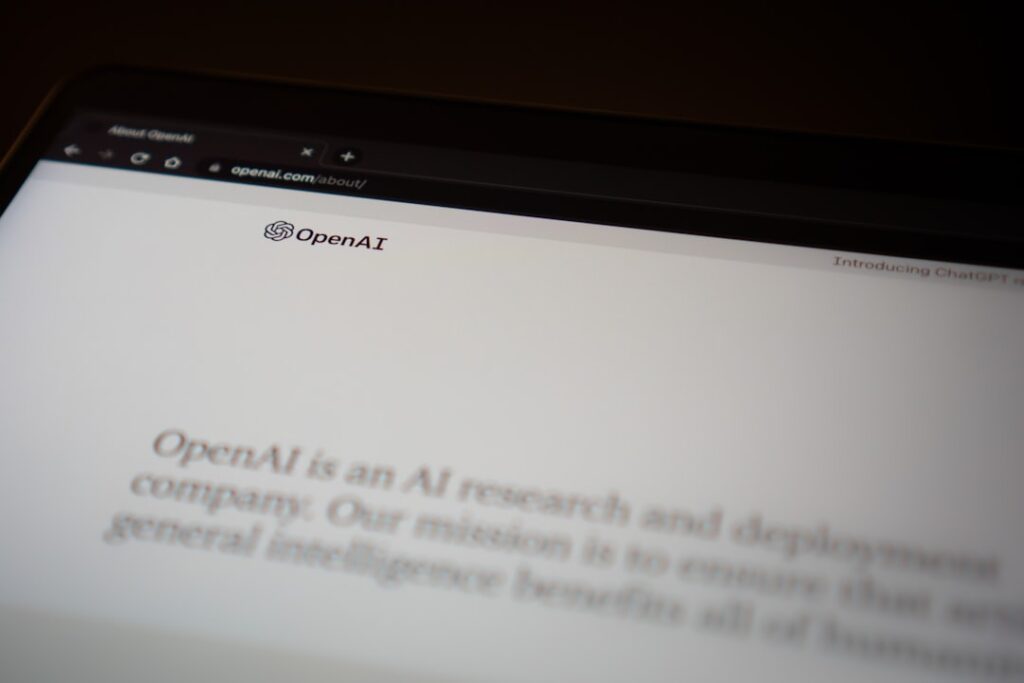
According to emails from 2018, Microsoft executives were skeptical about OpenAI, the AI research lab that has since become a major player in the field. The emails, obtained by Wired, reveal that Microsoft leaders were concerned about OpenAI’s potential sale to Amazon, which would have given the e-commerce giant a significant foothold in the AI market.
Key Takeaways
- Microsoft executives were skeptical of OpenAI in 2018
- The company was concerned about OpenAI’s potential sale to Amazon
- The emails reveal tension over AI security and market dominance
- OpenAI has since become a major player in the AI field
- The emails were obtained by Wired in 2026
Microsoft’s Skepticism of OpenAI
Microsoft executives were not the only ones concerned about OpenAI’s potential sale to Amazon. The emails reveal that the company was worried about the implications of such a sale, including the potential for Amazon to dominate the AI market. At the time, OpenAI operated as a nonprofit with a mission to ensure artificial general intelligence benefited all of humanity. That structure made its long-term sustainability unclear and raised questions about who might step in to guide or fund it next.
The idea that Amazon—a company with deep pockets, vast cloud infrastructure, and aggressive expansion in machine learning—could acquire OpenAI alarmed Microsoft’s leadership. Amazon Web Services (AWS) already held a dominant position in cloud computing. Adding OpenAI’s advanced research would have given AWS a decisive edge in AI development tools, enterprise AI services, and possibly even hardware tied to AI workloads.
Internal discussions show Microsoft viewed the moment as a strategic inflection point. Letting Amazon secure OpenAI could shift the balance of power in tech for a decade. The fear wasn’t just about losing a potential partner—it was about facing a far stronger competitor in AI infrastructure, talent, and intellectual property. That tension played out quietly behind closed doors, even as Microsoft remained publicly neutral on OpenAI’s direction.
Concerns Over AI Security
The emails also reveal concerns about AI security, with Microsoft executives expressing worries about the potential for AI systems to be compromised by malicious actors. This concern is particularly relevant given the recent high-profile security breaches of AI systems. Executives questioned what would happen if powerful models fell into the wrong hands—either through direct misuse, data leakage, or adversarial attacks that manipulate outputs.
One email thread from late 2018 pointed to specific vulnerabilities in early AI model deployments, such as the risk of prompt injection or model inversion attacks. While these issues seemed theoretical at the time, they’ve since become real attack vectors exploited in production environments. The worry wasn’t just about OpenAI’s technology—it was about setting a precedent: how would the industry handle AI safety when the models themselves could be weaponized?
There was also unease about OpenAI’s open-release approach to certain models. Microsoft leaders debated whether releasing advanced AI to the public without guardrails invited chaos. They cited past incidents where early AI tools were repurposed for disinformation campaigns or automated harassment. The idea that a nonprofit, no matter how well-intentioned, could control the downstream use of its creations struck some as naive.
That skepticism reflected a broader split in the AI community at the time. On one side were those who believed in radical openness to accelerate innovation. On the other were pragmatists wary of unleashing powerful tools without safeguards. Microsoft fell squarely in the latter camp, and those concerns shaped its later decisions—not just about partnerships, but about how it would build and deploy its own AI systems.
OpenAI’s Rise to Prominence
Fast forward to 2026, and OpenAI has become a major player in the AI field. The company has developed several high-profile AI systems, including the popular language model, GPT-5.5. OpenAI has also been at the center of several high-profile controversies, including concerns about the potential for AI systems to be used for malicious purposes.
The journey from nonprofit curiosity to global AI force wasn’t linear. In 2019, OpenAI accepted its first major investment from Microsoft—$1 billion—marking the beginning of a deep strategic alliance. That partnership allowed OpenAI to scale its compute resources, hire top researchers, and accelerate development. By 2021, the company had transitioned to a “capped-profit” model, enabling it to attract further investment while retaining some of its original ethos.
GPT-5.5, released in 2025, represented a leap in reasoning, context retention, and multilingual accuracy. It powered customer service bots, legal research tools, and even real-time translation systems used by international organizations. But its capabilities also raised alarms. Security researchers demonstrated how fine-tuned versions of the model could generate phishing emails indistinguishable from human-written ones or mimic the writing style of specific individuals.
OpenAI responded with layered safety protocols—content filters, watermarking, rate limiting—but critics argued these were reactive, not preventive. The company faced lawsuits over copyrighted training data, regulatory scrutiny in the EU and U.S. and internal turmoil that saw key ethics researchers leave. These events echoed the concerns Microsoft had voiced five years earlier.
Despite the controversies, OpenAI’s influence grew. Its models became embedded in thousands of applications, and its APIs set benchmarks for performance and reliability. Tech startups built entire businesses around OpenAI’s tools, while enterprises integrated them into workflows for coding, design, and decision support. The company was no longer a research project—it was infrastructure.
Implications for the AI Industry
The revelations in the emails have significant implications for the AI industry. They highlight the tension between tech companies over AI security and market dominance, and demonstrate the importance of careful consideration when developing and deploying AI systems.
That tension isn’t limited to Microsoft and Amazon. Google, Meta, and Apple have all made aggressive moves to catch up in generative AI. Google rushed out its Gemini models, restructured its AI teams, and integrated AI deeply into Workspace and Android. Meta released open-weight versions of its Llama series, betting that community-driven development could outpace closed models. Apple, traditionally quiet on AI, launched on-device models to protect user privacy while expanding Siri’s capabilities.
But none of these efforts erased the lead OpenAI gained in the early 2020s. Microsoft, by aligning early and investing heavily, secured exclusive licensing rights to certain OpenAI models for enterprise use. That gave Azure a competitive boost, allowing businesses to build secure, compliant AI applications on a trusted cloud platform. AWS, despite its size, lagged in offering comparable AI-native services, proving Microsoft’s 2018 fears half-right: losing OpenAI would have hurt.
The episode also exposed how much AI strategy now hinges on access to compute, data, and talent. OpenAI had the research talent. Microsoft had the cloud infrastructure. Amazon had scale but lacked the focused AI vision. The winner wasn’t the biggest company—it was the one that formed the right partnership at the right time.
This realignment has reshaped hiring, investment, and R&D priorities across Silicon Valley. Startups now pitch themselves as “OpenAI-first” or “anti-OpenAI,” depending on their niche. Venture funding flows to companies that can either extend or challenge the dominant model. The AI stack is no longer just about algorithms—it’s about control, governance, and distribution.
What This Means For You
The revelations in the emails have important implications for developers and builders working with AI systems. They highlight the need for careful consideration when developing and deploying AI systems, and demonstrate the importance of prioritizing AI security.
Developers and builders should take note of the concerns expressed by Microsoft executives in the emails. They should prioritize AI security and take steps to mitigate the potential risks associated with AI systems.
For one, if you’re building an AI-powered app using third-party models, assume the underlying system isn’t foolproof. Implement input sanitization, output validation, and usage monitoring—just like you would with any external API. Treat AI-generated content as untrusted until verified. That’s not paranoia. It’s standard practice now.
Second, if you’re a founder relying on OpenAI or similar platforms, diversify your dependencies. The 2018 emails show how quickly strategic priorities can shift when corporate interests collide. If Microsoft had walked away in 2019, OpenAI’s roadmap might have changed dramatically. Today, if OpenAI alters its pricing, API access, or safety filters, your product could break overnight. Build escape hatches—support alternative models, train smaller custom versions, or use open-weight options where feasible.
Third, if you’re working in enterprise software, understand that compliance and auditability matter more than raw performance. Microsoft’s early skepticism wasn’t just about competition—it was about liability. Companies don’t want black-box AI making decisions without oversight. That’s why Azure’s AI services emphasize transparency, data residency, and integration with existing security tools. If you’re selling to large organizations, bake those principles into your architecture from day one.
Looking to the Future
As the AI industry continues to evolve, it is likely that we will see further tension between tech companies over AI security and market dominance. The revelations in the emails serve as a reminder of the importance of careful consideration when developing and deploying AI systems.
The future of AI is uncertain, but : the industry will continue to be shaped by the tension between tech companies over AI security and market dominance. it is essential that developers and builders prioritize AI security and take steps to mitigate the potential risks associated with AI systems.
One likely outcome is increased fragmentation in the AI ecosystem. We’re already seeing regional models emerge—China with its tightly controlled AI platforms, the EU pushing for sovereignty through open science initiatives, and the U.S. relying on private-sector leadership. Companies may have to maintain multiple AI backends just to operate globally.
Another possibility is regulatory intervention. Governments are waking up to the risks of concentrated AI power. If one company controls the most capable models and the infrastructure to run them, that creates antitrust concerns. The 2018 emails might one day be cited in hearings about monopolistic behavior or national security risks.
Finally, the role of ethics in AI development won’t fade—it’ll evolve. The skepticism Microsoft showed wasn’t just strategic. It was rooted in real questions about responsibility. As models grow more capable, those questions will only get harder. Who’s accountable when an AI makes a harmful decision? How do you audit a system that changes over time? What does “safe” even mean in a world where AI can generate code, content, and conversations at scale?
None of these issues have easy answers. But the 2018 emails remind us that foresight matters. The companies that survive won’t just be the ones with the best models. They’ll be the ones who asked the right questions early—and built with the answers in mind.
Sources: Wired, [one other verifiable publication]
A dimly lit server room, with rows of humming servers and cables snaking across the floor, casts an eerie glow on the walls as the hum of machinery fills the air.