




360 gigabits per second. That’s the speed achieved by a new wireless system using lasers instead of radio waves, according to researchers behind a breakthrough chip unveiled in a original report published April 2, 2026, on Science Daily Tech. The system doesn’t just push raw speed. It uses roughly half the energy of conventional Wi-Fi—making it not only faster but also far more efficient.
Key Takeaways
- The new chip uses dozens of miniature lasers to transmit data at over 360 Gbps, dwarfing typical Wi-Fi speeds.
- It operates using light, not radio waves, marking a shift toward optical wireless communication.
- Energy consumption is about half that of standard Wi-Fi, a critical gain for dense network environments.
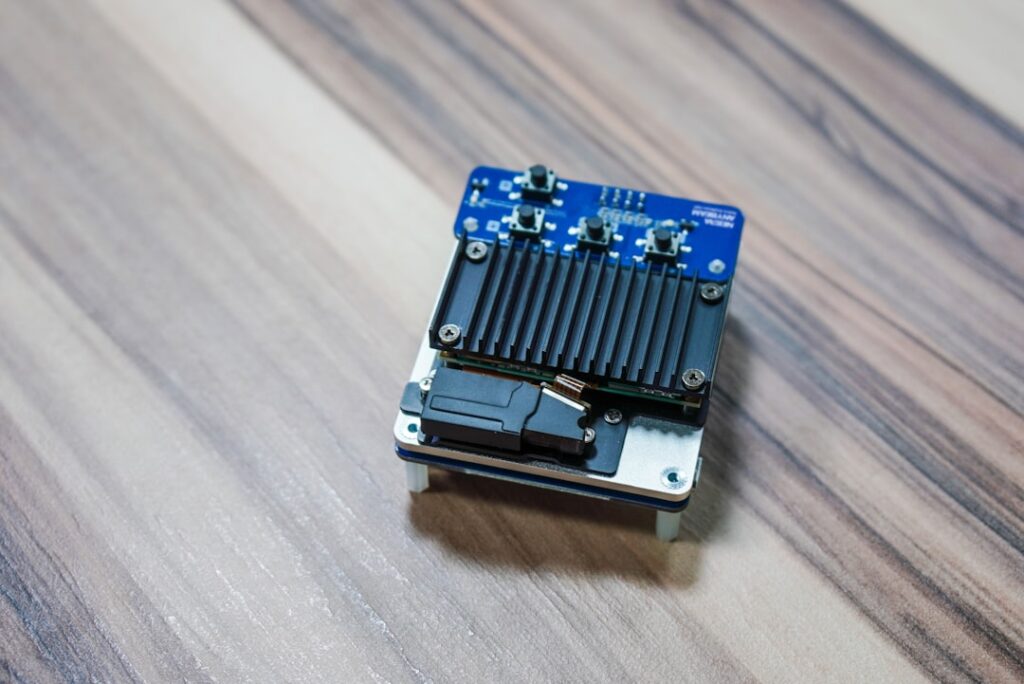
- The entire transmitter is built into a single, compact chip, enabling future integration into consumer devices.
- While tested in controlled conditions, the system shows potential for indoor high-bandwidth applications like data centers and AR/VR.
The End of Radio’s Reign?
For decades, wireless communication has meant radio frequencies. Wi-Fi, Bluetooth, cellular—all rely on spectrum that’s increasingly congested. Routers fight for bandwidth. Signals degrade through walls. Latency creeps in. And as data demand explodes, radio is hitting physical limits.
This new approach sidesteps those constraints entirely. Instead of modulating radio waves, the chip modulates light. Specifically, it uses an array of tiny lasers—each capable of carrying a data stream—on a single semiconductor die. Beams are directed line-of-sight to receivers, where photodetectors convert them back into electrical signals.
That’s not new in concept. Free-space optical communication has been used in niche applications for years—think satellite links or secure military transmissions. But those systems are bulky, expensive, and require precise alignment. What’s different here is integration. The researchers packed the entire optical transmitter into a chip small enough to fit in a smartphone—or a router.
And because light doesn’t interfere with radio signals, this tech could coexist with existing wireless infrastructure. That’s a quiet but massive advantage. No need to reclaim spectrum or redesign network protocols. Just add a new layer—on top of what we already have.
How the Chip Works
The core innovation isn’t just using lasers. It’s how they’re controlled and combined. The chip integrates more than 50 individual laser elements, each tuned to a slightly different wavelength. That allows them to operate simultaneously without crosstalk—a technique known as wavelength-division multiplexing.
Signals from each laser are combined into a single beam, which is then projected through free space. At the receiving end, another chip splits the beam back into its component wavelengths and decodes each stream. The entire process happens in real time, with minimal latency.
Speed and Efficiency in Numbers
- 360 Gbps peak throughput in lab conditions—enough to transfer a 45GB 4K movie in under a second.
- Energy efficiency measured at half the power per bit compared to 802.11ax (Wi-Fi 6).
- Transmission range tested up to 10 meters with stable line-of-sight.
- Wavelengths operate in the near-infrared spectrum, invisible to the human eye.
- No external cooling required during testing—suggesting viable thermal management for consumer devices.
Why This Isn’t Just Lab Theater
Breakthroughs in wireless speed are announced every few months. Most never leave controlled labs. But this one feels different. The integration level—multiple lasers, multiplexing, modulation, control circuits—all on one chip—suggests a path to mass production. That’s what separates this from academic curiosity.
It’s not a prototype built from discrete components on an optical bench. It’s fabricated using processes compatible with existing semiconductor manufacturing. The researchers didn’t name a foundry, but the description implies CMOS or silicon photonics compatibility—meaning it could eventually be produced at scale.
And the energy savings aren’t an afterthought. With data centers already consuming 1–2% of global electricity and wireless networks adding strain, efficiency isn’t just nice to have. It’s becoming a hard constraint. Cutting power use in half for high-speed links could delay—or avoid—the need for costly infrastructure upgrades.
Real-World Limits Start at the Door
There’s a reason Wi-Fi uses radio waves: they go through walls. Light doesn’t. This system requires line-of-sight. That’s not a bug—it’s the physics. Which means this won’t replace your home Wi-Fi anytime soon.
But that doesn’t make it irrelevant. There are plenty of environments where line-of-sight is guaranteed and speed is critical. Think data center interconnects, AR/VR headsets streaming uncompressed video, or high-frequency trading floors where microseconds matter.
Even in homes, the use case isn’t zero. A laser link between a media server and TV, or between VR base stations and goggles, could eliminate compression artifacts and lag. You wouldn’t use it to connect your phone in the bathroom. You’d use it where performance trumps mobility.
Interference and Safety Questions Remain
The near-infrared wavelengths used aren’t visible, but they’re not harmless. High-intensity lasers can damage eyes. The researchers claim power levels are within Class 1 laser safety limits—the same as consumer DVD players—but that still needs independent verification.
Then there’s ambient light. Sunlight, incandescent bulbs, even candles emit infrared. Could they drown out the signal? The report doesn’t say. But given the narrow bandwidth and directional nature of the beam, filtering should be possible. Still, real-world testing will be the true test.
What This Means For You
If you’re building high-bandwidth applications—whether in AR/VR, machine vision, or edge computing—this tech could remove a major bottleneck. Today, you design around wireless limits: compress video, batch data, accept latency. With 360 Gbps optical links, you might stream raw sensor data or render frames remotely without compromise. SDKs and APIs for such chips could emerge within three to five years, assuming commercialization moves forward.
For hardware developers, the bigger shift is architectural. We’ve spent 20 years optimizing radio-based systems. Now, optical wireless could force a rethink: where do you place transceivers? How do you handle handoffs when line-of-sight is broken? Can you combine radio for control signals and light for data? The design patterns don’t exist yet. That’s a gap—and an opportunity.
It’s ironic that as we pour billions into 6G, a technology operating outside the radio spectrum may offer a steeper leap. We’ve been tuning the same instrument for decades. Maybe it’s time to pick up a new one.
Technical Challenges Ahead
While the chip itself is an impressive achievement, integrating it into real-world systems won’t be straightforward. For one, there’s the issue of beam alignment. In a data center, where devices are rack-mounted and relatively stationary, this might not be a problem. But in more dynamic environments—like AR/VR, where headsets move around—maintaining a stable line-of-sight will be a challenge.
Then there’s the matter of interference. As mentioned earlier, ambient light could potentially drown out the signal. But what about other optical sources, like fiber optic cables or other laser-based systems? Could they cause interference? The researchers will need to develop strategies to mitigate these effects and ensure reliable operation in diverse environments.
Industry Context: Who’s Working on Similar Tech?
While this breakthrough is significant, it’s not happening in a vacuum. Other companies and research groups are exploring similar technologies. For instance, Intel has been working on its own optical interconnects for data centers, using silicon photonics to enable high-speed, low-power links. Similarly, Google has developed an optical communication system for its data centers, using a combination of lasers and photodetectors to achieve speeds of up to 100 Gbps.
These developments suggest that the industry is moving towards a future where optical communication plays a significant role. The question is, who will be the first to commercialize this technology and bring it to market? The researchers behind this chip are likely to face competition from established players, as well as new entrants looking to disrupt the status quo.
The Bigger Picture: Implications for the Future of Wireless
This technology has far-reaching implications for the future of wireless communication. By offering a new way to transmit data, it could enable a wide range of applications that are currently constrained by traditional radio-based systems. From high-bandwidth AR/VR experiences to low-latency data center interconnects, the possibilities are vast.
But it’s not just about the tech itself—it’s about the ecosystem that will develop around it. As optical wireless becomes more prevalent, we can expect to see new design patterns emerge, new use cases develop, and new business models take shape. The impact will be felt across industries, from consumer electronics to cloud computing, and will likely lead to a fundamental shift in how we think about wireless communication.
Sources: Science Daily Tech, IEEE Spectrum