


It’s July 15, 2026, and Nokia just announced its AI RAN platform, claiming more than 20% spectral efficiency gains in early trials. The statement feels bold, especially when the company says the platform could push that figure to 50% by 2027 and even 100% by 2028. Those targets aren’t proven yet, but the rollout plan is real: pilots by year‑end and commercial availability slated for 2027.
Key Takeaways
- Early tests show > 20% spectral efficiency gains.
- Targets: 50% by 2027, 100% by 2028.
- Three deployment models: GPU plug‑in, standalone node, cloud‑server.
- Nokia partnered with NVIDIA after a $1 billion investment for a 3% stake.
- Analyst Omdia pegs the AI‑RAN market at > $200 billion by 2030.
We’ve seen Nokia’s radio business struggle for years, and CEO Justin Hotard has made it his toughest problem since taking the helm in 2025. At the November capital markets day, he told investors the mobile division hadn’t delivered acceptable returns, so he folded it into a new Mobile Infrastructure segment and slashed costs. The AI RAN platform is his first concrete attempt to reverse that trend.
Historical Context
For a decade, Nokia’s radio gear has been eclipsed by rivals that moved faster on 5G deployments. The company kept a sizable inventory of legacy base stations, and each new release felt like a patch rather than a leap. When Hotard arrived in 2025, the balance sheet showed mounting pressure on the mobile division. That pressure manifested in a public pledge to reinvent the business, a pledge that culminated in the November capital markets day where he outlined a restructuring plan. The plan called for tighter integration with software partners and a decisive shift away from custom ASIC development.
Earlier in 2025, Nokia announced a partnership with NVIDIA that would bring GPU acceleration into its radio portfolio. The deal, sealed in October, brought a $1 billion cash infusion and a modest equity stake for NVIDIA. That injection was meant to fund the transition from in‑house silicon design to a software‑first model, aligning with what Hotard called the “future of radio.” The timeline is clear: first, secure the GPU‑based compute blocks; then, embed them in the anyRAN stack; finally, roll the solution out to carriers that still need to squeeze more out of existing spectrum.
Meanwhile, Ericsson entered the AI‑RAN arena in June, offering a subscription‑based AI‑in‑RAN software that promised up to 20% higher efficiency. Ericsson’s move forced Nokia to double‑down on its own AI ambitions, positioning the November‑2025 partnership as a direct response to that competitive pressure. The market now sees two distinct approaches: Ericsson’s hardware‑centric AI overlay and Nokia’s GPU‑driven, software‑heavy platform.
What the AI RAN platform promises
Don’t let the hype drown out the numbers. Nokia says its platform, built on the anyRAN software stack and NVIDIA’s Aerial system, can extract far more capacity from existing spectrum without a hardware overhaul. In pilot labs, the system already delivered > 20% spectral efficiency gains, which translates to more bits per hertz for operators. If the 50% target by 2027 holds, carriers could nearly double throughput on the same bands. By 2028, the claim is that capacity could double again, effectively giving operators a second set of spectrum without buying new licenses.
Nokia’s strategic pivot with NVIDIA
We’ve watched Nokia shift from custom silicon to off‑the‑shelf GPU acceleration, and the October 2025 deal with NVIDIA made that shift official. NVIDIA poured $1 billion into the partnership and took roughly a 3% equity stake. That cash injection lets Nokia trim in‑house R&D on ASICs and focus on software, which is where Hotard says the future lies. The move also gives Nokia access to CUDA‑based AI tooling, allowing the AI RAN stack to run on NVIDIA’s accelerated compute without reinventing the wheel.
Technical Architecture
The backbone of the platform is the anyRAN software stack, a modular framework that separates radio functions from the underlying compute. By plugging NVIDIA’s Aerial system into anyRAN, the solution offloads intensive inference tasks to GPU cores that excel at parallel workloads. The stack uses CUDA libraries, meaning developers can reuse existing AI models without rewriting them for proprietary silicon. This architecture also supports three physical deployment options, each mapping to a different point in the network hierarchy.
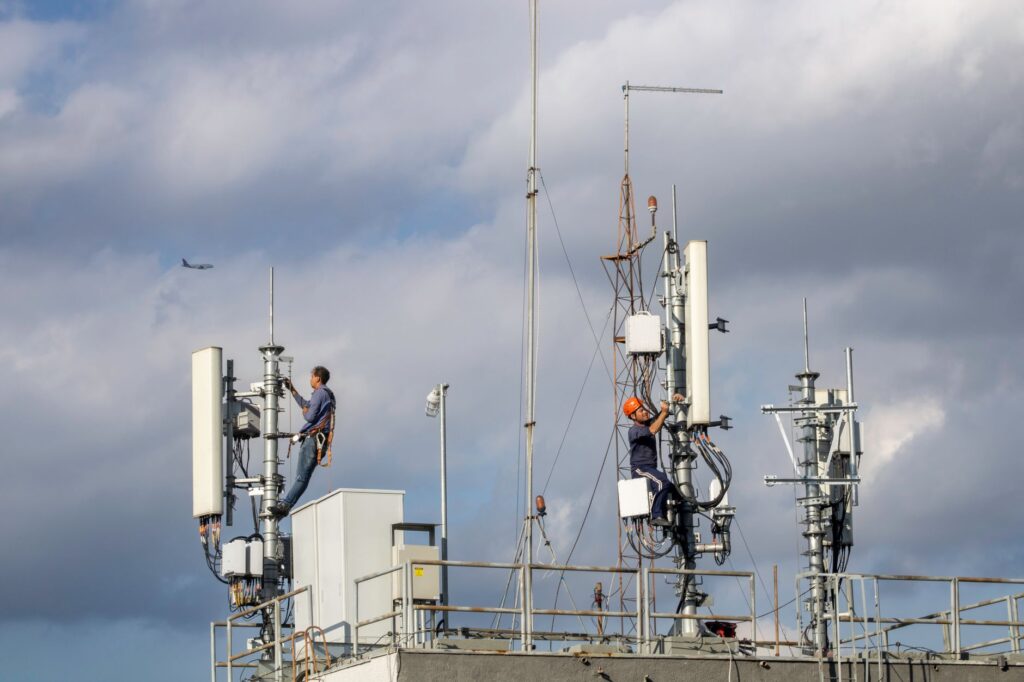
First, the GPU‑powered plug‑in card slots into existing AirScale sites. The card brings high‑throughput compute to the edge, letting the base station run AI inference locally. Second, a standalone AI‑RAN node contains its own power and cooling, acting as a self‑contained radio point that can be placed where traditional infrastructure is scarce. Third, a cloud‑server build runs the stack in a data center, exposing the AI capabilities via a service interface. All three paths share the same software core, ensuring consistent behavior across deployment models.
Because the platform relies on standard GPU interfaces, upgrades can be as simple as swapping a card for a newer generation. That flexibility reduces the risk of obsolescence—a common complaint with earlier, ASIC‑centric radio solutions. In practice, operators can start with a plug‑in rollout and later migrate to cloud‑based services as their traffic patterns evolve.
Market reaction and analyst view
There’s been a noticeable uptick in Nokia’s share price since the partnership was announced, and the AI RAN launch landed just before the second‑quarter earnings release. Omdia analyst Rémy Pascal, quoted in Nokia’s own announcement, put the cumulative AI‑RAN opportunity at above $200 billion by 2030. That estimate underlines why investors have re‑rated the stock sharply through 2026. Still, the market will be watching whether pilots deliver the promised efficiency gains before the commercial roll‑out.
Competitive landscape: is it really the first?
We’ve got to ask whether Nokia can truly claim the “industry’s first” label. In June, Ericsson started selling a commercial AI‑in‑RAN software subscription that it says delivers up to 20% higher efficiency. Ericsson’s claim pre‑dates Nokia’s July 15 announcement, which means the market already has at least one AI‑enhanced RAN solution in production. The nuance is that Nokia’s platform is the first built on NVIDIA’s accelerated computing stack, whereas Ericsson relies on its own hardware‑centric approach.
We are launching the industry’s first commercial AI‑native #AIRAN platform built on @NVIDIA accelerated computing, marking one of the most significant shifts in radio network architecture in decades and providing operators with a practical path to AI Native Networks.
Adoption Timeline
The roadmap is straightforward. By the end of 2026, Nokia will run pilot deployments with a handful of carriers that have agreed to test the plug‑in and standalone node options. Those pilots will focus on real‑world traffic, measuring the claimed 20% efficiency boost under peak loads. If the results meet expectations, the company plans a broader rollout in early 2027, making the platform commercially available across all three deployment models.
Operators that choose the cloud‑server option will see a subscription model kick in by mid‑2027, aligning billing with the AI‑driven capacity they actually consume. The subscription model is designed to be incremental, allowing carriers to scale usage as they validate performance. By 2028, Nokia aims to hit the 100% efficiency target, a milestone that would signal a full‑scale transformation of how radio spectrum is used.
Throughout the timeline, Nokia will publish quarterly performance reports, giving partners visibility into the efficiency gains and any required tuning. Those reports will be key for carriers that need to justify the investment to regulators and internal stakeholders.
Deployment options and practical considerations
Don’t overlook the three ways operators can adopt the platform. First, a GPU‑powered plug‑in card fits into existing AirScale sites, letting carriers upgrade without tearing down towers. Second, a standalone AI‑RAN node offers a turnkey solution for new sites or edge locations. Third, a cloud‑server build delivered through partners lets operators run the stack as a service, paying via a software subscription rather than a capital‑expenditure heavy hardware refresh. Each model carries its own cost profile, and the subscription model could appeal to carriers looking to shift spend from capex to opex.
We’ve linked the original press release for more details: original report. The tweet above gives a concise view of Nokia’s messaging, but the real test will be whether the promised efficiency gains survive real‑world traffic loads.
What This Means For You
If you’re a developer building telecom‑grade AI pipelines, the AI RAN platform opens a new set of APIs that run on NVIDIA GPUs. That means you can prototype models using familiar CUDA libraries and ship them directly to the edge without rewriting for proprietary ASICs. You’ll also need to think about latency: the platform promises real‑time inference, so your models must fit within tight compute budgets. In practice, that pushes you toward quantized or sparsified networks that still meet the 20‑plus percent efficiency target.
For network architects, the subscription model changes budgeting. Instead of a multi‑year hardware refresh, you can now pay per‑month for AI‑enhanced capacity, which could free up capital for other projects like 5G‑Advanced rollout. However, you’ll also need to negotiate service‑level agreements that guarantee the AI stack delivers the advertised gains, especially if your SLA hinges on meeting traffic peaks.
Product managers will find the platform’s modularity useful for roadmap planning. The ability to swap a GPU plug‑in for a newer generation without overhauling the entire radio site means feature releases can be paced more predictably. That predictability can translate into smoother rollout calendars and fewer surprise outages.
Investors should watch the pilot results closely. Early efficiency numbers can set the tone for the 2027 commercial launch, and a strong showing could accelerate the re‑rating of Nokia’s stock. Conversely, if the pilots fall short, the market may question whether the AI‑driven narrative can survive competition from Ericsson’s existing AI‑RAN subscription.
Will the AI RAN platform truly double spectrum capacity by 2028, or will it become another incremental upgrade in a crowded market? Only the pilots at year‑end will reveal if Nokia’s AI‑driven vision can survive the harsh realities of live networks.
Key Questions Remaining
Several uncertainties linger as the rollout approaches. First, can the AI stack maintain the claimed efficiency when traffic spikes beyond lab conditions? Operators will need to monitor performance during rush hour, when interference and handover events are most intense. Second, how will regulators view the use of AI to effectively “create” extra spectrum? Some jurisdictions may require proof that the AI does not compromise signal integrity. Third, what happens if competitors accelerate their own AI‑RAN offerings before Nokia reaches the 2027 milestone? A faster‑moving rival could erode the first‑mover advantage Nokia hopes to claim.
Finally, the long‑term economics of the subscription model remain to be proven. If carriers find that the OPEX cost of AI‑enhanced capacity exceeds the value of the extra throughput, they may revert to traditional capex upgrades. The upcoming pilots will provide the data needed to answer these questions, and the industry will be watching