




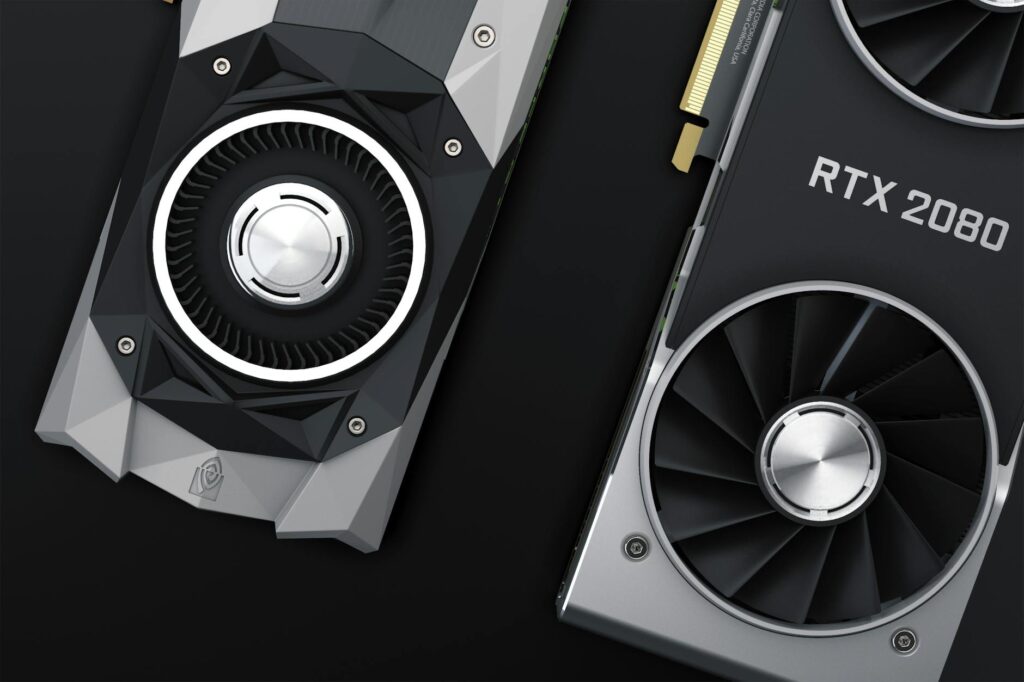
On June 1, 2026, Nvidia announced the RTX Spark, a chip it calls “the most efficient PC chip ever built.” The claim came without a single chart, but the specs are concrete: the flagship version mirrors the DGX Spark’s GB10 silicon with 20 CPU cores, 6,144 GPU cores and up to 128GB of LPDDR5X memory. That alone makes it the first full‑computing silicon Nvidia’s putting into thin‑and‑light laptops.
Key Takeaways
- RTX Spark is an Arm‑based SoC that combines a high‑core‑count CPU with a powerful GPU.
- Flagship specs match the DGX Spark: 20 CPU cores, 6,144 GPU cores, 128GB unified memory.
- Microsoft’s Surface Laptop Ultra will be the first RTX Spark‑powered device, billed as the most powerful laptop they’ve ever made.
- Over 30 laptops and 10 desktops from partners like Acer, Asus, Dell, HP, MSI and Lenovo are slated for the fall.
- Nvidia says local AI can keep data private and eliminate token costs for on‑device models.
Nvidia RTX Spark Redefines the Consumer PC Chip
Mark Aevermann, Nvidia’s senior director of product management, said the chip is “the most efficient PC chip ever built,” and that efficiency is supposed to stem from the unified memory architecture. The chip isn’t just a GPU; it’s a full‑system‑on‑chip that runs Windows on Arm, meaning legacy x86 software will need Microsoft’s Prism emulator to work.
Why Arm Matters
Arm‑based designs have been championed by Apple and Qualcomm for their power advantages. Nvidia’s move puts it in the same league, but it also forces Windows developers to rely on emulation for x86 apps. Microsoft has spent years polishing Prism, and it now claims that Nvidia’s AI and graphics capabilities will push the emulation experience further than before.
Performance Claims That Stretch Imagination
Nvidia boasts that the RTX Spark can render a 90GB 3D scene, edit 12K‑resolution video, or run “Indiana Jones and the Great Circle” at a smooth 100 fps on a 1440p display—all in a 14 mm‑thick laptop without being plugged in. Those numbers sound impressive, but they’re still company claims without third‑party benchmarks.
AI‑First User Experience
At Microsoft’s Build conference this week, the company highlighted new Windows security primitives that, together with Nvidia’s OpenShell runtime, “allows personal agents to run safely and under full user control.” Nvidia frames that as a new personal computing paradigm where AI becomes the UX, letting users talk to their PC instead of juggling mouse and keyboard.
Partner Ecosystem and Device Roadmap
Eight laptops are already confirmed for the upcoming fall, including a Surface Laptop Ultra that Andrew Hill, the Surface boss, described as “the most powerful thing we’ve ever made.” Beyond Microsoft, partners such as Acer, Asus, Dell, Gigabyte, HP, MSI and Lenovo are working on over 30 laptops and more than 10 desktops that will ship with RTX Spark variants ranging down to 16 GB of RAM.
Pricing and Market Reach
Aevermann promised that “RTX Spark is going to be a family of products that are going to attack a lot of different price points,” and he sees “a large” market opportunity. While the flagship chip matches DGX Spark’s specs, smaller SKUs will likely trim core counts and memory to hit sub‑$1,000 price tags.
Software Compatibility Landscape
Nvidia points out that a slew of creative and audio tools already run natively on Arm: Blender, DaVinci Resolve, Maxon Cinema 4D, Redshift, Topaz Photo, CapCut, Cubase, Bitwig Studio, Affinity by Canva, and more. Adobe has added optimizations for Premiere and Photoshop that tap the new chip’s GPU.
Even game anti‑cheat providers are getting on board. Microsoft says Riot Games is bringing both League of Legends and Valorant to Windows on Arm, while Krafton is adding PUBG. Nvidia mentions ongoing work with developers using Easy Anti‑Cheat, BattlEye and Denuvo, and Epic’s Fortnite already runs on Windows on Arm.
Real‑World Use Cases
According to Nvidia, an esports streamer could have the laptop automatically mute their mic, turn off lights and switch broadcasting modes when they step away. A designer could ask Adobe to turn a sketch into a full image, render a 3D model, and produce an AI‑generated video—all via voice. A developer could let an AI agent monitor a GitHub repo and fix QA issues by taking over the keyboard and mouse.
What This Means For Developers
For developers, the RTX Spark pushes the need to ship Arm‑native builds or at least ensure their apps run well under Prism. The promise of on‑device AI means you can embed models without worrying about token costs or data leaving the device, but you’ll have to test performance against the emulated x86 path.
Builders should also watch the emerging ecosystem of Windows security primitives that Nvidia and Microsoft are co‑creating. Those primitives could become the de‑facto way to sandbox personal agents, making it easier to certify AI‑driven workflows for enterprise customers.
What This Means For You
If you’re a developer targeting the high‑end laptop market, you’ll need to start compiling your code for Arm and verify that Prism doesn’t bottleneck your UI. The good news is that major creative suites already have Arm builds, so you can lean on existing tooling to get started.
For startup founders, the RTX Spark opens a path to ship AI‑heavy apps without relying on cloud inference. That could lower operating costs and simplify compliance, especially in regulated industries that care about data residency.
Only whether the performance claims hold up in real‑world tests, but Nvidia’s push into the consumer PC space is unmistakable. If the chip lives up to its specs, we might finally see laptops that can run large language models locally without draining the battery.
Will the industry embrace an Arm‑first Windows laptop ecosystem, or will developers keep clinging to x86 compatibility? The answer will shape the next wave of portable AI.
“This is the most efficient PC chip ever built,” Mark Aevermann said.
Read the original report for more details.
Sources: The Verge, Microsoft Build conference
Historical Context: From Data‑Center Silicon to the Laptop Desk
Nvidia’s DGX Spark line has been positioned as a data‑center‑focused AI accelerator. By re‑using the same GB10 silicon for a laptop‑sized SoC, the company is essentially collapsing the distance between server‑grade compute and the consumer form factor. That transition mirrors a broader industry trend where the line between “cloud” and “edge” hardware is blurring. In the past, Nvidia’s consumer offerings were split between discrete GPUs and separate CPUs, but the RTX Spark bundles them into a single package. The move signals a strategic pivot: rather than waiting for software to catch up, Nvidia is delivering the hardware first and letting the ecosystem adapt.
Technical Architecture: Unified Memory and the SoC Blueprint
The core of the RTX Spark’s promise lies in its unified memory architecture. By sharing the 128GB of LPDDR5X across CPU and GPU, the chip eliminates the traditional bottleneck of copying data between separate memory pools. That design mirrors what Nvidia has done in its high‑end data‑center products, but now the latency advantage is brought to a battery‑powered environment. The 20 CPU cores are built on an Arm instruction set, meaning they inherit the low‑power characteristics that have made Arm popular in mobile devices. Meanwhile, the 6,144 GPU cores retain the parallelism needed for graphics rendering and AI tensor operations. Together, the CPU, GPU, and memory form a tightly coupled fabric that can handle complex workloads without the overhead of a discrete graphics card.
Running Windows on Arm adds another layer of integration. Microsoft’s Prism emulator translates x86 instructions into Arm instructions on the fly, allowing legacy software to execute. Nvidia’s OpenShell runtime sits atop this stack, exposing hardware‑accelerated AI primitives to applications. The combination creates a software pipeline where an AI model can be invoked directly from the OS, bypassing the need for a separate inference server.
Adoption Timeline and Ecosystem Rollout
Microsoft’s Surface Laptop Ultra will be the first publicly available device, slated for launch later this year. Following that, the announced roster of partners will begin shipping their own variants throughout the fall season. Early adopters will likely gravitate toward the flagship configurations, while mid‑range models will target creators who need strong GPU performance but can compromise on memory. The broader ecosystem—spanning 30 laptops and 10 desktops—suggests that Nvidia intends to saturate both premium and mainstream segments. By staggering releases, the company can gather real‑world data, refine driver support, and address any Prism‑related hiccups before the next generation of devices arrives.
Key Questions Remaining
Benchmark independence remains a hot topic. Third‑party testing will be needed to verify Nvidia’s performance claims, especially for workloads that mix AI inference with high‑resolution graphics. Developers will also want to know how much overhead Prism adds when running demanding applications like 12K video editors or large‑scale 3D scenes. Another open question is the longevity of the unified memory approach—whether future software will be able to fully exploit the shared pool without running into fragmentation issues. Finally, the security model for personal agents is still in its infancy; enterprises will be watching closely to see if Microsoft’s new primitives can meet compliance standards without sacrificing usability.
As the first wave of RTX Spark devices hits the market, the industry will be watching for signals that indicate whether an Arm‑first Windows laptop can truly replace the entrenched x86 ecosystem. The answer will determine how quickly developers, creators, and enterprises move their workloads onto the edge, and whether Nvidia’s vision of a unified, AI‑centric PC platform becomes the new baseline for portable computing.