
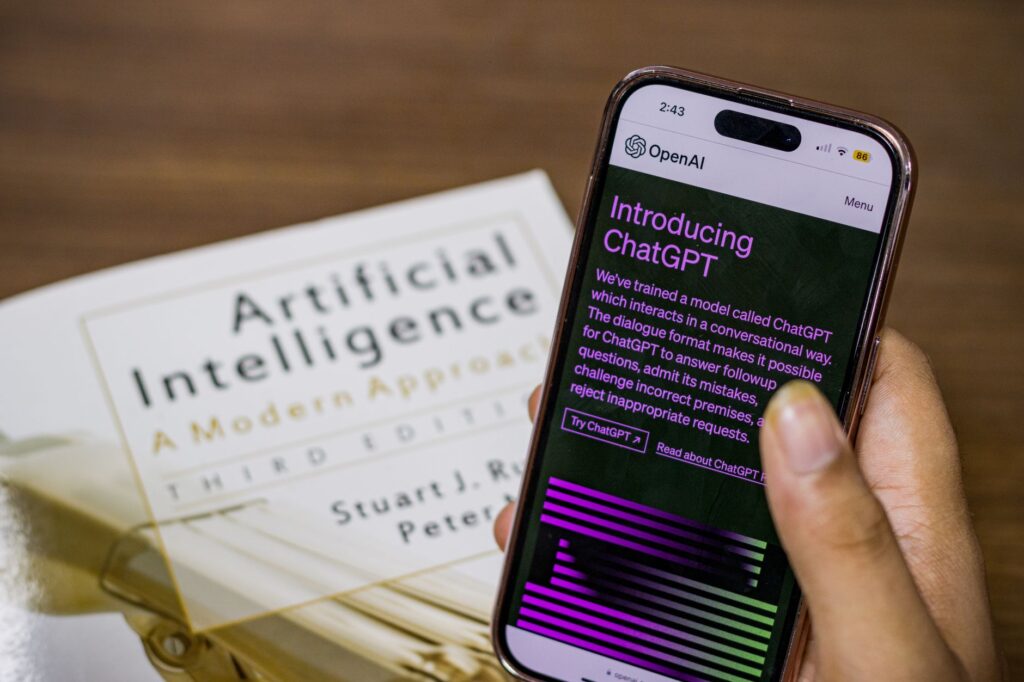



On July 10, 2026, OpenAI unveiled its OpenAI super app, rolling out the new GPT‑5.6 models and a feature‑rich ChatGPT Work suite the same day. That’s a bold move, showing the company isn’t waiting for hype to catch up with its tech.
Key Takeaways
- OpenAI’s super app bundles a chatbot, coding assistant, and new GPT‑5.6 models under one interface.
- ChatGPT Work is designed to both do work for users and collaborate with them.
- The launch coincides with an announced fully automated researcher feature.
- Industry outlets like Reuters and Ars Technica are already dissecting the rollout’s impact.
- Developers should expect new integration points and potential shifts in workflow.
Historical Context
OpenAI’s journey to this launch began with the release of GPT‑3 in 2020, a model that sparked widespread interest in large‑language AI. Two years later, GPT‑4 arrived, raising expectations for reasoning and contextual awareness. Each iteration added layers of safety and capability, enabling for the more specialized GPT‑5 series. The company’s earlier “ChatGPT Plus” subscription proved a stepping stone, offering priority access but still requiring users to juggle separate tools for code, writing, and research. Those fragmented experiences set the stage for a unified platform.
In parallel, competitors experimented with modular AI suites, yet none delivered the smooth integration OpenAI now claims. By the time GPT‑5.6 was ready, the market had grown accustomed to point solutions—one for chat, another for code, a third for data analysis. OpenAI’s super app flips that script, merging the three into a single, continuously updated environment. The timing aligns with a broader industry shift toward “all‑in‑one” AI experiences, making the launch both a response to demand and a catalyst for future expectations.
OpenAI super app: what it is
It isn’t just a rebrand. The super app combines the familiar ChatGPT chat window with a coding assistant and the latest GPT‑5.6 models. That means you can ask the bot to write code, run diagnostics, and even generate research drafts without hopping between tools. It’s designed to do your work for you and with you, a claim echoed in the original report. The integration feels smooth, as if the app learned how developers actually move through tasks.
Under the hood, the app routes each request to the appropriate model slice—chat, code, or research—while maintaining a single session state. This design eliminates the need for manual context switching, a pain point that many developers have voiced for years. When you ask for a code snippet, the system pulls the latest language‑specific knowledge from GPT‑5.6, then instantly offers suggestions that respect the surrounding file structure. When you request a literature review, the same session can retrieve citations and summarize findings without resetting the conversation. The result is a fluid workflow that mirrors how a human teammate would handle multiple responsibilities.
Inside the ChatGPT Work suite
First, the chatbot side still feels like the ChatGPT you know. It can answer questions, draft emails, and brainstorm ideas. Second, the coding tool now taps the GPT‑5.6 engine, offering autocomplete suggestions that are more context‑aware than anything before. Third, the new models are tuned for research‑heavy prompts, letting the app pull together literature reviews in minutes. Together, they form a workflow that blurs the line between user input and autonomous output.
Beyond the core trio, the suite introduces a set of “prompt templates” that help users frame complex queries. These templates guide the model toward the desired format—be it a JSON schema, a LaTeX table, or a markdown report. The system also remembers recent interactions, allowing it to refine drafts iteratively. For example, you can ask the AI to revise a code block based on a new API change, and the app will apply the modification without re‑entering the full context. Such iterative capabilities reduce the friction that early GPT versions introduced.
Why the timing matters
OpenAI didn’t just pick a random Thursday. Releasing the super app on the same day as the GPT‑5.6 rollout signals a coordinated push to showcase the models’ capabilities. That move also puts pressure on competitors who’ve been teasing similar bundles. It’s a statement: OpenAI isn’t waiting for the market to dictate the pace; it’s setting the tempo.
Competitive Landscape
When OpenAI announced the super app, other AI labs were already field‑testing comparable offerings. Anthropic, for instance, had hinted at a “Claude Workspace” that would merge chat and coding assistants. Google’s DeepMind team was rumored to be building a research‑centric AI portal. Microsoft, a long‑time partner, continues to embed GPT models in its Office suite, but those integrations remain separate from a dedicated coding environment. The sudden convergence of chat, code, and research under a single OpenAI umbrella forces these players to accelerate their roadmaps or risk falling behind.
Each rival brings a different strength. Anthropic emphasizes safety layers, Google leans on its search infrastructure, and Microsoft counts on enterprise adoption. OpenAI’s advantage lies in the breadth of its model family and the speed at which it can iterate on new features. The super app therefore becomes a benchmark, a yardstick against which the industry will measure future releases. Expect a flurry of announcements in the months ahead as companies scramble to match the integrated experience.
Implications for developers
Developers will now have a single entry point for a suite that previously required multiple subscriptions. That could simplify onboarding, but it also means you’ll need to learn new prompt‑engineering tricks to get the most out of the automated researcher. The tool promises to generate drafts of technical documents, which could cut research time by hours. Yet, you’ll still have to verify the output, because the model can hallucinate facts as it did in earlier versions.
- New API endpoints for ChatGPT Work are expected within weeks.
- Beta access for the automated researcher is limited to select enterprise customers.
- Pricing details haven’t been disclosed, but OpenAI hinted at tiered plans.
Beyond the listed API changes, the platform introduces a unified authentication flow. That means a developer can sign in once and instantly access chat, code, and research modules without juggling tokens. The reduction in friction may encourage more experimentation, especially among indie creators who previously hesitated due to cost or complexity. However, the learning curve around “prompt scaffolding” will be real; developers must craft queries that guide the model toward precise outputs, a skill that differs from traditional coding.
Industry reaction
Reuters called the launch “a design to do your work for you and with you,” highlighting the blend of automation and collaboration. Ars Technica noted that the super app arrives alongside the GPT‑5.6 models, suggesting a strategic alignment. The New York Times pointed out that the automated researcher could reshape how companies conduct internal R&D. Across the board, the sentiment is that OpenAI is nudging the industry toward more integrated AI experiences.
Commentators also raised eyebrows about the pace of adoption. Some analysts warned that enterprises might stall until security assurances arrive, while others highlighted the potential for rapid productivity gains in startups. The mixed reactions underscore a market that’s both eager and cautious. Observers expect the conversation to shift from “if” to “how” as teams begin to embed the super app into daily pipelines.
Potential challenges and concerns
Automation always raises eyebrows. While the super app promises efficiency, it also threatens to displace roles that rely on repetitive coding or data‑gathering tasks. Privacy is another question—having a single app that accesses codebases, research data, and personal prompts could become a single point of failure if not secured properly. OpenAI hasn’t detailed the security architecture, so developers will have to ask hard questions about data residency and encryption.
Hallucination risk remains a core issue. The model’s ability to fabricate citations or code snippets can lead to subtle bugs if unchecked. Companies will need to implement verification layers, perhaps using internal test suites or external fact‑checking tools. the consolidation of multiple functions into one platform may create dependency concerns; an outage could impact chat, code, and research simultaneously. These challenges suggest that adoption will be accompanied by a set of governance practices tailored to each organization’s risk tolerance.
What This Means For You
If you’re a solo developer, the super app could replace a handful of separate subscriptions. You’ll likely spend less time switching between a chat UI, a code editor, and a research portal. That means you can focus more on product logic and less on tool‑management. Expect a learning curve, though; the prompts that unlock the automated researcher aren’t the same as the ones you used with earlier models.
For teams, the super app offers a shared workspace where every member can see AI‑generated drafts and code suggestions in real time. That could simplify code reviews and accelerate prototype cycles. However, you’ll need to set governance policies around AI‑produced content to avoid compliance pitfalls. In short, the app is a powerful ally, but it demands disciplined usage.
Consider a startup building a data‑driven SaaS product. The team could use the chat side to outline feature specs, the coding assistant to scaffold APIs, and the research engine to pull market reports—all without leaving the app. A marketing group could draft campaign copy, then ask the same model to generate performance metrics simulations. The ability to pivot between tasks without opening new tools shortens feedback loops dramatically.
What will the next iteration of AI‑driven work tools look? Only if the industry can keep up with the pace this launch sets.
Key Questions Remaining
Security remains top of mind. How will OpenAI protect proprietary code and confidential research when everything lives in one place? Users will look for transparent encryption details and options for on‑premise deployment. Another open question concerns model reliability. Will future updates reduce hallucinations enough to trust the researcher for legal or medical summaries? Finally, pricing will shape adoption. Tiered plans could lock smaller teams out of premium features, or they might democratize access if priced competitively. Answers to these questions will determine whether the super app becomes a universal workhorse or a niche solution.
Sources: MIT Tech Review, Reuters