
On June 22, 2026, the National Highway Traffic Safety Administration announced a fresh Tesla Autopilot investigation after a Model 3 plowed into a home in Katy, Texas, killing a 76‑year‑old resident. That single fatality adds to a growing list of incidents that have prompted the regulator to launch more than three dozen special crash investigations into Tesla’s advanced driver assistance systems since they became standard in 2016.
Key Takeaways
- The NHTSA has opened a new special crash investigation into a Texas Model 3 accident that killed a 76‑year‑old.
- Driver Michael Butler said he was using Tesla’s partially automated driving system at the time of the crash.
- Federal probes into Tesla’s systems have risen to over three dozen since 2016.
- Legal pressure forced Tesla to drop the “Autopilot” name in February 2026.
- Despite the probe, Tesla shares closed up at $405.05 on Monday.
Tesla Autopilot investigation expands amid fatal crash
What’s striking about the latest incident is how quickly it resurfaced the debate over how much control drivers actually retain when they engage Tesla’s driver‑assist features. Michael Butler, the vehicle’s operator, was cooperating with Harris County authorities, and he told investigators he’d been using the car’s partially automated system when the Model 3 drifted out of its lane and collided with the house. The NHTSA’s response — opening a special crash investigation — signals that regulators aren’t treating these events as isolated mishaps.
The Katy, Texas incident: what happened
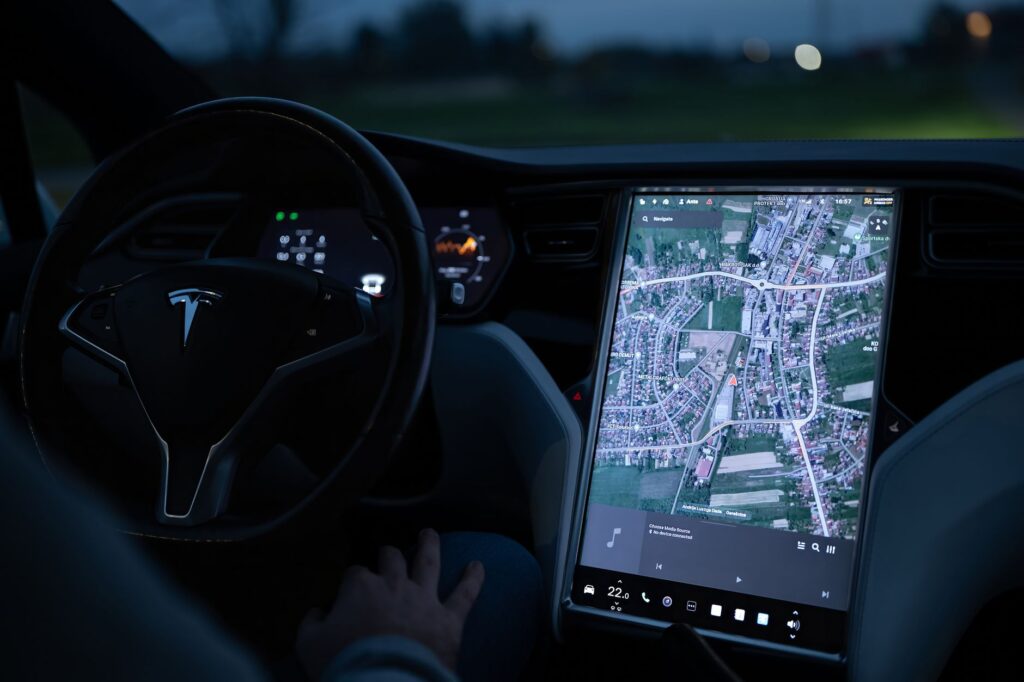
According to Harris County officials, the Model 3 was traveling on a suburban road when it veered off the pavement, smashed through a fence, and slammed into a single‑family home. Inside, 76‑year‑old Martha Avila lost her life. The crash left a gaping hole in the front of the house and a scene that looks like a set from a disaster movie. Authorities are still piecing together the exact sequence, but they’ve confirmed that the driver was using Tesla’s advanced driver assistance system, which the company markets under the name “Full Self‑Driving (FSD) Supervised.”
Historical Context
When Tesla first rolled out its driver‑assist suite in 2016, the technology was presented as an optional add‑on that could handle steering, acceleration, and braking under certain conditions. The agency’s first special crash investigation that same year targeted the nascent system, setting a precedent for how the regulator would evaluate future incidents. Over the next decade, each high‑profile accident prompted a fresh review, creating a cumulative record that now exceeds three dozen investigations.
In 2024, a Model S collided with a bus in Colorado, prompting a second‑generation probe that examined how the system responded to unexpected obstacles. The following year, a California crash involving a Tesla and a residential structure added another data point. Those earlier inquiries forced Tesla to hand over telemetry logs, driver statements, and software revision histories. The pattern of data requests has become a routine part of the agency’s oversight process.
Legal challenges arrived in early 2026 when the California Department of Motor Vehicles and a state court concluded that the “Autopilot” label misled consumers. The ruling triggered a mandatory rebranding to “Full Self‑Driving (FSD) Supervised.” That change did not alter the underlying code, but it sharpened the focus on how marketing language aligns with functional capability. The Texas crash, occurring just months after the rename, illustrates how regulatory scrutiny can intensify after a naming dispute.
NHTSA’s pattern of special investigations
Since 2016, the NHTSA has opened more than three dozen special crash investigations targeting Tesla’s driver‑assist technologies. Those probes cover a range of outcomes, from minor injuries to fatal crashes like the one in Katy. The regulator’s approach is to treat each incident as a potential indicator of a systemic safety issue, rather than dismissing them as isolated driver errors.
- 2016 – First special crash investigation into Tesla’s Autopilot.
- 2024 – NHTSA launches a probe after a Model S collided with a bus in Colorado.
- 2025 – A California crash involving a Tesla and a house prompts another investigation.
- 2026 – The current Texas crash adds to the tally, bringing the total to over three dozen.
Each of those investigations has forced Tesla to provide data, vehicle telemetry, and driver statements. The agency’s goal is to determine whether the automation software contributed to the loss of control, and whether software updates or driver‑training revisions are needed.
Legal backdrop: Autopilot naming and advertising
In February 2026, Tesla stopped marketing its driver‑assist suite as “Autopilot” in the United States after the California Department of Motor Vehicles and a state court found the company had engaged in false advertising. The ruling said Tesla’s naming could mislead consumers about the system’s capabilities, implying it could operate without driver supervision when it could not.
That legal pressure forced a rebranding to “Full Self‑Driving (FSD) Supervised,” but the underlying technology remains the same. Critics argue that the terminology still suggests a level of autonomy that doesn’t exist, and the recent crash underscores why those distinctions matter.
California case and its ripple effects
When a California court ruled against Tesla, it didn’t just change a nameplate; it gave regulators a foothold to scrutinize the company’s marketing claims. The DMV’s findings that Tesla’s advertisements could confuse drivers have been cited in subsequent investigations, including the one in Texas.
Fatality statistics from TeslaDeaths.com
Independent tracking site TeslaDeaths.com, which compiles news reports, police records, and federal data, has logged at least 65 fatalities from crashes where Tesla’s Autopilot or FSD was a factor between 2013 and 2025. That figure doesn’t include the Texas incident, which would push the total to 66 if the investigation confirms the system’s involvement.
Those numbers are stark, especially when you consider that Tesla sells hundreds of thousands of vehicles each year. The site’s methodology is transparent: they only count crashes that have a clear reference to the driver‑assist system in public reports.
Market reaction and Musk’s roadmap
Even with the federal probe, Tesla’s stock closed up by a point at $405.05 on Monday. Investors seem to be discounting the immediate risk, perhaps because they trust Elon Musk’s long‑term vision of robotaxis and autonomous fleets. Musk has repeatedly claimed that his company’s technology will soon be “sophisticated and safe enough” to run large fleets of driver‑less cars on public roads.
But the pattern of crashes is making it harder for the company to convince regulators and the public that its systems are ready for full autonomy. The NHTSA’s special investigations could force Tesla to roll back features, issue software updates, or even recall vehicles if systemic flaws are identified.
Investor confidence versus regulatory pressure
Investors are betting on the upside of Tesla’s autonomous ambitions, while regulators are focusing on the downside of safety lapses. That tension is what makes each new investigation a flashpoint for both the market and the policy arena.
What This Means For You
If you’re a developer building applications that interface with Tesla’s APIs, you’ll need to watch the outcome of the NHTSA investigation closely. A finding that the driver‑assist system contributed to the crash could lead to stricter data‑access policies, updated telemetry formats, or new compliance requirements for third‑party software.
For founders and product teams working on autonomous‑driving tech, the Texas incident is a reminder that safety claims need to be backed by rigorous testing and clear communication. Even if your system isn’t directly tied to Tesla, regulators are likely to scrutinize any claims of hands‑free operation, especially when high‑profile accidents keep surfacing.
Three concrete scenarios illustrate how the investigation could ripple through the ecosystem. First, a fleet operator that relies on Tesla’s API for real‑time vehicle status may be forced to implement additional driver‑monitoring checks if the agency mandates new logging standards. Second, a startup that bundles navigation overlays with Tesla data could see its access token revoked until a compliance audit is completed. Third, a venture‑backed autonomous‑shuttle project might need to redesign its user‑interface to emphasize driver responsibility, mirroring the language that regulators now expect from manufacturers.
Will the NHTSA’s probe finally force Tesla to redesign its driver‑assist suite, or will it result in another round of software patches? The answer could shape the entire autonomous‑vehicle industry’s regulatory landscape for years to come.
Key Questions Remaining
As the investigation proceeds, several unanswered issues will dictate the next steps for both Tesla and the broader market. Will the agency’s final report pinpoint a software flaw, a user‑error pattern, or a combination of both? If a software defect is identified, how quickly can Tesla roll out a corrective update across its global fleet? Conversely, if driver misuse is deemed the primary factor, what new training or certification requirements might regulators impose on owners of vehicles equipped with FSD Supervised?
Another open question concerns the scope of future investigations. The NHTSA has signaled that each crash involving the driver‑assist suite will be examined on its own merits, but a cumulative finding of systemic risk could trigger broader mandates, such as mandatory over‑the‑air disables of certain features until safety benchmarks are met.
Finally, the market will watch how investors react to any regulatory outcome. A decisive ruling that forces a feature rollback could depress share prices, while a finding that validates the current design might buoy confidence in Tesla’s autonomous roadmap. The balance between safety accountability and commercial optimism will continue to define the conversation around self‑driving technology for the foreseeable future.
Sources: CNBC Tech, NBC 7 San Diego