




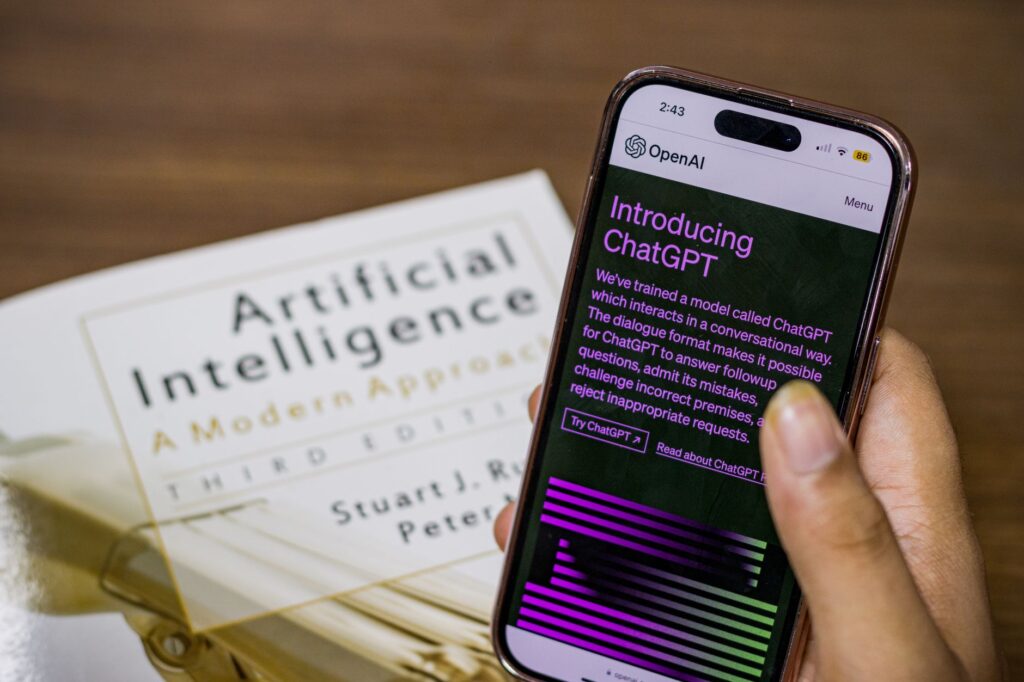
OpenAI priced GPT-5.6 Sol at $5 per million input tokens and $30 per million output tokens, slashing the cost of Anthropic’s Fable by half.
Key Takeaways
- Three GPT-5.6 variants—Sol, Terra, Luna—are in limited preview for trusted partners.
- Sol is billed as the strongest model, especially for cybersecurity tasks.
- OpenAI is giving the U.S. government early access under a new AI cybersecurity order.
- Security hardening includes a “max” reasoning mode and a 700,000‑GPU‑hour jailbreak mitigation effort.
- Pricing ranges from $1 to $5 per million input tokens, depending on the variant.
What the GPT-5.6 preview tells us about OpenAI’s roadmap
It’s clear that OpenAI’s strategy is to tier its models, giving developers a cheap baseline while reserving premium performance for high‑stakes use cases. The company says Sol is its most capable model yet, and it’s the only variant that supports the new “max” reasoning effort, which lets the model spend extra cycles on deep analysis. That’s a move that signals OpenAI is betting on differentiated compute budgets rather than a one‑size‑fits‑all approach.
Sol: the high‑end model
Sol isn’t just a bigger model; it’s the one OpenAI markets as its best cybersecurity tool. The firm claims Sol can help users find and fix vulnerabilities, and it’s been fortified against real‑world attacks after weeks of internal testing. The company also says Sol comes with strengthened protections for high‑risk activities and sensitive requests, which should curb misuse in the hands of malicious actors.
Terra and Luna: cost‑focused options
Terra, according to OpenAI, offers performance comparable to GPT‑5.5 while being twice as cheap. Luna is the lowest‑cost offering, aimed at everyday workloads that don’t need the full power of Sol. Both variants still carry the same safety layers, but they’re priced to attract a broader user base once the limited preview expands.
Historical Context
OpenAI has rolled out a series of incremental upgrades over the past few years. Each new generation has introduced a mix of larger parameter counts, refined training data, and tighter safety guardrails. The pricing strategy has evolved in tandem, moving from a single flat rate to a tiered structure that mirrors the model hierarchy. That shift became evident when the company introduced its previous generation—GPT‑5.5—with a uniform price that many developers found steep for large‑scale experiments.
Anthropic’s entry with the Fable model set a benchmark for security‑focused pricing. By positioning Fable at $10 per million input tokens and $50 per million output tokens, Anthropic forced the market to reckon with the cost of specialized AI safety. OpenAI’s response, reflected in the Sol price of $5 per million input tokens, effectively halves that barrier. The competition has nudged both firms toward a pricing cadence where safety‑enhanced variants command a premium, while general‑purpose models drop in price to stay attractive.
Government involvement is not new either. Earlier collaborations between AI firms and federal agencies have focused on research grants and shared datasets. The current AI cybersecurity order, however, formalizes a review window that directly impacts product release schedules. This policy change builds on a legacy of voluntary compliance that many companies have already practiced, but it codifies the expectation that cutting‑edge models will undergo a short, pre‑release audit.
Government involvement and the new AI cybersecurity order
OpenAI gave the U.S. government a preview of GPT-5.6 before today’s public announcement, and it’s doing so at the request of the administration. The company notes that the partnership’s participation has been shared with the government, but it adds, “We don’t believe this kind of government access process should become the long-term default.” That’s a direct quote from OpenAI’s announcement, and it underscores the tension between rapid deployment and regulatory oversight.
President Trump signed an AI cybersecurity order earlier this month, mandating that companies present their most powerful models for voluntary government review 30 days before release. The New York Times reported that OpenAI, Anthropic, Google, xAI, and Microsoft have already been giving the government early access, while Meta remains the only holdout. That context helps explain why OpenAI is taking a “short‑term step” to release GPT‑5.6 to a trusted cohort before the broader rollout.
Security hardening and jailbreak mitigation
OpenAI says it’s put safeguards on all three variants to withstand real adversarial pressure. The company trained GPT-5.6 to refuse “prohibited cyber assistance,” which includes attempts to jailbreak the model. To back that claim, OpenAI spent 700,000 GPU hours hunting universal jailbreaks and building defenses. It also pledges a rapid‑response process to reproduce, assess, prioritize, and remediate newly discovered jailbreaks.
That focus on jailbreak prevention likely stems from Anthropic’s recent experience. A few weeks ago, Anthropic suspended access to its Mythos 5 and Fable 5 models after a government directive, only to start lifting the block once the U.S. government gave permission to redeploy Mythos to a select group. OpenAI’s proactive stance suggests it’s trying to avoid a similar shutdown.
Pricing strategy and market positioning
OpenAI’s pricing for the GPT‑5.6 line is decidedly aggressive. Sol costs $5 per million input tokens and $30 per million output tokens. Terra is priced at $2.50 for input and $15 for output, while Luna sits at $1 and $6 respectively. Those numbers are a stark contrast to Anthropic’s Fable, which cost $10 for input and $50 for output for the same token volume.
- Sol: $5 / M input, $30 / M output
- Terra: $2.50 / M input, $15 / M output
- Luna: $1 / M input, $6 / M output
Because the pricing tiers are transparent and the lower‑cost models still retain safety layers, developers can experiment without fearing runaway costs. That could accelerate adoption once OpenAI expands the preview beyond its trusted partners.
Competitive Landscape
Beyond OpenAI and Anthropic, the AI field includes several heavyweight players that have already signaled interest in the new cybersecurity order. Google, xAI, and Microsoft have each submitted their latest models for the 30‑day review, indicating a shared willingness to align product timelines with government expectations. Meta’s decision to sit out of the early‑access group sets it apart, and observers will watch whether that stance translates into a different pricing or safety posture.
All of these firms are juggling the same trade‑off: delivering raw capability while maintaining a guard against misuse. The fact that OpenAI has devoted a dedicated “max” reasoning mode to Sol suggests a future where each vendor carves out a niche of high‑risk performance. Meanwhile, cost‑focused variants like Terra and Luna echo a broader industry trend toward democratizing access to large language models.
When multiple companies adopt a tiered approach, developers gain the flexibility to choose a model that matches both budget and risk tolerance. The competition also pressures each player to keep their safety investments visible, because a breach or jailbreak can quickly erode market confidence.
What This Means For You
If you’re building a security‑focused SaaS platform, Sol’s enhanced cybersecurity capabilities might let you embed vulnerability‑scanning directly into your product, cutting out the need for third‑party tools. The fact that OpenAI has already fortified Sol against known jailbreak techniques means you’ll have a stronger safety net out of the box.
For developers chasing cost efficiency, Terra and Luna give you the flexibility to spin up large‑scale language‑model workloads without breaking the bank. The pricing model aligns with a pay‑as‑you‑go mindset, and the built‑in safeguards mean you won’t have to retrofit heavy moderation later.
OpenAI’s decision to involve the U.S. government in the preview raises questions about future compliance requirements. If the AI cybersecurity order becomes the norm, you might soon need to schedule a 30‑day review before releasing any product that uses GPT‑5.6 or later models. That could reshape development timelines, but it also promises a clearer regulatory path for AI‑driven applications.
Imagine a startup that provides automated code review for open‑source projects. Using Sol, the team could run deep static analysis on pull requests, flagging insecure patterns before they merge. Terra would let the same startup handle routine documentation generation and code comment assistance without incurring heavy costs. Luna, on the other hand, could power a chatbot that answers developer questions in real time, keeping operational expenses low while still benefiting from OpenAI’s safety framework.
Another scenario involves a compliance‑heavy industry such as finance. A fintech firm could route transaction anomaly detection through Sol, using its “max” reasoning mode to explore complex fraud patterns. At the same time, routine client‑facing communication—like generating account summaries—could run on Luna, ensuring that the bulk of token usage stays inexpensive.
Finally, a government contractor building a secure document‑analysis pipeline would need to meet the 30‑day review requirement. By opting for Terra during the early phase, the contractor can stay within budget while still satisfying the mandated safety checks. Once the review clears, the same pipeline could be upgraded to Sol for the most sensitive data sets, gaining the extra security hardening that the order emphasizes.
Will the next wave of AI models continue to balance raw capability with government‑mandated safeguards, or will developers push back against what could become a new bottleneck? Only.
Key Questions Remaining
- How will the 30‑day government review process evolve once more models reach the preview stage? Will the window stay fixed, or could it shrink as agencies gain experience?
- Will OpenAI keep the “max” reasoning mode exclusive to Sol, or could it eventually roll a scaled‑down version into Terra for customers who need deeper analysis without the full price tag?
- How will competitors respond to the aggressive pricing? Will we see a cascade of lower‑cost tiers, or will safety investments keep premium pricing stable across the board?
Answers to these questions will shape the pace at which AI‑driven security tools move from experimental labs into production environments. Watching how OpenAI, its rivals, and regulators interact over the next few months will provide a clearer picture of the ecosystem’s direction.
Sources: Engadget, The New York Times