



More than 80 percent of the world’s reefs have been impacted in at least 83 countries and territories since 2023, when record‑breaking marine heat waves sparked the most severe global coral bleaching event ever recorded. That stark statistic frames every dive that Anne Cohen, a tenured scientist at the Woods Hole Oceanographic Institution, takes in the emerald waters of Majuro lagoon.
Key Takeaways
- Since 2023, over 80% of reefs have suffered bleaching across 83 nations.
- Anne Cohen relies on an unmanned surface vehicle called Yellowfin to locate specific reef patches.
- The robot navigates by precise coordinates, cutting through swells like a tiny mast‑less sailboat.
- Scientists hope some reefs, like the one Cohen revisits, may be heat‑tolerant.
- Understanding resilient reefs could reshape conservation priorities worldwide.
Coral Heat Resilience: Field Work in the Marshall Islands
We’ve never seen a robot guide a marine biologist quite like this. Perched on the bow of an aluminum landing craft, Cohen watches a yellow robot glide across the lagoon, its hull barely rippling the surface. “She’s the best dive buddy,” she says, laughing as the unmanned surface vehicle pauses and hovers, signaling the spot they’ve been chasing for years. The moment the robot steadies, Cohen’s heart races; she’s about to see whether the reef she’s monitored for years can still cling to life.
Yellowfin, the Robotic Guide
Yellowfin isn’t a fancy drone; it’s a compact, battery‑powered surface vehicle programmed to hit exact GPS coordinates. It cuts through small swells like a tiny sailboat without a mast, steering itself with a precision that would make a human pilot jealous. The robot’s ability to hover exactly where Cohen wants it means she can drop her snorkel gear and plunge straight into the spot she’s been targeting, saving precious time and energy on a day when every minute counts.
The Bleaching Crisis Since 2023
We’re still feeling the aftershocks of the heat waves that began in 2023. Those waves pushed sea temperatures past the threshold that many coral species can tolerate, forcing them to expel the symbiotic algae that give them colour and food. Without those algae, corals turn ghostly white, a condition researchers call bleaching. In many places, the bleached colonies haven’t recovered, and the loss of vibrant reef ecosystems threatens fisheries, tourism, and coastal protection.
Historical Context
Coral bleaching isn’t a new phenomenon, but the 2023 event stands out for its speed and scale. Prior episodes have left scientists with patchy data, making it hard to draw firm conclusions about long‑term trends. The 2023 heat spikes, however, coincided with an record amount of satellite monitoring and citizen‑science reporting. That convergence of technology and urgency gave researchers a clearer picture of how quickly reefs can tip from health to distress. The record‑breaking nature of those waves also raised the bar for what constitutes a “severe” bleaching event, prompting a re‑evaluation of existing climate‑impact models.
Why Majuro’s Reef Might Be Different
There’s a reason Cohen keeps coming back to this patch of reef. She’s noticed subtle signs that suggest it might be coping better than its neighbors. When she slipped off the boat, black and yellow snorkel fins slapping the water, she felt a strange optimism. The reef’s structure seemed less eroded, and some corals still held onto bits of colour even after the latest heat spike. That’s why she’s eager to document any signs of resilience—if this reef can survive, it could teach us how to protect others.
Observations from the Dive
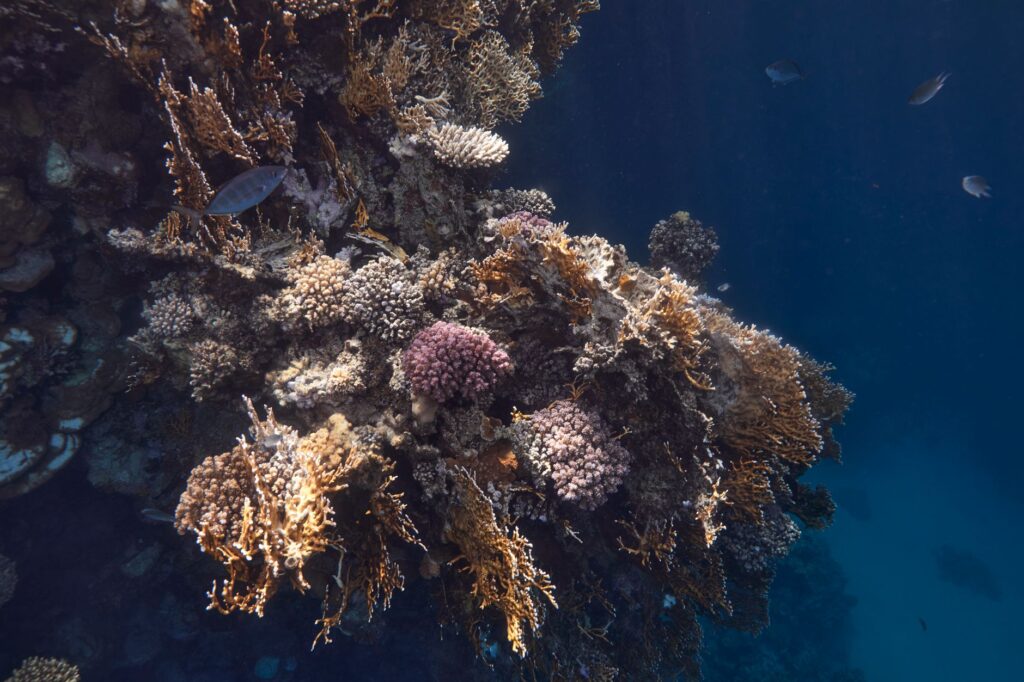
She’s quick to spit into her mask to keep it from fogging, a habit that’s saved her countless hours of wasted observation. As she descended, the water turned a deeper blue, and a muffled squeal escaped her snorkel. The scene that unfolded beneath her was startling: patches of coral still displayed faint hues, while adjacent sections were stark white. Those mixed signals hint at a possible genetic or micro‑environmental advantage that could be key to future restoration work.
Robotics Meet Marine Science
We’ve seen autonomous underwater vehicles map the ocean floor, but using a surface robot as a dive companion is a fresh twist. Yellowfin’s ability to navigate to a precise set of coordinates means researchers can repeatedly visit the exact same spot, creating a longitudinal dataset that’s hard to achieve with traditional boat dives. That consistency lets scientists track subtle changes over months, not just years.
- Yellowfin operates on battery power, limiting its runtime but ensuring silent, low‑impact movement.
- The robot’s GPS navigation reduces human error, increasing repeatability of data collection.
- Its small size lets it maneuver in tight lagoon spaces where larger vessels can’t go.
Adoption Timeline
Early prototypes of surface‑guided robots were tested in calm bays, primarily for ocean‑ographic sampling. As confidence grew, developers added higher‑precision GPS modules and refined the hull design to cut through modest swells. By the time the 2023 bleaching crisis hit full force, the technology was mature enough to be deployed in remote lagoon environments. Cohen’s current fieldwork illustrates the final stage of that evolution: a robot that can be launched from a modest craft, lock onto a reef coordinate, and hold position long enough for a scientist to dive directly into the target zone. The progression from experimental platform to practical research assistant happened within a few years, driven by the urgent need to monitor reefs under climate stress.
Implications for Conservation Strategies
We can’t ignore what this tiny robot is teaching us. If certain reefs show a pattern of heat tolerance, managers could prioritize those sites for protection, seed them with larvae, or study their microbiomes for clues. The data gathered by Cohen and her robot could inform policies that allocate limited funding to the most promising refuges. That’s a practical shift from blanket protection to targeted, evidence‑based action.
Potential Policy Shifts
Governments might start designating heat‑resilient reefs as climate refuges, granting them stricter fishing limits and funding for monitoring. NGOs could focus restoration efforts on these refuges, using coral fragments that have survived past bleaching events. And researchers worldwide could share a standardized protocol for using surface robots, accelerating the pace at which we identify resilient sites.
What This Means For You
If you’re building tools for environmental monitoring, the Yellowfin case shows that precision navigation and repeatable sampling are major shifts. You’ll want to design APIs that let scientists tag exact coordinates, sync data streams in real time, and export tidy datasets for analysis. Because the more smooth the workflow, the faster we can turn observations into actionable insights.
For developers working on climate‑related platforms, integrating live feeds from robots like Yellowfin could give users a front‑row seat to reef health. Real‑time visualizations, alerts when a reef shows signs of stress, and dashboards that compare resilient versus bleaching‑prone sites would make the data both compelling and usable. That kind of immediacy could drive funding, policy, and public support for marine conservation.
Scenario one: a startup creates a modular sensor suite that plugs into any surface vehicle. By exposing a simple endpoint, field teams can push temperature, salinity, and GPS data straight to a cloud store, where analysts run trend detection scripts. Scenario two: a nonprofit builds a citizen‑science portal that streams Yellowfin’s video feed. Volunteers tag coral patches that appear healthy, feeding a crowdsourced dataset into machine‑learning models that predict future resilience hotspots. Scenario three: a university lab develops a teaching kit that pairs a miniature surface robot with a classroom dashboard, letting students watch live reef conditions and learn about marine ecology in real time.
Will the next generation of ocean‑tech be built around tiny, purpose‑driven robots that let us watch the sea’s most fragile ecosystems in record detail? Only, but the clues are already surfacing in the clear waters of Majuro lagoon.
Key Questions Remaining
Even with Yellowfin’s precise positioning, several uncertainties linger. What genetic traits actually confer heat tolerance, and can they be transferred to vulnerable reefs through assisted migration? How will long‑term monitoring cope with battery limitations and the need for regular maintenance in remote locations? And what governance frameworks will emerge to protect identified refuges without creating new inequities among coastal communities? Answering these questions will require coordination across scientific, technological, and policy domains.
Sources: Ars Technica, original report